Savor the Goodness: Your Ultimate Guide to Crafting the Perfect Homemade Vegetable Soup
Ever wondered how to transform simple garden ingredients into a heartwarming, soul-nourishing masterpiece? Preparing a delicious Vegetable Soup at home offers unparalleled satisfaction, allowing you to control every vibrant flavor and nutritional element. This comprehensive guide will walk you through creating a truly memorable Homemade Vegetable Soup that’s not just a meal, but an experience. Let’s dive into the art of making this comforting classic.
Ingredients & Kitchen Tools
Crafting the perfect soup requires a selection of fresh ingredients and essential kitchen tools. Here’s what you’ll need:
Ingredients:
- 2 tablespoons Olive Oil: For sautéing aromatics and building a flavorful base.
- 1 large Yellow Onion, chopped: The foundation of many great soups, offering sweetness and depth.
- 2 Carrots, peeled and diced: Adds natural sweetness and vibrant color.
- 2 Celery Stalks, diced: Contributes an earthy, savory note.
- 2 cloves Garlic, minced: Essential for aromatic complexity.
- 1 (14.5 ounce) can Diced Tomatoes, undrained: Provides a tangy, rich base.
- 6 cups Vegetable Broth (low sodium preferred): The liquid backbone of our soup, choose low sodium to control seasoning.
- 1 cup Green Beans, trimmed and cut into 1-inch pieces: Adds a crisp-tender texture.
- 1 cup Zucchini, diced: A tender addition that absorbs flavors beautifully.
- 1 cup Yellow Squash, diced: Similar to zucchini, offering a mild, slightly sweet flavor.
- 1/2 cup Small Pasta (e.g., ditalini, small shells): For a heartier, more filling soup. (Optional substitution: 1 cup cooked quinoa for a gluten-free option.)
- 1 teaspoon Dried Oregano: A classic herb that complements vegetable flavors.
- 1/2 teaspoon Dried Thyme: Adds a subtle, earthy fragrance.
- Salt and Black Pepper, to taste: Crucial for balancing and enhancing all flavors.
- Fresh Parsley or Basil, chopped: For garnish and a fresh finishing touch. (Optional)
Kitchen Tools:
- Large Dutch Oven or Stockpot (6-8 quart): Ideal for even heat distribution and ample space.
- Cutting Board: For safe and efficient vegetable preparation.
- Chef’s Knife: A sharp knife is indispensable for dicing and chopping.
- Measuring Cups and Spoons: For accurate ingredient quantities.
- Wooden Spoon or Spatula: For stirring and scraping the bottom of the pot.
Prep Time & Cooking Schedule
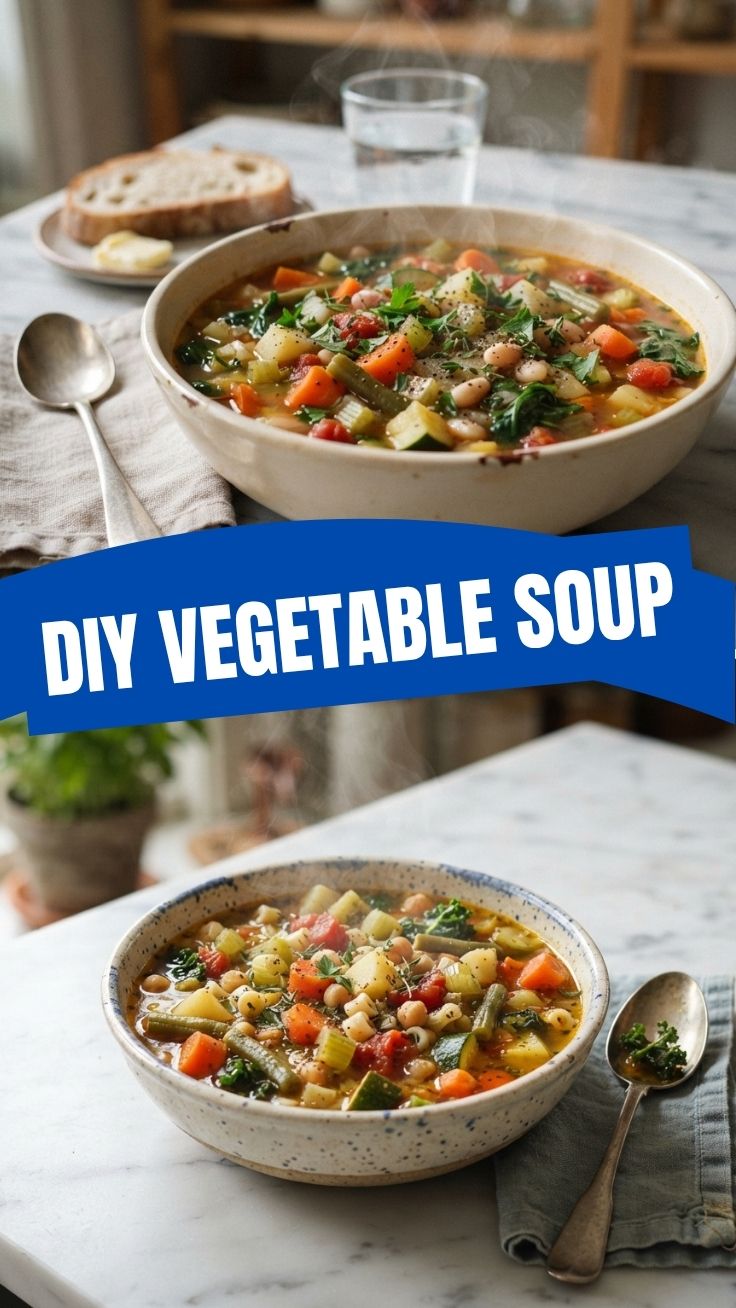
Planning is key to a smooth cooking experience. This Vegetable Soup comes together efficiently with a little prep work.
- Prep Time: 20 minutes (for chopping and dicing all vegetables)
- Cook Time: 30-35 minutes (simmering until vegetables are tender)
- Resting Time: 5 minutes (allowing flavors to meld before serving)
Total Time: Approximately 1 hour. This schedule allows for a relaxed cooking process, perfect for a weeknight meal or a leisurely weekend lunch.
Step-by-Step Instructions
Follow these clear steps to achieve a perfectly balanced and flavorful soup:
1. Sauté Aromatics: Heat olive oil in your large Dutch oven or stockpot over medium heat. Add chopped onion, carrots, and celery. Sauté for 5-7 minutes until the vegetables soften and the onion becomes translucent. This “sweating” process builds the foundational flavor of your Homemade Vegetable Soup.
2. Add Garlic and Spices: Stir in minced garlic, dried oregano, and dried thyme. Cook for another minute until fragrant, being careful not to burn the garlic.
3. Introduce Liquids and Tomatoes: Pour in the vegetable broth and add the undrained diced tomatoes. Bring the mixture to a gentle simmer, scraping any browned bits from the bottom of the pot to incorporate all the delicious flavors.
4. Simmer Hardier Vegetables: Add the green beans, zucchini, and yellow squash. Reduce heat to low, cover, and let the soup simmer for 15-20 minutes, or until the vegetables are tender-crisp.
5. Cook Pasta: If using pasta, stir it into the soup. Continue to simmer, uncovered, for another 8-10 minutes, or until the pasta is al dente. If you’re making a traditional Vegetable Soup and want to avoid soggy pasta for leftovers, you can cook it separately and add it to individual bowls.
6. Season and Finish: Season generously with salt and freshly ground black pepper to taste. The amount will depend on the sodium content of your broth and diced tomatoes. Taste and adjust as needed.
7. Garnish and Serve: Ladle the hot soup into bowls. Garnish with fresh chopped parsley or basil, if desired, for a pop of freshness.
Nutritional Benefits & Advantages
This Vegetable Soup is a powerhouse of nutrition. It’s naturally low in calories and fat, rich in dietary fiber, and packed with vitamins and minerals from the diverse array of vegetables. Carrots provide beta-carotene (Vitamin A), tomatoes offer lycopene (an antioxidant), and green beans contribute Vitamin K. The high fiber content aids digestion and promotes a feeling of fullness, making it an excellent choice for weight management. Furthermore, the ample liquid content helps with hydration.
Tips Variations & Cooking Advice
- Boost Protein: Add a can of rinsed and drained cannellini beans or chickpeas during the last 10 minutes of cooking for extra protein and fiber.
- Spice It Up: For a touch of heat, add a pinch of red pepper flakes with the garlic.
- Herb Variations: Experiment with other herbs like bay leaf (remove before serving), rosemary, or marjoram.
- Seasonal Vegetables: Feel free to swap vegetables based on what’s in season. Spinach, kale, corn, or potatoes are all excellent additions. Add leafy greens in the last 5 minutes of cooking.
- Creamy Texture: For a creamier soup, blend a portion of it with an immersion blender before adding the pasta, or stir in a tablespoon of unsweetened plant-based milk at the end.
- Gluten-Free: Use gluten-free pasta or substitute with quinoa or rice.
Common Mistakes to Avoid
- Overcooking Vegetables: This can lead to mushy textures and loss of nutrients. Aim for tender-crisp.
- Undercooking Aromatics: Rushing the initial sauté of onions, carrots, and celery will result in a less flavorful base.
- Insufficient Seasoning: Don’t be shy with salt and pepper! Taste and adjust throughout the cooking process. A bland soup is often just an under-seasoned one.
- Adding Pasta Too Early: Pasta can become overcooked and soggy if added too soon, especially if you plan on having leftovers.
Storage & Meal Prep Tips
This Vegetable Soup is a fantastic candidate for meal prepping.
- Refrigeration: Store cooled soup in an airtight container in the refrigerator for up to 3-4 days.
- Freezing: For longer storage, freeze cooled soup in freezer-safe containers or bags for up to 3 months. If you’ve added pasta, it might become slightly softer upon reheating from frozen.
- Reheating: Reheat gently on the stovetop over medium-low heat, stirring occasionally, until heated through. You may need to add a splash of extra broth or water to adjust consistency.
Conclusion
Crafting a wholesome and flavorful Vegetable Soup is a rewarding experience, offering both culinary satisfaction and abundant nutrition. By following this guide, you can confidently prepare a delicious Homemade Vegetable Soup that will nourish your body and delight your taste buds. We encourage you to try this recipe, experiment with your favorite vegetables, and share your delightful results!
FAQs
Q1: Can I make this soup in a slow cooker?
A1: Yes! Sauté the aromatics (onion, carrots, celery, garlic) on the stovetop first for best flavor. Then, transfer them to the slow cooker with all other ingredients (except pasta). Cook on low for 6-8 hours or high for 3-4 hours. Add pasta during the last 30 minutes of cooking.
Q2: What’s the best way to make this soup heartier?
A2: To make it more filling, consider adding a cup of cooked brown rice, farro, or quinoa. You can also include canned beans (like kidney or cannellini) or shredded cooked chicken or turkey for added protein.
Q3: My soup tastes bland. What can I do?
A3: The most common reason for bland soup is insufficient seasoning. Taste and add more salt and freshly ground black pepper. A squeeze of lemon juice or a splash of red wine vinegar at the end can also brighten flavors.
Q4: Can I use fresh herbs instead of dried?
A4: Absolutely! If using fresh herbs, you’ll generally need about three times the amount of dried herbs. Add fresh parsley or basil towards the end of cooking to preserve their vibrant flavor.