The Ultimate Guide to a Perfectly Juicy Roast Turkey
Dreaming of that golden-brown, succulent centerpiece for your next special occasion? Achieving a truly unforgettable Roast Turkey is not just a dream – it’s an attainable culinary triumph! While the prospect of tackling such a magnificent bird might seem daunting, mastering a delicious roast turkey recipe at home offers immense satisfaction and a deeply flavorful experience that store-bought alternatives simply can’t match. Imagine the rich aroma wafting through your kitchen, the tender meat falling off the bone, and the delighted smiles of your loved ones. This comprehensive guide will equip you with the knowledge and confidence to create a show-stopping turkey that will be the highlight of any meal.
Ingredients & Kitchen Tools
Crafting the perfect Roast Turkey requires a thoughtful selection of ingredients and the right tools.
- Whole Turkey (12-16 lbs): Fresh or thawed. A good quality bird makes all the difference.
- Unsalted Butter (1 stick / 113g), softened: For a rich, golden skin and moist meat.
- Fresh Herbs (Rosemary, Thyme, Sage): Aromatic additions that infuse the turkey with classic flavors.
- Yellow Onions (2 large), quartered: Adds subtle sweetness and creates a flavorful roasting bed.
- Celery Stalks (4), roughly chopped: Contributes to the aromatic base and keeps the turkey elevated.
- Carrots (4), roughly chopped: Adds sweetness and depth to the pan drippings.
- Garlic (1 head), cut in half horizontally: Infuses a delicate garlic flavor.
- Chicken or Vegetable Broth (4 cups): For basting and creating pan drippings.
- Salt and Freshly Ground Black Pepper: Essential for seasoning the turkey generously.
- Olive Oil (2 tablespoons): For a crispy skin.
- Large Roasting Pan with Rack: Crucial for even cooking and proper air circulation.
- Meat Thermometer: Non-negotiable for ensuring the turkey is cooked to a safe and juicy internal temperature.
- Basting Brush: For periodically moistening the turkey.
- Kitchen Twine: To truss the turkey and promote even cooking.
- Aluminum Foil: For tenting the turkey and resting.
Prep Time & Cooking Schedule
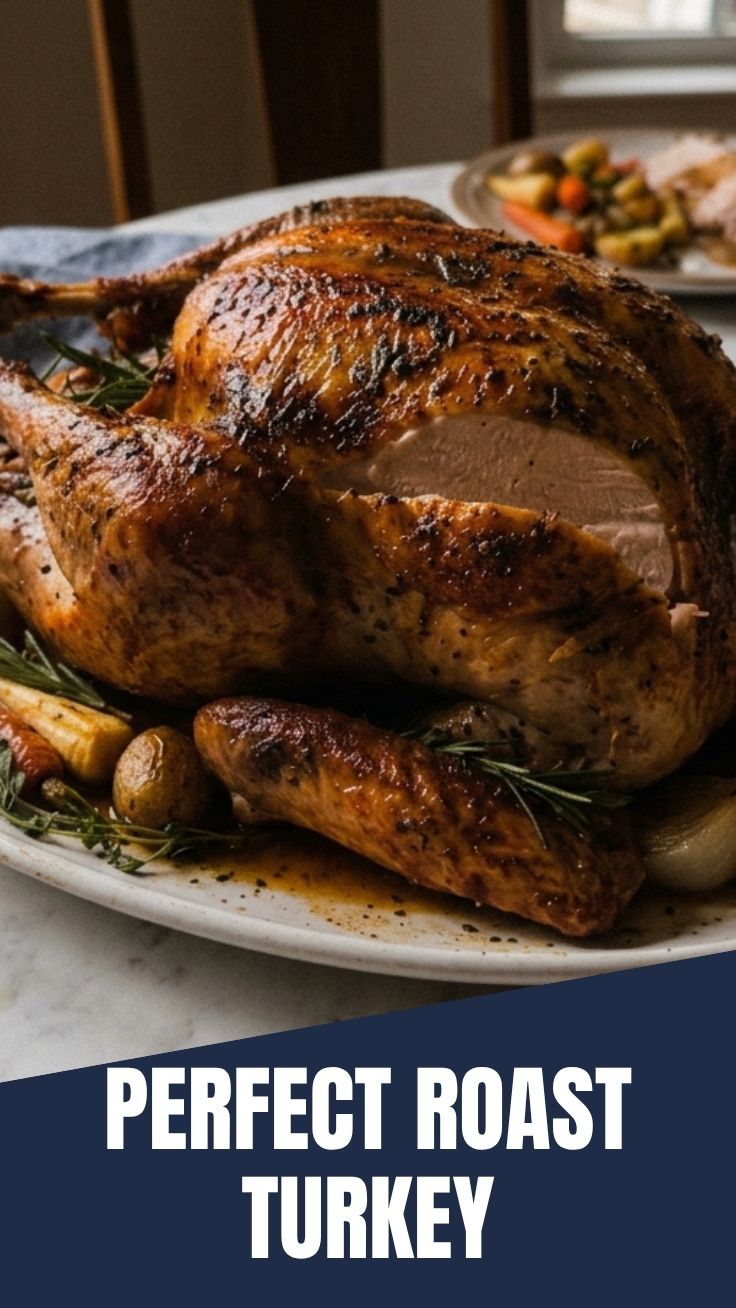
Planning is key for a stress-free turkey experience.
- Prep Time: 30-45 minutes (includes seasoning and trussing).
- Cook Time: Approximately 2.5-3.5 hours for a 12-16 lb turkey (roughly 13-15 minutes per pound). This can vary based on oven calibration and turkey size.
- Resting Time: 30-45 minutes. Absolutely essential for juicy results!
Planning Tip: Allow 24 hours per 4-5 pounds for thawing a frozen turkey in the refrigerator. Start thawing several days in advance if your turkey is large.
Step-by-Step Instructions
1. Prepare the Turkey: Remove the giblets and neck from the turkey cavity. Pat the turkey thoroughly dry with paper towels – this is crucial for crispy skin! Season the cavity generously with salt and pepper, then stuff with half of the quartered onions, celery, carrots, half-cut garlic, and a few sprigs of fresh herbs.
2. Rub with Butter & Season: In a small bowl, mix softened butter with a tablespoon of chopped fresh herbs. Gently loosen the skin over the breast meat with your fingers and spread half of the herb butter mixture directly onto the meat. Rub the remaining herb butter all over the exterior of the turkey. Season the entire exterior generously with salt and freshly ground black pepper.
3. Truss and Place in Roasting Pan: Using kitchen twine, tie the legs together. Tuck the wing tips under the turkey’s body. Place the remaining onions, celery, carrots, garlic, and herbs on the bottom of your roasting pan. Pour 2 cups of broth into the bottom of the pan. Place the turkey on the roasting rack within the pan, ensuring it’s elevated above the liquid and vegetables.
4. Roast the Turkey: Preheat your oven to 425°F (220°C). Roast the turkey for 30 minutes, uncovered, to get a beautiful golden-brown skin.
5. Reduce Heat & Baste: Reduce the oven temperature to 350°F (175°C). Pour the remaining 2 cups of broth into the roasting pan. Baste the Roast Turkey every 30-45 minutes with the pan drippings. If the skin begins to brown too quickly, tent loosely with aluminum foil. Continue roasting until a meat thermometer inserted into the thickest part of the thigh (without touching the bone) registers 165°F (74°C). This perfect internal temperature ensures your roast turkey recipe is cooked safely and retains its succulence.
6. Rest the Turkey: Once done, remove the turkey from the oven, transfer it to a cutting board, and tent loosely with aluminum foil. Let it rest for at least 30-45 minutes. This vital step allows the juices to redistribute, resulting in a more tender and flavorful bird.
Nutritional Benefits & Advantages
Turkey is an excellent source of lean protein, essential for muscle building and repair. It’s also rich in B vitamins (especially B3, B6, and B12), which are crucial for energy metabolism and nervous system function. Furthermore, turkey provides selenium, a powerful antioxidant, and zinc, vital for immune health. Enjoying a homemade Roast Turkey allows you to control the ingredients, ensuring a healthier meal free from excessive sodium or artificial additives often found in pre-cooked options.
Tips, Variations & Cooking Advice
- Brining: For an exceptionally moist turkey, consider wet brining overnight before roasting. This infuses the meat with flavor and moisture.
- Compound Butter: Experiment with different herbs like sage, marjoram, or even a hint of citrus zest (lemon or orange) in your compound butter.
- Flavorful Pan Drippings: Add apple slices or half a lemon to the roasting pan for extra flavor in your gravy.
- Spatchcocking: For faster, more even cooking, consider spatchcocking (butterflying) your turkey. This method exposes more surface area to the heat.
- Herbed Stuffing: While we didn’t include a stuffing recipe within the bird, a separate stuffing cooked alongside is a popular addition.
Common Mistakes to Avoid
- Not Thawing Completely: A partially frozen turkey will cook unevenly, leading to dry spots and undercooked areas.
- Overcooking: The number one culprit for dry turkey. Always rely on a meat thermometer, not just cooking time.
- Not Resting: Skipping the resting period will result in juices running out when you carve, leaving you with dry meat.
- Insufficient Seasoning: Turkey is a large bird and requires generous seasoning both inside and out.
- Opening the Oven Door Too Often: Each time you open the oven, the temperature drops, extending cooking time.
Storage & Meal Prep Tips
Leftover Roast Turkey is a gift that keeps on giving!
- Refrigeration: Carve the turkey meat off the bone and store it in airtight containers in the refrigerator for up to 3-4 days. This is perfect for sandwiches, salads, or quick weeknight meals.
- Freezing: For longer storage, freeze carved turkey meat in airtight freezer-safe containers or bags for up to 2-3 months. Thaw overnight in the refrigerator before reheating.
- Reheating: To maintain moisture, reheat turkey gently in the oven with a splash of broth, or in the microwave with caution to prevent drying out. The turkey carcass can be used to make a flavorful stock!
Conclusion
Creating a perfectly cooked Roast Turkey is a truly rewarding experience, transforming a simple ingredient into a magnificent feast. By following these detailed steps and embracing the tips provided, you can confidently prepare a succulent, flavorful centerpiece that will impress everyone at your table. This roast turkey recipe isn’t just about cooking; it’s about creating memories and savoring delicious moments. We encourage you to try this recipe, share your culinary triumphs in the comments below, and explore our other delicious poultry dishes!
FAQs
Q1: How do I know if my turkey is fully thawed?
A1: The best way to check is to feel inside the turkey’s cavity. There should be no icy spots or hard areas.
Q2: Can I brine the turkey if I don’t have a large enough container?
A2: Yes, you can use a brining bag or line a large cooler with a heavy-duty trash bag (food-safe) for brining.
Q3: My turkey skin isn’t getting crispy. What should I do?
A3: Ensure the turkey is patted very dry before roasting. You can also increase the oven temperature to 400°F (200°C) for the last 15-20 minutes, keeping a close eye on it, or brush with a little extra olive oil.
Q4: Can I stuff the turkey with actual stuffing?
A4: You can, but it significantly increases cooking time and can make it harder to ensure the stuffing reaches a safe temperature (165°F / 74°C). For safety and even cooking, it’s generally recommended to cook stuffing in a separate dish.
Q5: What if I don’t have a roasting rack?
A5: You can create a makeshift rack using rolled-up aluminum foil placed at the bottom of the roasting pan, or by scattering sturdy vegetables like carrots and onions to elevate the turkey.