Beat the Heat with Homemade Gazpacho: A Refreshing Summer Staple!
As the days grow longer and the sun beats down, do you find yourself craving something light, refreshing, and bursting with flavor? Look no further than homemade Gazpacho (Classic)! This iconic chilled soup isn’t just a delight for your taste buds; it’s a vibrant, healthy concoction that brings the essence of a traditional Spanish recipe right to your kitchen. Preparing this quintessential summer dish at home not only guarantees freshness and control over ingredients but also offers an incredibly rewarding culinary experience. Forget store-bought versions – once you taste the bright, authentic flavors of your own diligently crafted gazpacho, you’ll never go back.
Ingredients & Kitchen Tools
- Ripe Tomatoes (5-6 large): Roma or vine-ripened for best flavor and a rich red color.
- Cucumber (1 large): English cucumber works well, or a regular one peeled and seeded. Adds crispness and hydration.
- Green Bell Pepper (1 medium): For a subtle peppery note and vibrant color.
- Red Onion (½ small): Adds a touch of sweetness and pungency.
- Garlic Clove (1-2, to taste): Freshly minced for aromatic depth.
- Day-old Crusty Bread (1 slice, crust removed): Soaked (optional, but recommended) in water to thicken the soup. Gluten-free bread can be substituted.
- Extra Virgin Olive Oil (¼ cup, plus extra for drizzling): Crucial for emulsification, flavor, and a silky texture. Use a good quality Spanish olive oil for authenticity.
- Red Wine Vinegar (2-3 tablespoons, to taste): Provides tang and balances the flavors.
- Cold Water (½ cup, or more as needed): To achieve the desired consistency.
- Salt (to taste): Essential for enhancing all the flavors.
- Black Pepper (to taste): Freshly ground for a subtle kick.
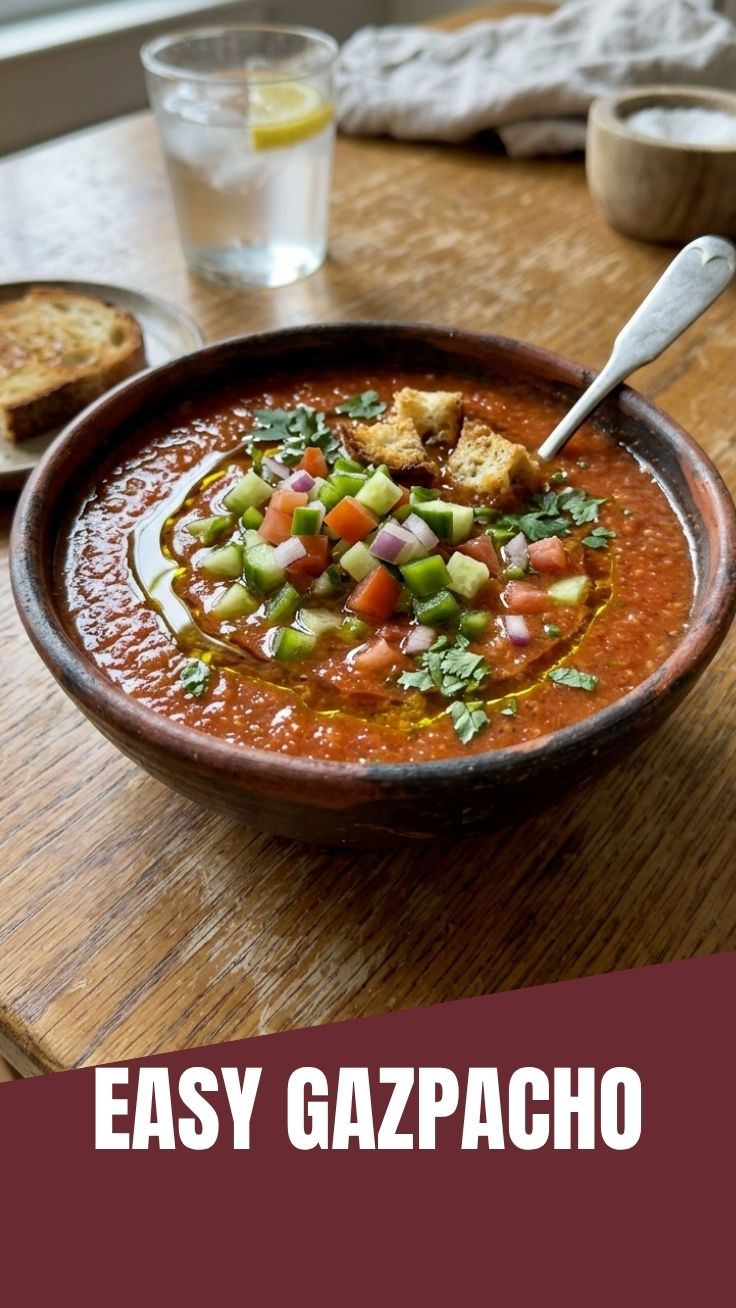
- Optional Garnishes: Diced cucumber, bell pepper, croutons, fresh parsley, a drizzle of olive oil.
Kitchen Tools:
- Blender or Food Processor: To achieve a smooth consistency.
- Large Bowl: For mixing and serving.
- Sharp Knife & Cutting Board: For prepping vegetables.
- Strainer or Sieve (optional): For an ultra-smooth gazpacho.
Prep Time & Cooking Schedule
- Prep Time: 20-25 minutes
- Blending Time: 5-7 minutes
- Chilling Time: Minimum 2 hours (ideally 4 hours or overnight)
This Gazpacho (Classic) is a champion of make-ahead meals! All the chopping and blending happen upfront, leaving you with a ready-to-serve dish after a good chill. The resting time is crucial for the flavors to meld and deepen, transforming fresh ingredients into a harmonious culinary symphony. Plan to prepare it in the morning for dinner, or the night before for a quick and delightful lunch the next day.
Step-by-Step Instructions
1. Prepare the Vegetables: Roughly chop the tomatoes, cucumber (peeled and seeded if desired), green bell pepper, red onion, and garlic. The exact sizing isn’t critical at this stage as everything will be blended.
2. Soak the Bread (Optional): If using, briefly soak the slice of day-old bread in a small amount of cold water. Squeeze out excess water before adding to the blender.
3. Blend the Core Ingredients: In a blender or food processor, combine the chopped tomatoes, cucumber, bell pepper, red onion, garlic, and soaked bread (if using).
4. Emulsify and Season: Add the extra virgin olive oil, red wine vinegar, cold water, salt, and pepper to the blender. Blend on high speed until completely smooth. For an extra velvety texture, you can pass the mixture through a fine-mesh strainer, pressing down on the solids to extract all the liquid. Discard any remaining pulp.
5. Achieve Spanish recipe Perfection: Taste the gazpacho and adjust seasoning as needed. You might want more salt, pepper, or vinegar to suit your preference. A perfectly balanced gazpacho should have a harmonious blend of sweet, tangy, and savory notes.
6. Chill Thoroughly: Transfer the blended gazpacho to a large bowl or pitcher. Cover and refrigerate for at least 2 hours, but preferably 4 hours or even overnight. This chilling time is essential for the flavors to fully develop and for the soup to reach its optimal refreshing temperature. Stir well before serving.
7. Serve: Ladle the chilled gazpacho into bowls. Garnish with a drizzle of extra virgin olive oil, finely diced vegetables, or croutons if desired. Serve immediately and enjoy!
Nutritional Benefits & Advantages
Gazpacho is a nutritional powerhouse! Packed with fresh vegetables like tomatoes, cucumbers, and bell peppers, it’s an excellent source of vitamins C and A, potassium, and antioxidants like lycopene (especially from ripe tomatoes). Its high water content makes it incredibly hydrating and low in calories, making it a perfect light meal or appetizer for weight management. The extra virgin olive oil provides healthy monounsaturated fats, contributing to heart health. It’s naturally vegan, gluten-free (if using gluten-free bread or omitting altogether), and dairy-free, catering to a wide range of dietary needs.
Tips, Variations & Cooking Advice
- Tomato Quality is Key: Use the ripest, freshest tomatoes you can find for the best flavor. Locally grown heirloom tomatoes can elevate your gazpacho significantly.
- Spicy Kick: Add a small piece of jalapeño or a pinch of cayenne pepper for a little heat.
- Herbaceous Notes: Fresh basil or oregano can be blended in for an aromatic twist.
- Green Gazpacho: For a vibrant variation, try swapping some tomatoes for green grapes, spinach, or even avocado.
- Bread vs. No Bread: While traditional, you can omit the bread for a lighter, thinner gazpacho.
- Texture Control: If you prefer a chunkier soup, pulse the vegetables in the blender rather than blending until completely smooth.
Common Mistakes to Avoid
- Using Under-ripe Tomatoes: This will result in a bland, watery gazpacho. Always opt for ripe, fragrant tomatoes.
- Not Chilling Long Enough: The flavors truly meld and deepen with proper chilling. Don’t rush this step!
- Over-seasoning with Vinegar: Add vinegar gradually and taste as you go. Too much can overpower the delicate vegetable flavors.
- Forgetting Good Quality Olive Oil: A cheap, bland olive oil can significantly detract from the overall taste. Invest in a good quality extra virgin olive oil.
- Blending Too Long (for chunky texture): If you prefer some texture, blend in short pulses rather than continuously.
Storage & Meal Prep Tips
Homemade gazpacho is excellent for meal prep! Store it in an airtight container in the refrigerator for up to 3-4 days. The flavors actually improve over time as they meld further. While it can be frozen for longer storage (up to 2 months), the texture might become slightly grainier upon thawing due to the high water content of the vegetables. If freezing, thaw overnight in the refrigerator and re-blend briefly if the texture is off, then taste and adjust seasonings. It does not require reheating; serve it chilled directly from the fridge.
Conclusion
Creating your own Gazpacho (Classic) is an incredibly rewarding culinary journey. This vibrant, healthy, and refreshing Spanish recipe is a testament to the power of simple, fresh ingredients expertly combined. It’s the perfect antidote to a hot summer day and a fantastic way to enjoy a burst of Mediterranean flavor. We encourage you to try this recipe and experience the difference homemade makes. Share your gazpacho creations with us in the comments below, or explore other refreshing summer recipes on our blog!
FAQs
1. Can I make gazpacho without a blender?
* While more labor-intensive, you can finely dice all the vegetables and then mash them with a potato masher, adding liquid ingredients and whisking until well combined. The texture will be much chunkier.
2. What if my gazpacho tastes bland?
* This is often due to under-ripe tomatoes. You can try adding a pinch of sugar to balance the acidity, a little more salt, or a dash more red wine vinegar or lemon juice to brighten the flavors.
3. Can I add other vegetables?
* Absolutely! Get creative. Yellow bell pepper, celery, even a small amount of carrot can add interesting flavor dimensions. Just be mindful not to overpower the core tomato flavor.
4. What’s the best way to thicken gazpacho without bread?
* You can use a small amount of mashed avocado for creaminess, or simply blend in a few more tomatoes or cucumber for a thicker consistency.
5. Is gazpacho traditionally served with ice?
* While some people add a few ice cubes to extra chilled gazpacho, it’s generally preferred to achieve its cold temperature through thorough refrigeration to avoid watering down the flavors.