The Secret to Restaurant-Quality Egg Drop Soup at Home
Ever wondered how your favorite Chinese restaurant achieves that silky, comforting, and utterly delightful Egg Drop Soup? What if we told you that replicating this beloved starter, a staple among Chinese Recipes, is not only achievable but surprisingly simple in your own kitchen? Preparing dishes like this at home offers unparalleled control over ingredients, allowing you to customize flavors, reduce sodium, and enjoy a fresh, wholesome meal free from preservatives. This comprehensive guide will walk you through every step to master this classic, transforming your kitchen into a hub of authentic Chinese flavors.
Ingredients & Kitchen Tools
Here’s what you’ll need to create your perfect Egg Drop Soup:
- Chicken Broth (4 cups): Low-sodium is preferred for better flavor control. You can substitute with vegetable broth for a vegetarian option.
- Eggs (3 large): Whisked lightly. These form the signature “egg drops.”
- Cornstarch (2 tablespoons): Mixed with 2 tablespoons cold water to create a slurry, thickening the soup.
- Soy Sauce (1 tablespoon): Low-sodium or regular, adds umami and depth. Tamari can be used for a gluten-free alternative.
- Sesame Oil (1 teaspoon): Toasted sesame oil for a nutty aroma and flavor.
- Fresh Ginger (1 inch piece): Grated or thinly sliced, for a subtle warmth and aroma.
- Green Onions (2 stalks): Chopped, for garnish and a mild oniony bite.
- White Pepper (1/4 teaspoon): Adds a traditional, subtle heat.
- Salt (to taste): Adjust based on your preferred saltiness and broth.
- Optional – White Vinegar (1 teaspoon): A splash at the end brightens the flavor.
- Large Pot or Dutch Oven: For simmering the soup.
- Whisk: For vigorous stirring when adding eggs.
- Small Bowl: For mixing the cornstarch slurry.
- Measuring Cups and Spoons: For accurate ingredient proportions.
Prep Time & Cooking Schedule
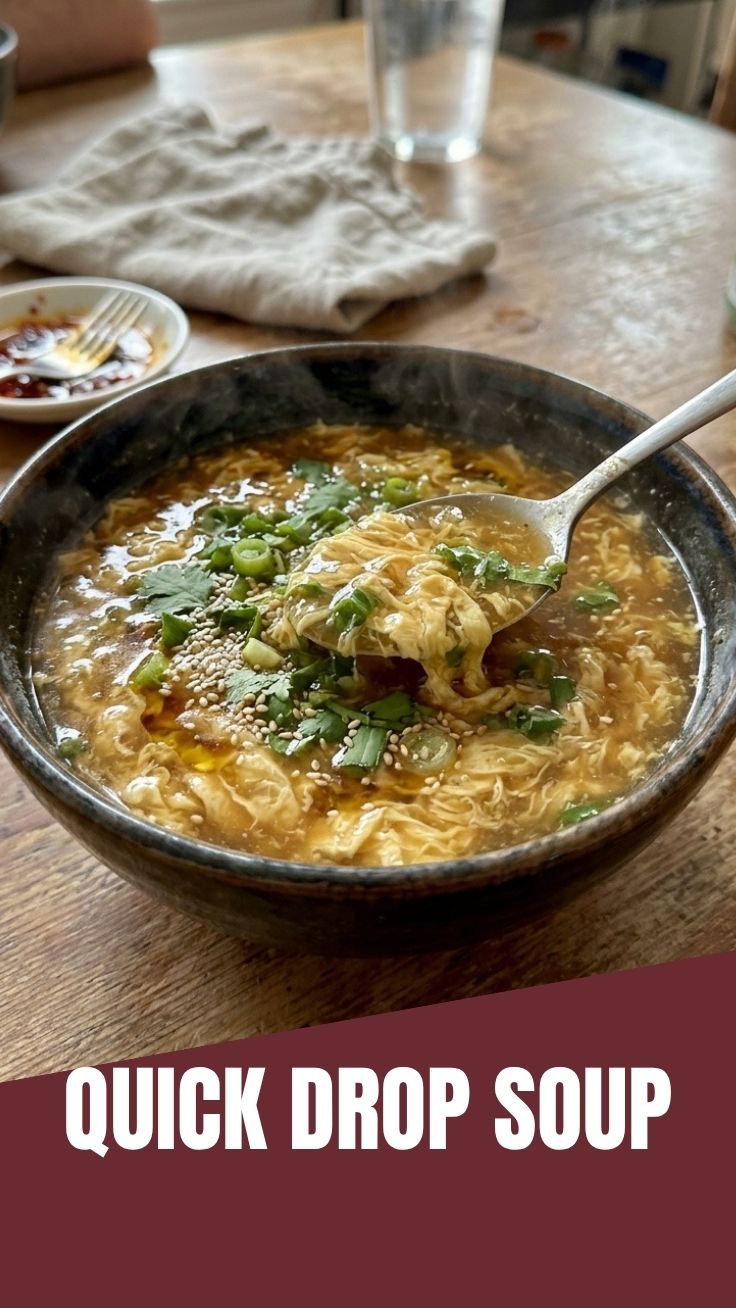
This recipe is designed for efficiency, perfect for a quick weeknight meal or a delightful appetizer.
- Prep Time: 10 minutes (chopping, whisking, mixing slurry)
- Cook Time: 15 minutes (simmering and finishing)
- Total Time: 25 minutes
This swift preparation time means you can have a warm, comforting bowl of soup ready in less than half an hour from start to finish. There’s no resting or marinating time required, making it an ideal choice for impromptu cravings or when you need a speedy, satisfying dish.
Step-by-Step Instructions
Follow these detailed steps to achieve a perfectly balanced and beautifully textured Egg Drop Soup, a true gem among Chinese Recipes:
1. Prepare the Broth Base: Pour the chicken broth into a large pot and bring it to a gentle simmer over medium heat. Add the grated ginger, soy sauce, and white pepper. Let it simmer for 5 minutes to allow the flavors to meld, ensuring the soup base is aromatic and ready.
2. Thicken the Soup: While the broth is simmering, re-whisk your cornstarch slurry (cornstarch mixed with cold water). Slowly pour the slurry into the simmering broth in a thin stream, stirring constantly with a whisk. Continue to stir until the soup thickens to your desired consistency, usually about 1-2 minutes. The soup should coat the back of a spoon lightly.
3. Add the Egg Streams: Crucial for perfect egg ribbons! Once the soup is simmering gently and thickened, remove the pot slightly from the direct heat or reduce the heat to low. While continuously stirring the soup in a circular motion with a whisk (creating a vortex), slowly drizzle in the lightly beaten eggs in a thin stream. The hot broth will immediately cook the eggs into delicate, feathery strands. Avoid pouring too quickly, as this can result in large clumps.
4. Finish and Serve: Stir in the sesame oil and any optional white vinegar. Taste and adjust seasoning with salt if needed. Garnish generously with chopped green onions. Serve immediately.
Nutritional Benefits & Advantages
Beyond its delicious taste, Egg Drop Soup offers several nutritional advantages. Eggs are an excellent source of high-quality protein, essential vitamins (B12, D), and minerals like selenium. Chicken broth provides collagen and amino acids, beneficial for gut health and joint support. When made at home, you can control sodium levels, making it a heart-healthy option. It’s a light yet satisfying dish, perfect for a starter or a light meal, and easily adaptable to various dietary needs.
Tips, Variations & Cooking Advice
- Flavor Boost: For extra umami, consider adding a dash of mushroom powder or a small amount of dashi granules to the broth.
- Vegetarian Version: Substitute chicken broth with vegetable broth and ensure your soy sauce is vegan-friendly.
- Spicy Kick: A pinch of red pepper flakes or a few drops of chili oil added at the end can elevate the spice profile.
- Texture Variations: For a richer soup, fold in a tablespoon of silken tofu towards the end. Some prefer a slightly thicker soup; simply add a bit more cornstarch slurry.
- Gluten-Free: Use tamari instead of soy sauce and ensure your broth is gluten-free.
- Protein Boost: Add shredded cooked chicken or small shrimp during the last few minutes of simmering for a more substantial meal.
Common Mistakes to Avoid
- Boiling the Eggs: Avoid adding eggs to a vigorously boiling soup. This will result in tough, rubbery egg clumps instead of delicate strands. Always reduce heat to a gentle simmer or off the direct heat.
- Not Stirring Vigorously: Lack of constant stirring when adding the egg can lead to large, irregular egg pieces rather than fine, wispy “drops.”
- Over-Thickening: Add the cornstarch slurry gradually. You can always add more, but it’s harder to thin out an overly thick soup.
- Too Much Sesame Oil: Sesame oil is potent; a little goes a long way. Too much can overpower the delicate flavors of the soup.
Storage & Meal Prep Tips
Egg Drop Soup is best enjoyed fresh, but leftovers can be stored.
- Refrigeration: Store cooled soup in an airtight container in the refrigerator for up to 2-3 days. The texture of the egg may soften slightly, but the flavor remains good.
- Freezing: Freezing is not recommended for Egg Drop Soup, as the egg texture can become rubbery and the soup may separate upon thawing.
- Reheating: Gently reheat the soup on the stovetop over low heat, stirring occasionally. Avoid bringing it to a rolling boil. You might need to add a splash of broth or water to adjust consistency if it thickens too much.
Conclusion
Mastering homemade Egg Drop Soup is a rewarding culinary achievement, opening the door to a world of authentic flavors right in your kitchen. This timeless classic, a beloved starter among Chinese Recipes, proves that comfort food can be both simple to prepare and exquisitely delicious. Armed with this guide, you can confidently create a silky, flavorful, and perfectly textured soup that rivals any restaurant. Don’t hesitate to whisk up a batch today! We’d love to hear about your experience – share your results and any personal twists in the comments below!
FAQs
Q1: Why are my egg drops clumpy instead of wispy?
A: This usually happens if the soup is boiling too vigorously when you add the eggs, or if you’re not stirring continuously as you drizzle them in. Ensure the soup is at a gentle simmer and stir consistently in one direction.
Q2: Can I make this soup ahead of time?
A: While best fresh, you can make the broth base ahead of time and store it. When ready to serve, reheat the broth, thicken it, and then add the eggs.
Q3: What can I use if I don’t have cornstarch?
A: While cornstarch is traditional for its clear finish, you can use arrowroot powder as a substitute. Use slightly less as it has more thickening power.
Q4: My soup is too thin/thick. How do I fix it?
A: If it’s too thin, mix a bit more cornstarch with cold water and slowly add it while stirring until desired thickness. If too thick, carefully stir in small amounts of hot chicken broth or water until it reaches your preferred consistency.
Q5: Can I add vegetables to my Egg Drop Soup?
A: Absolutely! Minced carrots, peas, or spinach can be added to the simmering broth a few minutes before adding the eggs for extra nutrition and color.