Crafting Café Du Monde Magic at Home: Your Ultimate Guide to Authentic New Orleans Beignets
Ever dreamt of biting into a warm, pillowy cloud dusted with powdered sugar, instantly transporting you to the bustling streets of the French Quarter? That iconic taste of New Orleans, specifically the famed Beignets (New Orleans Style), is surprisingly achievable in your very own kitchen. While a trip to Louisiana might not always be on the cards, mastering this classic pastry brings a slice of that unique culinary heritage right to your table. Not only will you impress your friends and family with your baking prowess, but creating this delectable treat from scratch allows for customisation and the sheer joy of hands-on cooking. Get ready to embark on a sweet adventure as we guide you through perfecting this timeless beignet recipe.
Ingredients & Kitchen Tools
To truly capture the essence of these delightful doughnuts, gather the following:
- Active Dry Yeast (2 ¼ teaspoons): The leavening agent that gives beignets their signature airy texture.
- Warm Water (½ cup, 105-115°F): Activates the yeast. Crucial for proper proofing.
- Granulated Sugar (¼ cup + 1 tablespoon): Sweetens the dough and feeds the yeast.
- Evaporated Milk (1 cup): Adds richness and a tender crumb. Whole milk can be a good substitute for a slightly different texture.
- Large Egg (1): Binds the ingredients and adds structure.
- All-Purpose Flour (3 ¾ cups, sifted): Provides the main structure. Sifting ensures a lighter dough.
- Salt (1 teaspoon): Balances sweetness and enhances flavor.
- Vegetable Shortening (2 tablespoons, melted): Adds tenderness and prevents sticking. Unsalted butter can be used for a richer flavor profile.
- Vegetable Oil or Canola Oil (6-8 cups): For deep frying. Choose oils with a high smoke point.
- Powdered Sugar (for dusting): The iconic finishing touch.
- Stand Mixer with Dough Hook (optional but recommended): For effortless kneading. A large mixing bowl and your hands work perfectly too.
- Large Heavy-Bottomed Pot or Dutch Oven: Essential for deep frying safely and maintaining consistent oil temperature.
- Candy/Deep-Fry Thermometer: Critical for accurate oil temperature control.
- Slotted Spoon or Spider Skimmer: For safely removing fried beignets.
- Rolling Pin: For rolling out the dough.
- Parchment Paper: Prevents sticking during proofing.
- Sharp Knife or Pizza Cutter: For cutting precise squares of dough.
- Wire Rack: For draining excess oil.
- Plate lined with Paper Towels: Another option for draining.
- Fine-Mesh Sieve: For dusting with powdered sugar.
Prep Time & Cooking Schedule
This recipe requires a bit of planning, mainly due to crucial resting times that develop the dough’s flavor and texture.
- Prep Time: 30 minutes
- Dough Resting/Proofing Time (First Rise): 1-2 hours (until doubled in size)
- Dough Chilling Time (Optional but Recommended): 4 hours to overnight (for easier handling and deeper flavor)
- Second Proofing Time (After cutting): 30 minutes
- Cook Time: 15-20 minutes (frying in batches)
- Total Time (Excluding Optional Chill): Approximately 2.5 – 3 hours
- Total Time (Including Optional Chill): 6.5 hours to overnight
Plan to start this recipe several hours before you intend to serve, or even the day before if you opt for the overnight chill, which significantly enhances the flavor and makes the dough much easier to handle.
Step-by-Step Instructions
1. Activate the Yeast: In a large mixing bowl (or stand mixer bowl), combine the warm water, 1 tablespoon of granulated sugar, and yeast. Stir gently and let sit for 5-10 minutes until foamy. This confirms your yeast is active.
2. Combine Wet Ingredients: Add the evaporated milk, remaining ¼ cup granulated sugar, and egg to the yeast mixture. Whisk until well combined.
3. Add Dry Ingredients: Gradually add the sifted flour and salt to the wet ingredients. If using a stand mixer, attach the dough hook and knead on low speed. If kneading by hand, mix with a spoon until a shaggy dough forms, then turn onto a lightly floured surface.
4. Knead the Dough: Add the melted shortening. Knead for 8-10 minutes in the stand mixer (or 10-15 minutes by hand) until the dough is smooth, elastic, and no longer sticky.
5. First Rise: Transfer the dough to a lightly oiled bowl, turning once to coat. Cover with plastic wrap or a clean kitchen towel and let rise in a warm place for 1-2 hours, or until doubled in size.
6. Chill (Optional but Recommended): Once risen, gently punch down the dough. You can now use it, or for best results, cover tightly and refrigerate for at least 4 hours or overnight. Chilling makes the dough firmer and easier to roll, and deepens the flavor of your Beignets (New Orleans Style).
7. Roll and Cut: On a lightly floured surface, roll out the chilled dough to about ¼ inch thickness. Using a sharp knife or pizza cutter, cut the dough into 2-inch squares.
8. Second Proof: Arrange the cut squares on a parchment-lined baking sheet, leaving some space between them. Cover loosely with plastic wrap and let rise for another 30 minutes.
9. Prepare for Frying: Heat 6-8 cups of vegetable oil in a large heavy-bottomed pot or Dutch oven to 350°F (175°C). Use a candy/deep-fry thermometer for accuracy.
10. Fry the Beignets: Carefully drop 3-4 beignet squares into the hot oil (do not overcrowd the pot). Fry for 1-2 minutes per side, or until golden brown and puffed.
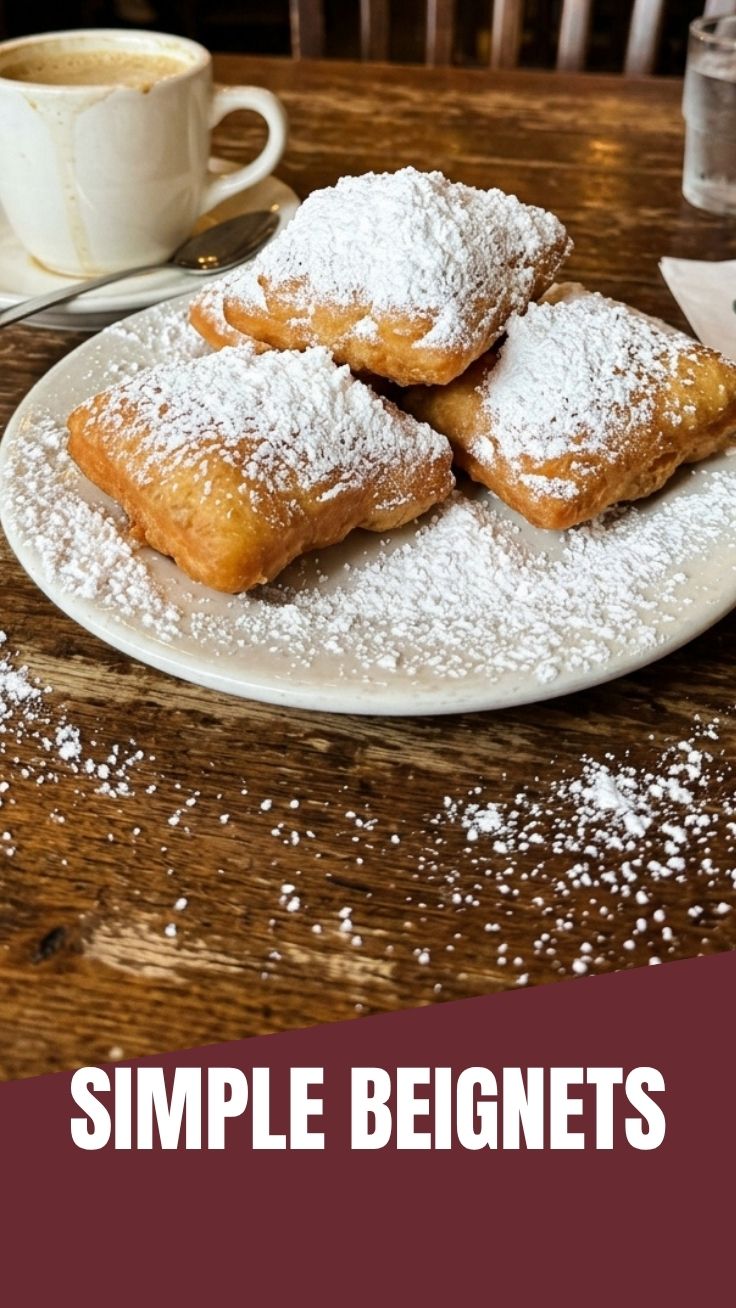
11. Drain and Powder: Using a slotted spoon or spider skimmer, remove the fried beignets and place them on a wire rack set over paper towels to drain excess oil. While still warm, liberally dust with powdered sugar using a fine-mesh sieve. Serve immediately as part of your delicious beignet recipe!
Nutritional Benefits & Advantages
While Beignets (New Orleans Style) are undoubtedly a treat, they offer some unique advantages. Making them at home allows you to control the quality of ingredients, opting for non-GMO oils or organic flours if desired. The evaporated milk provides a good source of calcium, and while fried, the quick cooking time means less oil absorption than often assumed, especially when fried at the correct temperature. Enjoying these in moderation as part of a balanced diet provides a comforting and satisfying experience.
Tips, Variations & Cooking Advice
- Flavor Boost: Add a teaspoon of vanilla extract or a pinch of nutmeg to the dough for extra depth of flavor.
- Gluten-Free Beignets: Experiment with a high-quality 1-to-1 gluten-free baking flour blend. You might need to adjust the liquid slightly.
- Dairy-Free: Substitute the evaporated milk with an unsweetened dairy-free milk alternative (like almond or oat milk) and use dairy-free butter or shortening.
- Frying Temperature is Key: Too low, and your beignets will be greasy; too high, and they’ll burn outside before cooking inside. 350°F is your sweet spot.
- Don’t Over-Flour: When rolling, use just enough flour to prevent sticking. Too much extra flour can make the beignets tough.
- Serve Immediately: Beignets are best enjoyed straight from the fryer when they’re hot, fluffy, and covered in powdered sugar.
Common Mistakes to Avoid
- Incorrect Oil Temperature: The most crucial error. Always use a thermometer to ensure 350°F (175°C).
- Overcrowding the Pot: Too many beignets at once will drop the oil temperature significantly, resulting in greasy, undercooked pastries. Fry in small batches.
- Not Activating Yeast: If your yeast doesn’t foam, it’s likely dead. Start over with fresh yeast and warm (not hot!) water.
- Over-Kneading: While kneading is important, over-kneading can develop too much gluten, leading to tough beignets. Stop when the dough is smooth and elastic.
- Skipping the Draining Step: Don’t let your delicious creations sit in oil. A wire rack allows air circulation and proper draining.
Storage & Meal Prep Tips
While beignets are undeniably best fresh, sometimes you have leftovers or want to prepare ahead.
- Dough Preparation: The dough can be prepared up to the chilling stage (step 6) and stored in the refrigerator for up to 2 days. This is an excellent meal prep option for fresh beignets on demand.
- Cooked Beignets: Store leftover fully cooked and powdered beignets in an airtight container at room temperature for up to 1 day.
- Reheating: To revive cooled beignets, you can gently warm them in a microwave for 10-15 seconds, or in a toaster oven at a low temperature (around 250°F/120°C) for a few minutes. Re-dust with fresh powdered sugar after reheating for the best presentation and flavor.
Conclusion
There’s something uniquely satisfying about recreating a classic like Beignets (New Orleans Style) in your own home. The aroma of yeast and frying dough, the simple joy of dusting with powdered sugar, and that first sweet, tender bite – it’s an experience that transcends mere sustenance. This comprehensive guide has equipped you with all the knowledge to master this delightful beignet recipe, ensuring perfectly puffed, golden treats every time. So go ahead, don your apron, gather your ingredients, and invite the spirit of New Orleans into your kitchen. We’d love to hear about your beignet-making adventures in the comments below!
FAQs
Q1: Can I make the dough without a stand mixer?
A1: Absolutely! While a stand mixer simplifies the kneading process, you can easily knead the dough by hand. It will just require a bit more effort and about 10-15 minutes of continuous kneading.
Q2: My beignets aren’t puffing up – what went wrong?
A2: Common culprits include inactive yeast (ensure it foams during activation), insufficient proofing time for the dough to rise adequately, or oil temperature that’s too low, leading to dense rather than airy beignets.
Q3: What if I don’t have evaporated milk?
A3: You can substitute an equal amount of whole milk. The resulting beignets might have a slightly less rich flavor and tender texture, but they will still be delicious.
Q4: How can I prevent my beignets from being too greasy?
A4: The most critical factor is maintaining the correct oil temperature of 350°F (175°C). Use a thermometer. Also, avoid overcrowding the pot, which lowers the oil temperature, and ensure you drain them on a wire rack after frying.
Q5: Can I freeze the uncooked dough?
A5: While technically possible, freezing raw yeast dough can sometimes affect the yeast’s activity and the final texture. For best results, it’s recommended to prepare the dough up to the chilling stage and refrigerate it for up to 2 days, or fry the beignets and reheat them later.