Unlock Savory Perfection: Your Guide to the Ultimate Herb-Roasted Turkey Tenderloin
Ever wondered how to transform a simple cut of meat into a culinary masterpiece that’s both elegant and effortlessly delicious? Imagine serving a dish that impresses without demanding hours of your precious time. Preparing a succulent Turkey Tenderloin at home offers undeniable value—it’s a healthier, more controlled, and often more flavorful alternative to store-bought options. This recipe isn’t just about cooking; it’s about crafting an experience, perfect for a cozy weeknight dinner or even as a lighter, yet equally satisfying, option for your Thanksgiving Turkey Recipes search. Let’s dive in and unlock the secrets to a perfect turkey tenderloin, ensuring every bite is a testament to your kitchen prowess.
Ingredients & Kitchen Tools
Gathering your mise en place is the first step to culinary success. Here’s what you’ll need:
Ingredients:
- 1.5-2 lb Turkey Tenderloin: The star of our show! Lean, flavorful, and quick-cooking.
- 2 tbsp Olive Oil: For searing and flavor, helps create a beautiful crust.
- 2 cloves Garlic, minced: Adds aromatic depth. (Substitution: 1/2 tsp garlic powder for convenience).
- 1 tbsp Fresh Rosemary, chopped: Earthy and fragrant, a classic pairing with turkey. (Substitution: 1 tsp dried rosemary).
- 1 tbsp Fresh Thyme, chopped: Complements rosemary with its delicate, minty notes. (Substitution: 1 tsp dried thyme).
- 1 tsp Smoked Paprika: Adds a subtle smoky sweetness and beautiful color.
- 1/2 tsp Onion Powder: Enhances savory notes.
- Salt & Freshly Ground Black Pepper, to taste: Essential for seasoning.
- 1/2 cup Chicken Broth (low sodium): For deglazing and keeping the turkey moist.
- 1 tbsp Lemon Juice (optional): A bright finish to cut through richness.
- Fresh Parsley, chopped (for garnish): Adds a pop of color and freshness.
Kitchen Tools:
- Large Oven-Safe Skillet (cast iron or stainless steel): Ideal for searing on the stovetop and finishing in the oven.
- Cutting Board: For prepping ingredients safely.
- Sharp Knife: For chopping herbs and garlic.
- Small Bowl: For mixing spices and herbs.
- Meat Thermometer: Crucial for ensuring perfect doneness and food safety.
- Tongs: For handling the tenderloin with ease.
- Aluminum Foil: For resting the meat.
Prep Time & Cooking Schedule
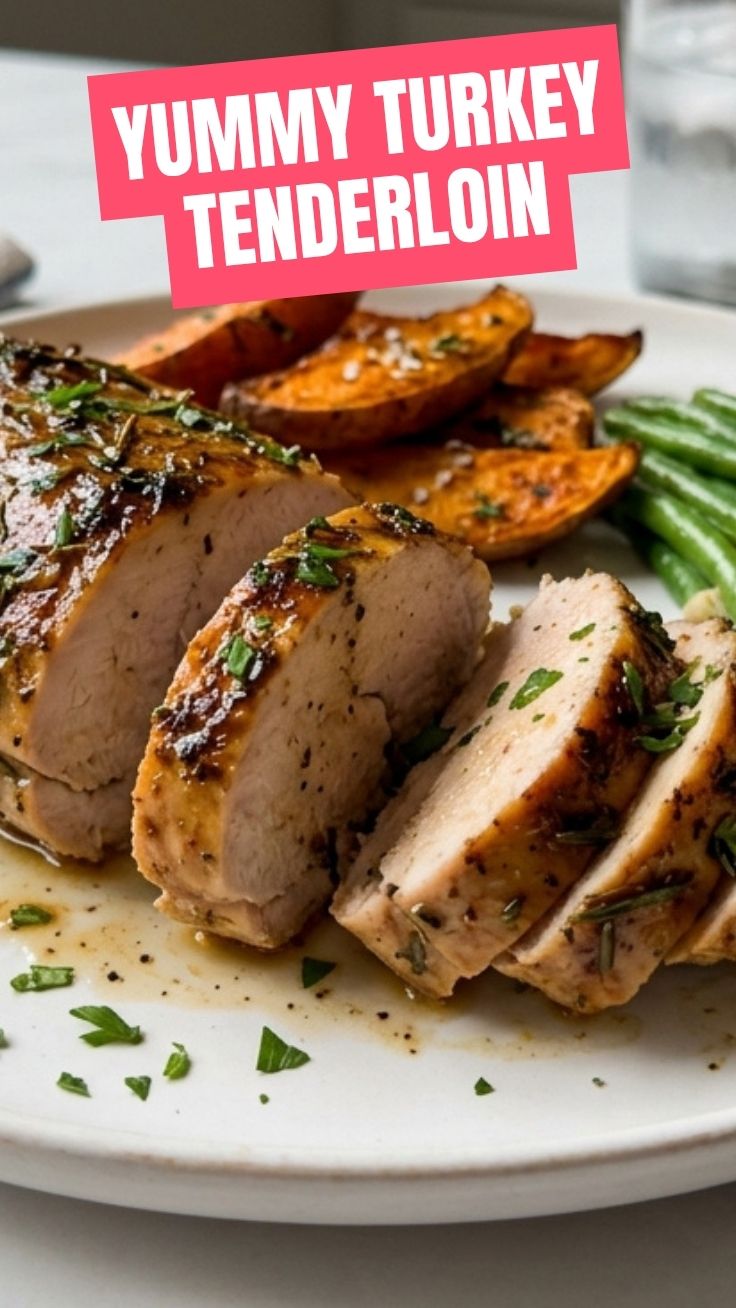
Planning your cooking timeline is key for a stress-free meal.
- Prep Time: 15 minutes (Includes trimming, seasoning, and chopping herbs).
- Cook Time: 20-25 minutes (Searing: 5-7 minutes; Roasting: 15-18 minutes).
- Resting Time: 10 minutes (Crucial for juicy results).
- Total Time: Approximately 45-50 minutes.
This recipe is designed for efficiency, allowing you to prepare a gourmet-quality meal even on a busy weeknight. Remember to preheat your oven while you’re prepping to save time.
Step-by-Step Instructions
Let’s get cooking! Follow these steps for a perfectly cooked Turkey Tenderloin.
1. Prepare the Turkey: Pat the turkey tenderloin dry with paper towels. This helps achieve a better sear. Trim any visible silver skin or excess fat.
2. Season the Turkey: In a small bowl, combine minced garlic, fresh rosemary, fresh thyme, smoked paprika, onion powder, salt, and black pepper. Drizzle the turkey tenderloin all over with olive oil, then rub the herb mixture generously onto all sides of the meat. Allow it to sit at room temperature for 10-15 minutes while you preheat your oven.
3. Preheat Oven & Skillet: Preheat your oven to 400°F (200°C). Place your oven-safe skillet on medium-high heat on the stovetop. Once hot, add a tablespoon of olive oil.
4. Sear the Tenderloin: Carefully place the seasoned Turkey Tenderloin in the hot skillet. Sear for 2-3 minutes per side, turning with tongs, until a golden-brown crust forms on all surfaces. This searing locks in juices and builds flavor.
5. Roast in the Oven: Transfer the skillet to the preheated oven. Roast for 15-18 minutes, or until an instant-read meat thermometer inserted into the thickest part reads 160°F (71°C). Practical Tip: Don’t overcook! The temperature will rise to 165°F (74°C) during resting.
6. Rest the Meat: Carefully remove the skillet from the oven. Transfer the turkey tenderloin to a cutting board, tent loosely with aluminum foil, and let it rest for at least 10 minutes. This resting period is critical for the juices to redistribute, ensuring a tender and moist final product, much like the precision you’d use for your best Thanksgiving Turkey Recipes.
7. Make the Pan Sauce (Optional): While the turkey rests, return the skillet to the stovetop over medium heat. Add chicken broth to deglaze, scraping up any browned bits from the bottom of the pan. Stir in lemon juice, if using. Simmer for 2-3 minutes until slightly reduced.
8. Slice and Serve: Slice the rested turkey tenderloin against the grain into thick medallions. Drizzle with the pan sauce, garnish with fresh parsley, and serve immediately.
Nutritional Benefits & Advantages
Turkey tenderloin is a powerhouse of lean protein, making it an excellent choice for a healthy diet. It’s low in saturated fat and cholesterol, while being rich in essential nutrients like B vitamins (B3, B6, B12), selenium, and zinc. These nutrients support energy metabolism, nerve function, immune health, and antioxidant defense. Opting for turkey tenderloin is a smart way to enjoy a flavorful meal without compromising your health goals.
Tips, Variations & Cooking Advice
- Flavor Variations: Experiment with different herb blends! Try Italian seasoning, a smoky chipotle-lime rub, or a blend of sage and marjoram.
- Ingredient Swaps: No fresh herbs? Use 1 teaspoon of dried herbs for every tablespoon of fresh.
- Alternative Cooking Methods: This tenderloin can also be cooked entirely on the stovetop using a lower heat and covered skillet for about 20-25 minutes, or on a grill for 20-25 minutes over medium heat, rotating frequently.
- Dietary Adaptations: This recipe is naturally gluten-free and dairy-free. Always double-check broth labels for hidden gluten if managing severe allergies.
- Temperature Control: A good meat thermometer is your best friend. Don’t guess; measure!
Common Mistakes to Avoid
- Overcooking: The most common mistake! Overcooked turkey is dry and bland. Always use a meat thermometer and aim for 160°F (71°C) before resting.
- Not Resting the Meat: Skipping the rest leads to juices running out, resulting in a drier turkey. Always allow at least 10 minutes for resting.
- Not Patting Dry: Moisture on the surface prevents a good sear, leading to a less flavorful crust.
- Crowding the Pan: If searing multiple tenderloins, ensure they have enough space in the skillet to brown properly. Overcrowding steams the meat instead of searing it.
Storage & Meal Prep Tips
- Refrigeration: Store leftover turkey tenderloin in an airtight container in the refrigerator for up to 3-4 days.
- Freezing: Slice the cooked tenderloin, then freeze in a single layer on a baking sheet before transferring to a freezer-safe bag or container for up to 2-3 months. Thaw overnight in the refrigerator.
- Reheating: For best results, gently reheat sliced turkey in a skillet with a splash of chicken broth over low heat until warmed through to maintain moisture. Avoid microwaving on high, which can dry it out.
- Meal Prep Use: Leftover turkey tenderloin is fantastic for salads, sandwiches, wraps, or added to pasta dishes.
Conclusion
Mastering the art of the herb-roasted Turkey Tenderloin is simpler than you think and incredibly rewarding. With just a few quality ingredients and a clear cooking method, you can achieve a tender, flavorful, and incredibly versatile dish that’s perfect for any occasion. This recipe proves that healthy eating doesn’t have to sacrifice flavor, offering a fantastic alternative to heavier mains, perfect for those seeking delicious Thanksgiving Turkey Recipes without the fuss of a whole bird. Give it a try, snap a picture, and share your culinary success with us! We can’t wait to see your delicious creations.
FAQs
Q1: Can I use different herbs?
A1: Absolutely! Feel free to customize the herb blend. Sage, marjoram, oregano, or even a touch of thyme-lemon zest can work beautifully. Adjust quantities to your preference.
Q2: What if I don’t have an oven-safe skillet?
A2: You can sear the turkey tenderloin in any skillet, then transfer it to an oven-safe baking dish to finish cooking in the oven.
Q3: How do I know when the turkey tenderloin is done without a thermometer?
A3: While a thermometer is highly recommended for accuracy, if you don’t have one, cut into the thickest part. The juices should run clear, and the meat should be opaque but still moist. However, a thermometer is the best way to prevent over- or under-cooking.
Q4: Can I marinate the turkey tenderloin overnight?
A4: Yes, for an even deeper flavor, you can rub the tenderloin with the herb mixture, cover it, and refrigerate it overnight (8-12 hours). Bring it to room temperature for 30 minutes before cooking.
Q5: What side dishes pair well with this?
A5: This turkey tenderloin is incredibly versatile. It pairs wonderfully with roasted vegetables (like asparagus or Brussels sprouts), mashed potatoes, quinoa, a light green salad, or even a flavorful rice pilaf.