Unlock Restaurant-Quality Teriyaki Salmon at Home: Your Ultimate Guide!
Are you ready to elevate your weeknight meals with a dish that’s both supremely flavorful and surprisingly simple to prepare? Imagine a perfectly flaky salmon, glazed with a rich, savory-sweet teriyaki sauce, all made right in your own kitchen. This guide will walk you through creating an unforgettable Teriyaki Salmon, transforming a seemingly complex meal into an achievable home-cooked masterpiece. We’ll dive deep into techniques that guarantee succulence and incredible taste, proving that delicious and nutritious easy salmon recipes are well within your reach. Preparing this at home not only saves you money but also ensures you’re using fresh, high-quality ingredients tailored to your preferences.
Ingredients & Kitchen Tools
To embark on this culinary adventure, gather the following:
- Salmon Fillets (4, 6 oz each, skin-on or off): Opt for wild-caught for superior flavor and nutritional profile, or responsibly farmed. Skin-on helps keep the fish moist during cooking.
- Soy Sauce (1/2 cup, low-sodium): Provides the foundational umami and saltiness for the teriyaki. Low-sodium helps control overall salt content.
- Mirin (1/4 cup): A Japanese sweet rice wine crucial for authentic teriyaki flavor, adding subtle sweetness and gloss.
- Sake (2 tbsp, optional): Another Japanese rice wine, enhances depth of flavor. If unavailable, an extra tablespoon of mirin or chicken broth can substitute.
- Brown Sugar (2 tbsp, packed): Balances the savory notes with a caramel-like sweetness.
- Fresh Ginger (1 tbsp, grated): Adds a pungent, warming spice and fragrant aroma.
- Garlic (2 cloves, minced): Essential aromatic, providing a savory depth.
- Cornstarch (1 tsp, mixed with 1 tbsp cold water): Creates a slurry to thicken the teriyaki glaze.
- Sesame Oil (1 tsp): A finishing oil for its distinct nutty aroma, added at the end.
- Green Onions (2, thinly sliced): For garnish, adding a fresh, mild oniony bite.
- Sesame Seeds (1 tbsp): For garnish, adding a nutty texture and visual appeal.
Kitchen Tools:
- Shallow Dish or Ziploc Bag: For marinating the salmon.
- Small Saucepan: To prepare the teriyaki glaze.
- Non-stick Skillet, Cast Iron Pan, or Baking Sheet: For cooking the salmon.
- Spatula: For flipping the salmon.
- Meat Thermometer (optional but recommended): For precise doneness.
Prep Time & Cooking Schedule
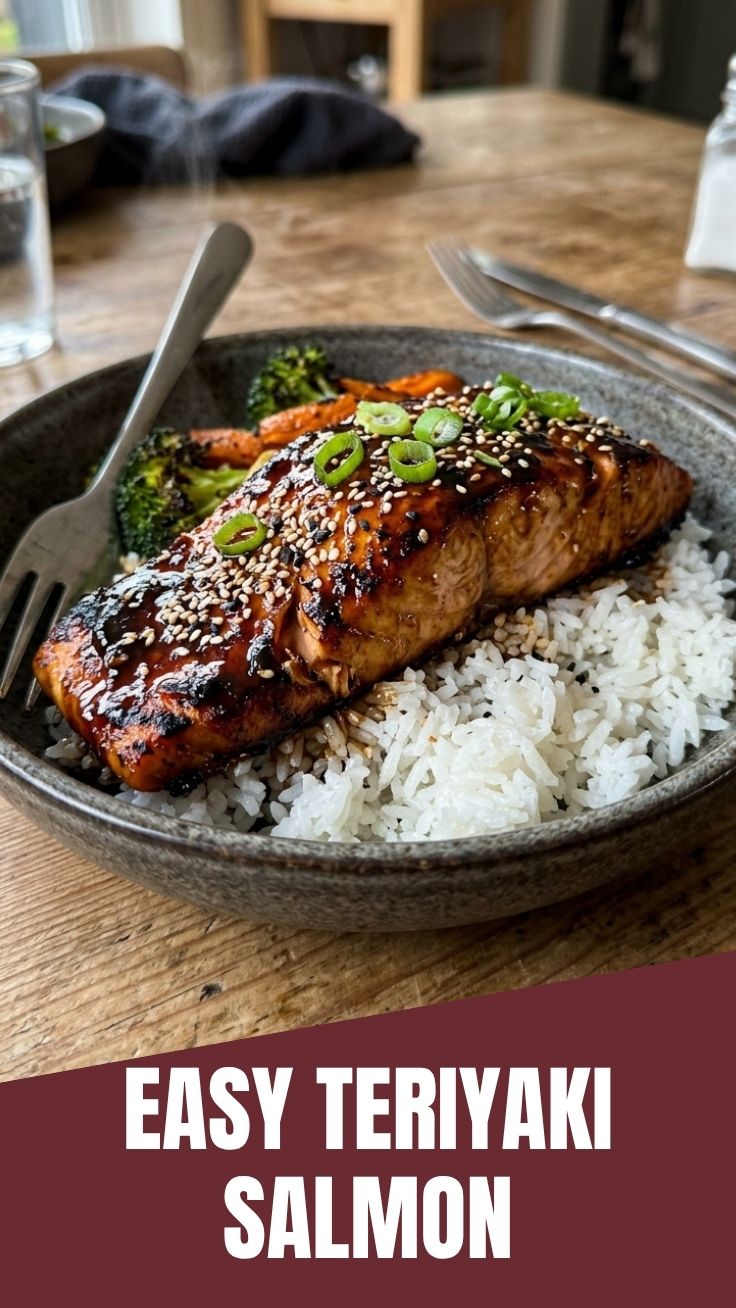
This recipe is designed for efficiency!
- Prep Time: 15 minutes (includes making the glaze and preparing salmon).
- Marinating Time: 15-30 minutes (while optional, even a short marinade significantly enhances flavor and tenderizes the fish. Do not marinate for more than 1 hour, as the acidity can “cook” the fish).
- Cook Time: 10-15 minutes (depending on thickness and desired doneness).
- Resting Time: 5 minutes (allows juices to redistribute for a moister fillet).
This schedule makes it perfect for a weeknight dinner, ensuring a gourmet meal without hours in the kitchen. Plan to start your marinade while you prepare any side dishes like rice or steamed vegetables.
Step-by-Step Instructions
1. Prepare the Teriyaki Glaze: In a small saucepan, combine soy sauce, mirin, sake (if using), brown sugar, grated ginger, and minced garlic. Bring to a gentle simmer over medium heat, stirring until the sugar dissolves. In a separate small bowl, whisk the cornstarch with 1 tbsp cold water to create a slurry. Gradually whisk the slurry into the simmering sauce. Continue to cook and stir until the sauce thickens to a glaze consistency, about 2-3 minutes. Remove from heat and stir in the sesame oil.
2. Marinate the Salmon: Pat the salmon fillets dry with paper towels. Place them in a shallow dish or a Ziploc bag. Reserve about 1/4 cup of the teriyaki glaze for serving. Pour the remaining glaze over the salmon, ensuring all pieces are well coated. Marinate for 15-30 minutes at room temperature, or up to 1 hour in the refrigerator.
3. Cook the Salmon: Heat a non-stick skillet or cast iron pan over medium-high heat. If using skin-on salmon, cook skin-side down first. Place the salmon fillets in the hot pan, searing for 4-5 minutes until the skin is crispy and golden. For Teriyaki Salmon to be perfectly cooked, you want a beautiful sear.
4. Finish Cooking: Carefully flip the salmon. Spoon some of the reserved glaze over each fillet. Continue cooking for another 5-7 minutes, or until the internal temperature reaches 145°F (63°C) at its thickest part. The fish should flake easily with a fork. This method ensures delicious and easy salmon recipes every time.
5. Rest and Serve: Transfer the cooked salmon to a plate and let it rest for 5 minutes. Garnish with thinly sliced green onions and sesame seeds. Serve with the reserved teriyaki glaze.
Nutritional Benefits & Advantages
Salmon is a nutritional powerhouse! It’s an excellent source of lean protein, crucial for muscle repair and satiety. Rich in Omega-3 fatty acids (EPA and DHA), it supports heart health, brain function, and reduces inflammation. This dish also boasts beneficial antioxidants from ginger and garlic. Compared to red meat, salmon offers a lighter, yet equally satisfying protein option, making it an ideal choice for a balanced diet.
Tips, Variations, & Cooking Advice
- Flavor Variations: For a spicier kick, add a pinch of red pepper flakes to the glaze. A squeeze of fresh lime or orange juice at the end brightens the flavor.
- Ingredient Swaps: No mirin or sake? Apple cider vinegar (1 tbsp per Mirin/Sake) with a pinch of sugar can offer a similar tang, though the flavor profile will differ slightly.
- Alternative Cooking Methods:
* Baking: Preheat oven to 400°F (200°C). Place marinated salmon on a parchment-lined baking sheet. Bake for 12-18 minutes, brushing with extra glaze halfway through, until cooked through.
* Grilling: Preheat grill to medium-high heat. Place salmon skin-side down on oiled grates. Grill for 4-6 minutes, then flip and grill for another 3-5 minutes, brushing with glaze.
- Dietary Adaptations:
* Gluten-Free: Use tamari instead of soy sauce. Ensure all other ingredients (like cornstarch) are certified gluten-free.
* Low-Sodium: Stick to low-sodium soy sauce and consider reducing the amount slightly.
* Sugar-Free: Use a sugar substitute (like erythritol or stevia) that is suitable for cooking, though the glaze’s texture might vary slightly.
Common Mistakes to Avoid
- Over-Marinating: Salmon is delicate. Marinating for too long (over an hour) can cause the fish to become mushy due to the acidity in the marinade.
- Overcooking: This is the most common mistake with salmon! Overcooked salmon is dry and tough. Use a meat thermometer (145°F/63°C) or cook until it just flakes easily.
- Crowding the Pan: If cooking multiple fillets, ensure there’s enough space between them. Crowding lowers the pan temperature, leading to steaming instead of searing, and a less crispy exterior. Cook in batches if necessary.
- Not Patting Dry: Excess moisture on the salmon surface prevents a good sear. Always pat the fillets thoroughly dry before marinating or cooking.
Storage & Meal Prep Tips
- Refrigeration: Leftover Teriyaki Salmon can be stored in an airtight container in the refrigerator for up to 3 days.
- Freezing: Cooked salmon generally doesn’t freeze as well as raw, as it can alter the texture. However, if you must, ensure it’s in an airtight freezer-safe container for up to 1 month. Thaw in the refrigerator overnight.
- Reheating: Gently reheat in a microwave on low power, or in a covered pan over low heat with a splash of water or broth to prevent drying out. You can also flake the cold salmon into salads or wraps.
- Meal Prep: Prep the teriyaki glaze ahead of time and store it in the fridge for up to a week. You can then marinate and cook the salmon on demand. This makes preparing easy salmon recipes even more convenient.
Conclusion
Mastering this Teriyaki Salmon recipe truly elevates your home cooking repertoire, proving that restaurant-quality dishes are entirely achievable in your own kitchen. With its perfect balance of sweet and savory, and the health benefits of omega-rich salmon, it’s a dish that caters to both your palate and well-being. We hope you feel empowered to create this delightful meal and discover the joy of preparing truly easy salmon recipes. Don’t hesitate to experiment with the variations and make it your own! Share your culinary creations in the comments below – we’d love to see them!
FAQs
Q1: Can I make the teriyaki sauce from scratch instead of buying store-bought?
A1: Absolutely! Our recipe provides simple instructions for a homemade teriyaki glaze that is far superior in flavor and allows you to control the ingredients.
Q2: My salmon always sticks to the pan. How can I prevent this?
A2: Ensure your pan is hot enough before adding the fish and use a good quality non-stick pan or a well-seasoned cast iron skillet. A little oil or cooking spray can also help, and most importantly, don’t try to flip it until a crust has formed and it naturally releases from the pan.
Q3: What are good side dishes to serve with Teriyaki Salmon?
A3: Steamed jasmine rice, brown rice, quinoa, sautéed bok choy, roasted asparagus, or a simple cucumber salad all pair wonderfully with the rich flavors of teriyaki salmon.
Q4: How do I know when the salmon is perfectly cooked?
A4: The best way is to use an instant-read meat thermometer, aiming for an internal temperature of 145°F (63°C) in the thickest part. Visually, the salmon should be opaque throughout and flake easily with a fork, but still appear moist. A little translucence in the very center is signs of optimal juiciness.