Unlock the Secret to Perfect Fried Rice (Classic) at Home: A Culinary Journey
Ever wondered how your favorite takeout spot achieves that magical, perfectly textured fried rice? The good news is, you don’t need a wok burner hotter than the sun to recreate that deliciousness in your own kitchen! Mastering a truly delightful Fried Rice (Classic) from scratch isn’t just about saving money; it’s about control over ingredients, personalized flavors, and the immense satisfaction of creating a beloved dish. In this comprehensive guide, we’ll demystify the process, revealing the secrets to achieving restaurant-quality homemade fried rice every single time. Get ready to impress your taste buds and your dinner guests!
Ingredients & Kitchen Tools
Crafting the perfect fried rice requires a thoughtful selection of fresh ingredients and a few essential kitchen tools. Here’s what you’ll need to elevate your culinary experience:
- Cooked Rice (cold, day-old is best): 3 cups. Crucial for non-sticky, airy fried rice. Use long-grain white rice like jasmine or basmati.
- Eggs: 2 large. Adds richness, protein, and binds ingredients.
- Sesame Oil: 1 tbsp. For authentic flavor and aroma.
- Vegetable Oil (or other neutral oil): 2 tbsp, divided. High smoke point for searing.
- Garlic: 3 cloves, minced. Foundation of flavor.
- Ginger: 1 tbsp piece, grated. Adds a zesty warmth.
- Carrots: 1 small, finely diced. For sweetness and color.
- Green Onions (scallions): 4, thinly sliced (white and green parts separated). Garnish and aromatic.
- Frozen Peas: 1/2 cup. Adds a pop of sweetness and color.
- Soy Sauce (low sodium): 2-3 tbsp, taste to adjust. Essential umami and seasoning.
- Oyster Sauce (optional): 1 tbsp. Adds depth and a subtle sweetness. Substitute with vegetarian oyster sauce or a pinch of sugar.
- White Pepper: 1/2 tsp. A classic seasoning for fried rice.
- Wok or Large Skillet: Essential for even heat distribution and tossing.
- Spatula: For stirring and scraping.
- Measuring Spoons & Cups: For accurate ingredient quantities.
- Cutting Board & Knife: For prepping vegetables.
Prep Time & Cooking Schedule
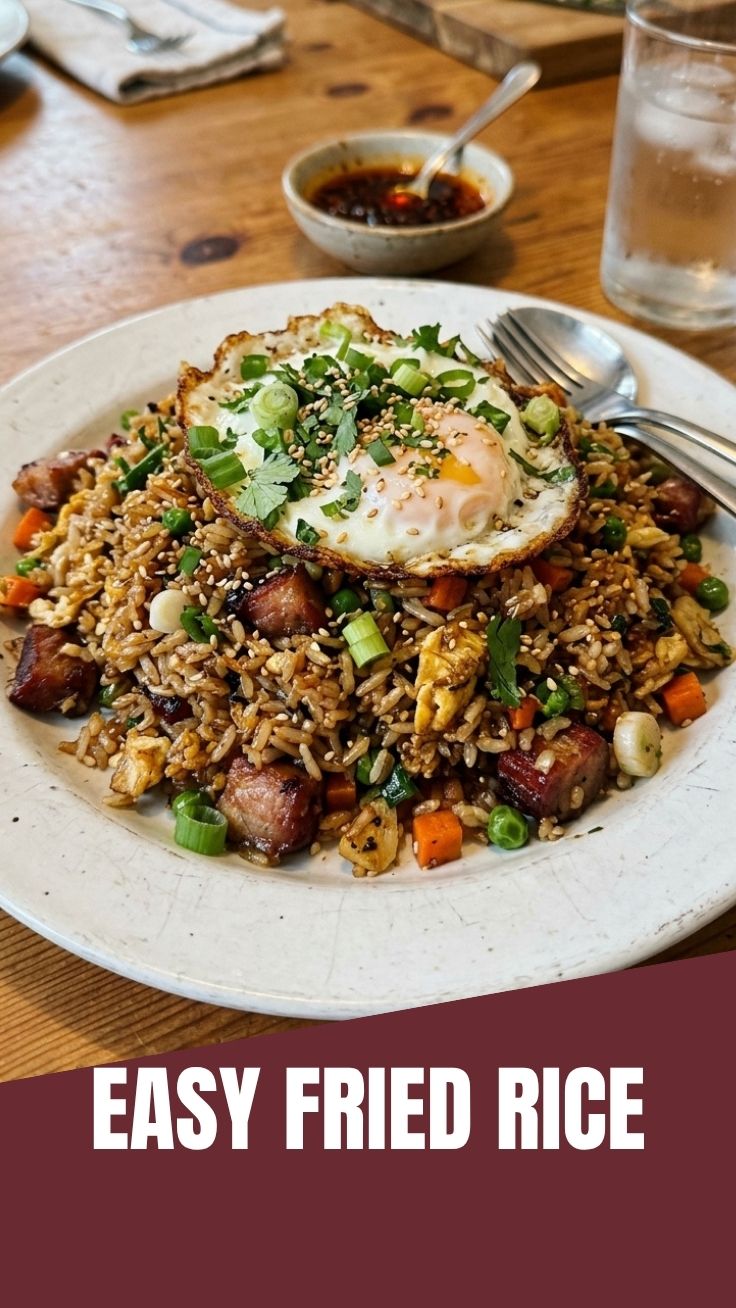
Planning is key to a smooth cooking experience. This timetable ensures all components are ready for quick assembly:
- Prep Time: 15 minutes. This includes chopping all vegetables, mincing garlic and ginger, and separating green onion parts.
- Cook Time: 10-12 minutes. Fried rice cooks quickly over high heat, so having everything prepped beforehand is crucial.
- Crucial Tip: The most important “prep” step is ensuring you have cold, day-old cooked rice. Freshly cooked rice is too moist and will lead to a mushy result. Cook your rice the day before and refrigerate it uncovered to dry it out.
Step-by-Step Instructions
Let’s dive into mastering your own Fried Rice (Classic) with these detailed, actionable steps. Achieving that perfect texture and flavor for your homemade fried rice is easier than you think!
1. Prepare the Eggs: In a small bowl, lightly beat the eggs. Heat 1 teaspoon of vegetable oil in your wok or skillet over medium-high heat. Pour in the eggs and scramble until just set but still slightly moist. Remove from the wok and set aside.
2. Aromatics First: Add remaining 1 tablespoon of vegetable oil to the hot wok. Add the white parts of the green onions, minced garlic, and grated ginger. Sauté for about 30 seconds until fragrant, being careful not to burn.
3. Vegetable Sensation: Add the finely diced carrots to the wok and stir-fry for 2-3 minutes until slightly tender-crisp.
4. Introduce the Rice: Add the cold, day-old cooked rice to the wok. Break up any clumps with your spatula. Increase heat to high and stir-fry for 3-5 minutes, pressing the rice against the hot surface to encourage browning and reduce moisture.
5. Flavor Fusion: Push the rice to one side of the wok. Add the soy sauce, oyster sauce (if using), and white pepper to the empty side, allowing it to bubble for a few seconds before incorporating it into the rice. Stir vigorously to evenly coat the rice.
6. Final Touches: Add the scrambled eggs and frozen peas to the wok. Continue to stir-fry for 1-2 minutes until everything is heated through and well combined.
7. Serve & Garnish: Stir in the green parts of the green onions and a drizzle of sesame oil just before serving. Serve immediately!
Nutritional Benefits & Advantages
Beyond its incredibly satisfying taste, Fried Rice (Classic) offers several nutritional upsides when prepared at home. It’s an excellent source of carbohydrates for energy, and the addition of eggs and optional meat (chicken, shrimp, tofu) boosts its protein content significantly. Vegetables like carrots and peas contribute essential vitamins (A and K) and dietary fiber, promoting digestive health. By making your own, you control the amount of sodium and unhealthy fats, making it a much healthier alternative to many store-bought options.
Tips Variations & Cooking Advice
- Protein Boost: Add cooked chicken, shrimp, pork, or tofu for a heartier meal. Cook and chop separately before adding to the rice.
- Heat It Up: For a spicy kick, add a pinch of red pepper flakes or a dash of sriracha along with the soy sauce.
- Vegetable Variety: Experiment with other quick-cooking vegetables like corn, bell peppers, or finely chopped broccoli florets.
- Grain Alternatives: While day-old white rice is traditional, you can also use day-old brown rice for a whole-grain option.
- Vegan Option: Omit eggs, use vegetable oyster sauce, and ensure your soy sauce is vegan. Add crumbled firm tofu for protein.
Common Mistakes to Avoid
- Using Hot, Freshly Cooked Rice: The #1 culprit for mushy fried rice. Always use cold, day-old rice.
- Overcrowding the Wok: Cooking in batches if necessary ensures ingredients get properly stir-fried, not steamed.
- Low Heat: Fried rice needs high heat for that perfect slightly charred flavor and quick cooking.
- Too Much Sauce: Start with less soy sauce and add gradually to taste, preventing your rice from becoming soggy or overly salty.
- Forgetting to Prep: Mis en place (having all ingredients prepped and ready) is crucial for stir-frying.
Storage & Meal Prep Tips
Your delicious Fried Rice (Classic) makes fantastic leftovers! Store cooled fried rice in an airtight container in the refrigerator for up to 3-4 days. For longer storage, it can be frozen for up to 1 month. To reheat, microwave in short bursts, stirring occasionally, or reheat in a skillet over medium heat with a tiny splash of water or oil to rehydrate and prevent sticking.
Conclusion
There you have it – the definitive guide to creating irresistibly flavorful and perfectly textured Fried Rice (Classic) right in your own kitchen. By following these steps and embracing the power of homemade fried rice, you’ll unlock a new level of culinary confidence and satisfaction. Don’t be afraid to experiment with your favorite proteins and vegetables, making this classic dish uniquely yours. We encourage you to try this recipe, share your delicious results, and let us know your favorite variations in the comments below! Happy cooking!
FAQs
Q1: Can I use fresh rice if I don’t have day-old rice?
A1: While day-old rice yields the best results, if you must use fresh rice, spread it thinly on a baking sheet and refrigerate it quickly for at least an hour to remove some moisture. It still won’t be as good as truly day-old.
Q2: What is the best type of rice for fried rice?
A2: Long-grain white rice like jasmine or basmati is ideal. Their individual grains separate well, leading to a fluffy, non-clumpy texture.
Q3: My fried rice is sticky/mushy. What went wrong?
A3: This is usually due to using fresh, wet rice or overcrowding the pan, which lowers the temperature and steams the rice instead of frying it. Ensure your wok is hot and cook in batches if necessary.
Q4: How can I make my fried rice healthier?
A4: Use brown rice, load up on vegetables, opt for lean proteins like chicken breast or tofu, and control the amount of oil and low-sodium soy sauce.
Q5: What’s the secret to getting that “wok hei” smoky flavor?
A5: Achieving genuine “wok hei” requires extremely high heat and rapid tossing, which can be challenging on a home stove. Using a well-seasoned wok, cooking in small batches, and ensuring your wok is screaming hot before adding ingredients will get you closer to that elusive smoky aroma.