Unleash Your Inner Chef: Master the Art of Homemade Indian Delights!
Have you ever dreamt of recreating the rich, creamy, and deeply flavorful Indian dishes you savor at your favorite restaurant, right in your own kitchen? The good news is, you absolutely can! Today, we’re diving deep into the world of two beloved Indian classics: exploring the secrets behind crafting an unforgettable Butter Chicken and a truly authentic Chicken Tikka Masala. Preparing these culinary masterpieces at home offers a multitude of benefits, from controlling the quality of ingredients to customizing spice levels to suit your palate. It’s a rewarding culinary journey that promises delicious results and an impressive addition to your home cooking repertoire. Let’s embark on this flavorful adventure!
Ingredients & Kitchen Tools
To whip up these delectable dishes, you’ll need the following:
- Chicken Thighs (boneless, skinless): Approximately 1.5 lbs, cut into 1-inch pieces. Thighs stay juicier than breast meat.
- Plain Yogurt (full-fat): 1/2 cup. Acts as a tenderizer and holds the marinade. (For dairy-free, use a plain, unsweetened coconut or almond yogurt.)
- Ginger-Garlic Paste: 2 tablespoons. Essential aromatic base. You can buy pre-made or blend equal parts fresh ginger and garlic.
- Lemon Juice: 2 tablespoons. Adds brightness and aids in tenderization.
- Garam Masala: 1 tablespoon. A fragrant spice blend key to Indian cuisine.
- Turmeric Powder: 1 teaspoon. For color and earthy flavor.
- Cumin Powder: 1 teaspoon. Adds warmth and depth.
- Coriander Powder: 1 teaspoon. Aromatic and slightly citrusy.
- Red Chili Powder (Kashmiri or Paprika for milder heat): 1-2 teaspoons, to taste. For color and warmth.
- Salt: To taste.
- Ghee or Unsalted Butter: 3 tablespoons. For sautéing and enriching the sauce. (Use a plant-based butter for dairy-free.)
- Onion (medium): 1, finely chopped. Forms the base of the sauce.
- Canned Crushed Tomatoes: 1 (14.5 oz) can. Provides the rich tomato base.
- Heavy Cream: 1/2 cup. For unparalleled richness and creaminess. (For dairy-free, use full-fat coconut milk or cashew cream.)
- Sugar: 1 teaspoon (optional). Balances the acidity of the tomatoes.
- Fresh Cilantro: For garnish. Adds freshness.
Kitchen Tools:
- Large Mixing Bowl: For marinating the chicken.
- Large Skillet or Dutch Oven: For cooking the chicken and simmering the sauce.
- Blender or Immersion Blender: To achieve a silky-smooth sauce.
- Measuring Spoons and Cups: For accurate ingredient portions.
- Cutting Board and Knife: For prepping ingredients.
Prep Time & Cooking Schedule
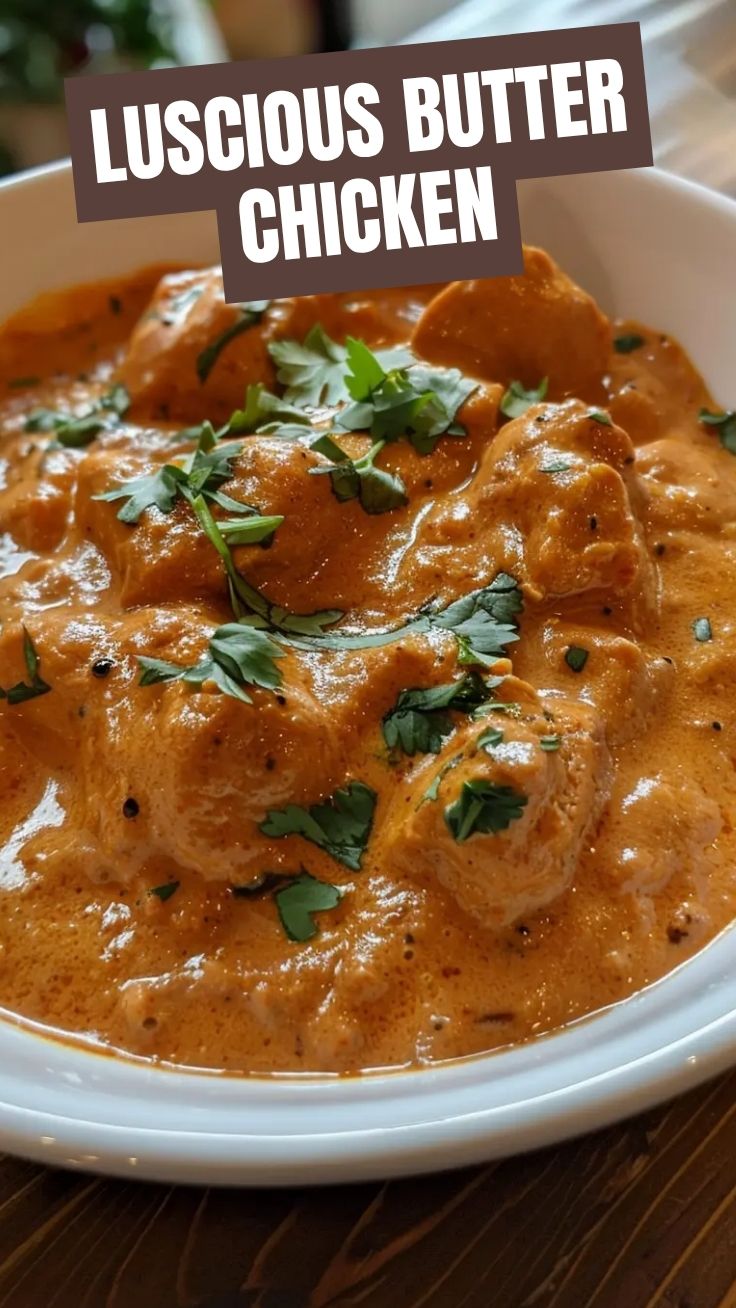
- Prep Time: 25 minutes (includes chopping and marinating prep)
- Marinating Time: Minimum 30 minutes, ideally 2-4 hours, or overnight for best flavor. This crucial step tenderizes the chicken and infuses it with spices.
- Cook Time: 40-50 minutes
- Total Time: Approximately 1 hour 45 minutes (with minimum marinating time)
Plan ahead to allow ample time for the chicken to marinate – this is where much of the flavor development truly happens!
Step-by-Step Instructions
1. Marinate the Chicken: In a large bowl, combine the cut chicken thighs with yogurt, ginger-garlic paste, lemon juice, garam masala, turmeric, cumin, coriander, red chili powder, and salt. Mix well to ensure every piece of chicken is coated. Cover and refrigerate for at least 30 minutes, or up to 12 hours. This marination is critical for the tender and flavorful Butter Chicken you crave.
2. Sear the Chicken: Heat 1 tablespoon of ghee or butter in a large skillet over medium-high heat. Add the marinated chicken in a single layer, working in batches if necessary, to avoid overcrowding the pan. Cook for 3-5 minutes per side until nicely browned with a slight char. The chicken doesn’t need to be fully cooked through at this stage. Remove the chicken from the pan and set aside. This charring adds depth, a hallmark of excellent Chicken Tikka Masala.
3. Build the Sauce: In the same skillet, add the remaining 2 tablespoons of ghee or butter. Reduce the heat to medium. Add the chopped onion and sauté until softened and translucent, about 5-7 minutes.
4. Add Aromatics & Tomatoes: Stir in more ginger-garlic paste (1 tablespoon extra, if desired for a stronger flavor), and cook for 1 minute until fragrant. Add the crushed tomatoes, and stir well. Bring to a simmer, then reduce heat to low, cover, and cook for 10-15 minutes, allowing the flavors to meld.
5. Blend the Sauce: Carefully transfer the sauce mixture to a blender and blend until completely smooth. Alternatively, use an immersion blender directly in the pot. Strain the sauce back into the skillet for an extra-silky texture, if desired.
6. Combine & Simmer: Return the seared chicken to the smooth sauce. Stir in the heavy cream (or coconut milk/cashew cream) and sugar (if using). Bring the mixture to a gentle simmer, stirring occasionally. Cook for another 10-15 minutes, or until the chicken is cooked through and the sauce has thickened slightly.
7. Serve: Garnish generously with fresh cilantro. Serve hot with basmati rice or warm naan bread.
Nutritional Benefits & Advantages
Both Butter Chicken and Chicken Tikka Masala, when prepared at home, offer numerous nutritional advantages. Chicken thighs provide a good source of lean protein, essential for muscle repair and growth. Turmeric, a key spice, is celebrated for its anti-inflammatory properties due to its active compound, curcumin. Tomatoes are rich in lycopene, an antioxidant linked to heart health. Furthermore, controlling the amount of fat and sugar allows for a healthier version than many restaurant offerings. Choosing dairy-free alternatives can also make these dishes accessible to those with dietary restrictions without sacrificing flavor.
Tips, Variations & Cooking Advice
- Smoky Flavor: For an authentic char, consider grilling or broiling your marinated chicken until slightly charred before adding it to the sauce.
- Spice Level: Adjust the red chili powder to your preference. For more heat, add a pinch of cayenne pepper. For less heat, opt for sweet paprika.
- Vegetarian Version: Substitute chicken with paneer (Indian cheese), firm tofu, or mixed vegetables (cauliflower, peas, potatoes). Add them to the sauce closer to the end of cooking.
- Thicker Sauce: If your sauce is too thin, simmer it uncovered for a bit longer until it reaches your desired consistency.
- Cream Alternatives: For a lighter option, replace some of the heavy cream with milk (dairy or non-dairy), understanding it will be less rich.
- Batch Cooking: This recipe scales well for larger groups or meal prepping.
Common Mistakes to Avoid
- Overcrowding the Pan: When searing the chicken, work in batches. Overcrowding lowers the pan’s temperature, leading to steamed chicken instead of beautifully browned pieces.
- Undercooked Onions: Don’t rush the onion sautéing. Properly caramelized onions form the sweet and savory foundation of your sauce.
- Skipping the Marination: This step is crucial for tender, flavorful chicken. Don’t cut it short!
- Not Blending the Sauce Enough: For a truly restaurant-quality, silky sauce, blend until absolutely smooth. Straining is an optional but recommended extra step.
- High Heat Simulation: Once the cream is added, maintain a gentle simmer. Boiling vigorously can cause the cream to separate.
Storage & Meal Prep Tips
Leftovers of both Butter Chicken and Chicken Tikka Masala taste even better the next day as the flavors deepen.
- Refrigeration: Store in an airtight container in the refrigerator for up to 3-4 days.
- Freezing: Both dishes freeze exceptionally well. Portion into freezer-safe containers or bags and freeze for up to 2-3 months. Thaw overnight in the refrigerator before reheating.
- Reheating: Gently reheat on the stovetop over low-medium heat, stirring occasionally. Add a splash of water or cream if the sauce has become too thick. Avoid high heat to prevent the sauce from splitting.
Conclusion
There you have it – a comprehensive guide to crafting two of India’s most beloved dishes at home! Mastering Butter Chicken and Chicken Tikka Masala will not only impress your family and friends but also provide you with a wholesome, flavorful meal made with love. The depth of flavor, the creamy texture, and the aromatic spices combine to create an unforgettable dining experience. Don’t be afraid to experiment with spice levels and dairy-free alternatives. Give this recipe a try, share your culinary triumphs in the comments below, and revel in the joy of truly authentic home-cooked Indian cuisine!
FAQs
Q1: Can I use chicken breast instead of thighs?
A1: Yes, you can use boneless, skinless chicken breast, but be mindful that it can dry out more easily. Cut it into slightly larger pieces and consider reducing the cooking time in the sauce.
Q2: What is the difference between Butter Chicken and Chicken Tikka Masala?
A2: While very similar in flavor profile, Butter Chicken typically has a milder, sweeter, and creamier tomato-based sauce, often with more butter. Chicken Tikka Masala usually features grilled or broiled chicken (tikka) in a more spiced, often tangier and sometimes thicker tomato-based sauce, with a greater emphasis on ground spices.
Q3: How can I make this recipe spicier?
A3: To increase the heat, add more red chili powder or a pinch of cayenne pepper to the chicken marinade or into the sauce as it simmers. A few slit green chilies can also be added to the sauce.
Q4: Is it necessary to blend the sauce?
A4: While not strictly necessary for flavor, blending the sauce (and optionally straining it) is key to achieving the smooth, velvety restaurant-style texture that both these dishes are known for.
Q5: What can I serve with these dishes?
A5: Basmati rice, naan bread, roti, or paratha are classic accompaniments. A simple side salad or a raita (yogurt with cucumber and spices) also complements the rich flavors beautifully.