The Ultimate Comfort: Crafting the Perfect Roasted Vegetable Soup at Home
Are you searching for a heartwarming bowl of comfort that’s both incredibly flavorful and packed with nutrients? Look no further! Today, we’re diving deep into the art of making the perfect Roasted Vegetable Soup. There’s something uniquely satisfying about transforming humble vegetables into a rich, aromatic broth. Forget bland, store-bought options; mastering this dish at home offers unparalleled freshness and the freedom to tailor every spoonful to your exact taste. This isn’t just about cooking; it’s about creating an experience, a sense of warmth and well-being that only Homemade Soup Recipes can provide. Get ready to elevate your culinary game and discover why roasting is the secret to unlocking incredible depths of flavor that make this soup an absolute star.
Ingredients & Kitchen Tools
Crafting the perfect Roasted Vegetable Soup requires a few key ingredients and basic kitchen essentials.
2 lbs mixed root vegetables: (e.g., carrots, parsnips, sweet potatoes, butternut squash), peeled and chopped into 1-inch pieces. These form the hearty base and natural sweetness.*
1 large onion: Chopped. Adds a foundational aromatic layer.*
3 cloves garlic: Minced. Essential for a robust flavor profile.*
1 bell pepper: (Any color), deseeded and chopped. Contributes a sweet, slightly peppery note.*
1 (14.5 oz) can diced tomatoes: Undrained. Adds acidity and a rich tomato base.*
6 cups vegetable broth: Low sodium, preferably homemade. The liquid base that brings everything together.*
2 tbsp olive oil: For roasting. Helps vegetables caramelize beautifully.*
1 tsp dried thyme: Or 1 tbsp fresh. A classic herb that complements roasted vegetables.*
½ tsp dried rosemary: Or 1 tsp fresh, chopped. Adds an earthy, piney aroma.*
Salt and freshly ground black pepper: To taste. Seasoning essentials.*
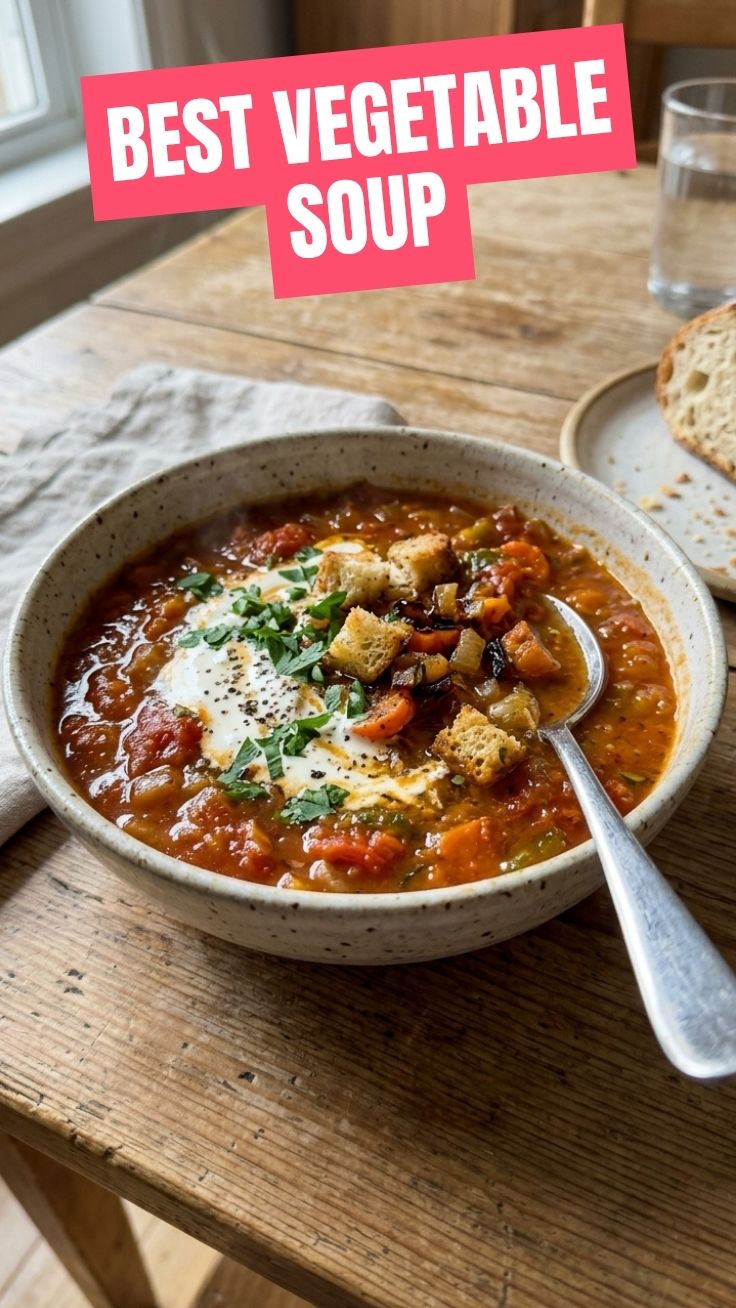
Optional garnishes: Fresh parsley or cilantro, a dollop of Greek yogurt or crème fraîche, croutons. For visual appeal and added texture/flavor.*
Kitchen Tools:
- Large baking sheet: For roasting the vegetables evenly.
- Large stockpot or Dutch oven: For simmering the soup.
Immersion blender or standard blender: For achieving your desired soup consistency. An immersion blender is convenient for blending directly in the pot.*
- Sharp knife and cutting board: For prepping vegetables.
- Measuring cups and spoons: For accurate ingredient quantities.
Prep Time & Cooking Schedule
Planning is key to a smooth cooking experience. This recipe is perfect for a cozy weekend meal or meal prepping during the week.
- Prep Time: 20 minutes (for chopping vegetables)
- Roasting Time: 30-40 minutes
- Simmering Time: 20-25 minutes
- Total Cook Time: Approximately 1 hour 10 minutes
This schedule allows you to get other tasks done while the vegetables are roasting, and the soup is simmering, making efficient use of your time.
Step-by-Step Instructions
Follow these steps to create a truly unforgettable and satisfying Roasted Vegetable Soup. Perfecting this recipe ensures you’ll have a delightful entry among your favorite Homemade Soup Recipes.
1. Preheat and Prepare: Preheat your oven to 400°F (200°C). Line a large baking sheet with parchment paper for easy cleanup.
2. Roast the Vegetables: In a large bowl, toss the chopped root vegetables, onion, garlic, and bell pepper with olive oil, thyme, rosemary, salt, and pepper. Spread the seasoned vegetables in a single layer on the prepared baking sheet. Roast for 30-40 minutes, or until tender and lightly caramelized. Caramelization is crucial here as it deepens the flavor wonderfully. Flip them halfway through to ensure even roasting.
3. Combine and Simmer: Transfer the roasted vegetables to a large stockpot or Dutch oven. Add the diced tomatoes (undrained) and vegetable broth. Bring the mixture to a boil, then reduce the heat, cover, and simmer for 20-25 minutes. Allowing it to simmer gently lets the flavors meld together beautifully.
4. Blend to Perfection: Once the vegetables are very tender, remove the pot from the heat. Carefully use an immersion blender to blend the soup directly in the pot until it reaches your desired consistency. For a smoother soup, blend longer; for a chunkier texture, blend less. If you don’t have an immersion blender, transfer the soup in batches to a standard blender, being very cautious with hot liquids (fill only halfway and vent the lid).
5. Adjust Seasoning: Taste the soup and adjust salt and pepper if needed. You might also want to add a pinch of sugar to balance the acidity of the tomatoes, or a splash of lemon juice for brightness.
6. Serve and Garnish: Ladle the hot soup into bowls. Garnish with fresh herbs, a swirl of cream, or crunchy croutons.
Nutritional Benefits & Advantages
This Roasted Vegetable Soup is a powerhouse of nutrition. The array of root vegetables provides complex carbohydrates for sustained energy, along with a wealth of dietary fiber which aids in digestion and promotes satiety. Sweet potatoes and carrots are rich in beta-carotene, a precursor to Vitamin A, essential for vision health and immune function. Bell peppers contribute Vitamin C, a vital antioxidant. Roasting vegetables actually enhances their natural sweetness and breaks down some of their tougher fibers, making them easier to digest and their nutrients more bioavailable. Furthermore, being a broth-based soup, it’s hydrating and often lower in calories than cream-based alternatives, making it an excellent choice for a healthy meal.
Tips, Variations & Cooking Advice
- Spice It Up: Add a pinch of red pepper flakes during roasting for a subtle kick, or a dash of smoked paprika for a deeper, smoky flavor.
- Creamy Texture: For an extra creamy soup without dairy, add a can of full-fat coconut milk during the simmering stage, or blend in 1/2 cup of soaked cashews with the soup.
- Protein Boost: Stir in cooked lentils, chickpeas, or shredded chicken after blending for a more substantial meal.
- Herb Variations: Experiment with other herbs like bay leaf during simmering, or fresh oregano for a Mediterranean twist.
- Alternative Roasting: If you prefer a woodier flavor, you can roast some vegetables over an open flame or grill them lightly before adding to the pot.
- Dietary Adjustments: This recipe is naturally gluten-free and can be easily made dairy-free by omitting dairy garnishes.
Common Mistakes to Avoid
- Overcrowding the Baking Sheet: This is the most common mistake when roasting. If vegetables are too close, they’ll steam instead of roast, leading to mushy results and no caramelization. Use two baking sheets if necessary.
- Under-seasoning: Don’t be shy with salt and pepper, especially before roasting. Taste and adjust again after blending.
- Blending Too Hot: If using a standard blender, always allow the soup to cool slightly, and blend in small batches to prevent pressure buildup and potential accidents.
- Not Roasting Enough: The magic of this soup lies in the roasted flavor. Ensure vegetables are tender and have some browned edges for maximum taste.
- Forgetting to Taste: Always taste your soup at various stages, especially before blending and serving, to adjust seasonings.
Storage & Meal Prep Tips
This Roasted Vegetable Soup is a fantastic candidate for meal prepping!
- Refrigeration: Store leftover soup in an airtight container in the refrigerator for up to 4-5 days.
- Freezing: This soup freezes beautifully. Allow it to cool completely, then transfer to freezer-safe containers or bags, leaving an inch of headspace if using rigid containers (liquid expands when frozen). It can be frozen for up to 3 months.
- Reheating: Thaw frozen soup overnight in the refrigerator, or gently reheat from frozen on the stovetop over low heat, stirring occasionally. You can also reheat individual portions in the microwave. Add a splash of broth or water if it’s too thick after reheating.
- Enhancing Leftovers: A fresh sprinkle of herbs or a swirl of cream can refresh leftovers and make them feel like a brand new meal.
Conclusion
There’s an undeniable satisfaction in creating a nourishing and delicious meal from scratch, and this Roasted Vegetable Soup exemplifies that perfectly. By embracing the simple power of roasting, you can unlock incredible depths of flavor that elevate humble ingredients into a culinary masterpiece. We hope this guide inspires you to whip up this comforting dish and discover the rich rewards of making your own Homemade Soup Recipes. Give it a try, experiment with your favorite vegetables, and share your delicious creations with us!
FAQs
Q1: Can I use different vegetables in this soup?
A1: Absolutely! That’s the beauty of this recipe. Feel free to swap in other sturdy vegetables like zucchini, broccoli florets, or even bell peppers. Just ensure they are cut into similar-sized pieces for even roasting.
Q2: How can I make this soup thicker or thinner?
A2: For a thicker soup, reduce the amount of broth or simmer uncovered for longer to allow some liquid to evaporate before blending. For a thinner soup, simply add more vegetable broth until you reach your desired consistency.
Q3: Is it possible to make this soup without an immersion blender or standard blender?
A3: If you prefer a chunky soup, you can skip blending entirely! Just mash some of the vegetables with a potato masher directly in the pot to release more flavors and create a rustic texture.
Q4: Can I add fresh herbs instead of dried ones?
A4: Yes, fresh herbs are wonderful! A general rule of thumb is to use triple the amount of fresh herbs compared to dried. For example, if the recipe calls for 1 tsp dried thyme, use 1 tbsp fresh thyme. Add fresh herbs towards the end of simmering or as a garnish.