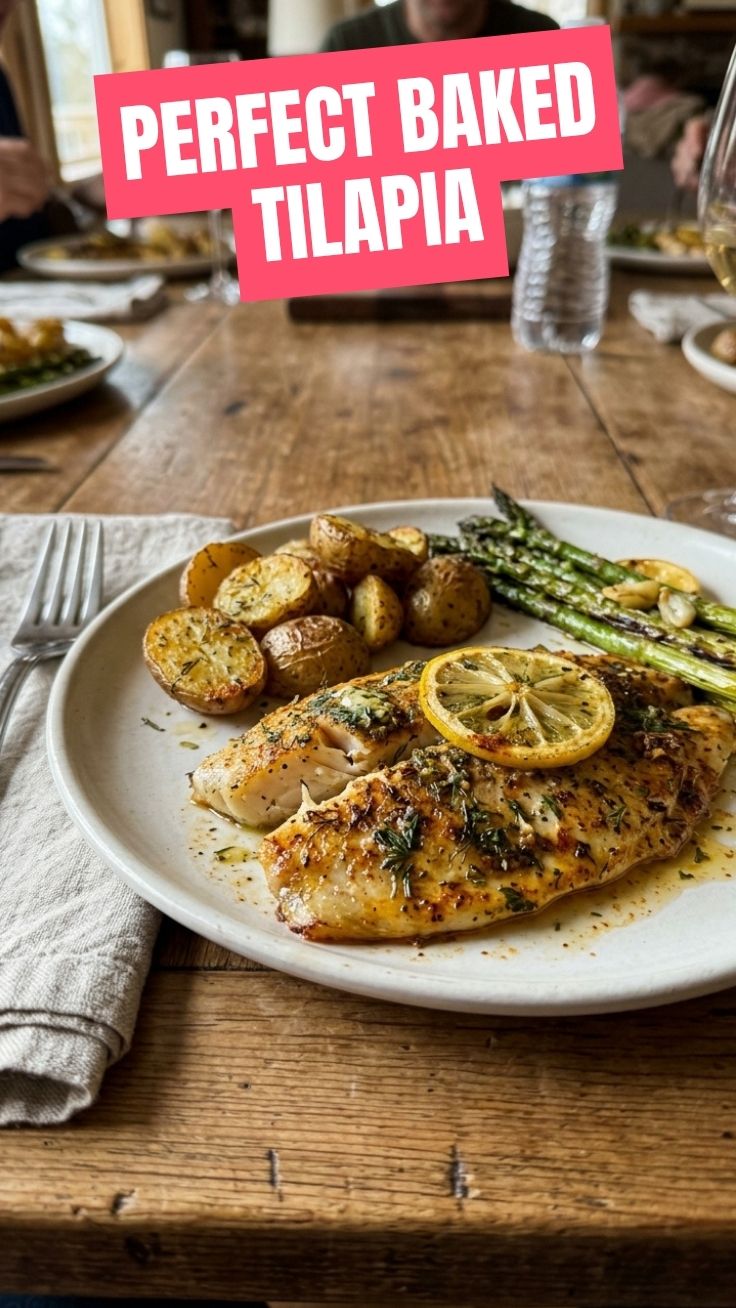
Unlock Bistro-Quality: Our Irresistible Baked Tilapia Recipe You Can Master Tonight!
Ever dreamt of effortlessly creating a culinary masterpiece that’s both healthy and incredibly flavorful? You’re in the right place! Tonight, we’re demystifying restaurant-worthy Baked Tilapia, transforming your kitchen into a gourmet haven. Preparing this flaky white fish at home isn’t just about saving money; it’s about controlling the quality of your ingredients, customizing flavors to your exact preference, and enjoying the immense satisfaction of a perfectly executed meal. With a few simple steps, you’ll be able to prepare delightful tilapia recipes that impress without the fuss. Let’s dive into creating a dish that will become a staple in your meal rotation!
Ingredients & Kitchen Tools
- Tilapia Fillets (4 individual fillets, 6 oz each): Fresh or frozen (thawed) boneless, skinless fillets are ideal for quick cooking. Look for sustainably sourced options.
- Olive Oil (2 tablespoons): Extra virgin for its rich flavor and heart-healthy benefits.
- Lemon (1 large): Freshly squeezed juice and zest are crucial for bright, tangy notes.
- Garlic (3 cloves): Minced finely, adds aromatic depth. Garlic powder (1 tsp) can be substituted.
- Fresh Parsley (1/4 cup): Chopped, for a fresh, herbaceous finish. Dried parsley (1 tbsp) works as well.
- Butter (2 tablespoons): Unsalted, melted, to create a rich, glossy sauce.
- Paprika (1 teaspoon): Sweet or smoked, for a touch of color and mild warmth.
- Dried Thyme (1/2 teaspoon): Earthy and aromatic, complements seafood beautifully.
- Salt & Black Pepper (to taste): Essential for seasoning.
- Baking Dish (9×13 inch): Glass or ceramic, for even heat distribution.
- Small Bowl: For mixing the seasoning blend.
- Whisk or Fork: To combine marinade ingredients.
- Meat Thermometer: For checking doneness (optional, but recommended).
- Parchment Paper or Aluminum Foil: For easy cleanup and preventing sticking.
- Zester: For lemon zest.
- Juicer: For lemon juice.
Prep Time & Cooking Schedule
- Prep Time: 15 minutes
- Cook Time: 12-18 minutes (depending on fillet thickness)
- Resting Time: 5 minutes (allows juices to redistribute)
This recipe is perfect for busy weeknights! You can prepare your mise en place (chopped garlic, parsley, lemon zest) while your oven preheats, ensuring a smooth and efficient cooking process. No lengthy marinating required, making it a fantastic last-minute meal option.
Step-by-Step Instructions
1. Preheat Oven & Prep Dish: Preheat your oven to 400°F (200°C). Line a 9×13 inch baking dish with parchment paper or aluminum foil for easy cleanup.
2. Prepare Tilapia Fillets: Pat the Baked Tilapia fillets dry with paper towels. This helps achieve a better texture. Arrange them in a single layer in the prepared baking dish.
3. Mix Seasoning Blend: In a small bowl, whisk together the melted butter, olive oil, minced garlic, lemon juice, lemon zest, paprika, dried thyme, salt, and black pepper.
4. Season the Fish: Pour the seasoning mixture evenly over the Baked Tilapia fillets, ensuring each piece is well-coated.
5. Bake: Bake for 12-18 minutes, or until the fish is opaque and flaky when gently poked with a fork. The internal temperature should reach 145°F (63°C) if using a thermometer. Avoid overcooking, as tilapia can dry out quickly.
6. Garnish & Serve: Remove from the oven. Garnish with fresh chopped parsley. Let the dish rest for 5 minutes before serving. This allows the flavors to meld and the fish to retain its moisture, making it one of the best tilapia recipes you’ll ever make.
Nutritional Benefits & Advantages
Tilapia is a lean source of protein, essential for muscle repair and growth, and is remarkably low in calories and saturated fat. It’s also a good source of B vitamins, phosphorus, and selenium, which play vital roles in energy metabolism, bone health, and antioxidant defense. Baking, as opposed to frying, further minimizes fat content while preserving the delicate texture and flavor of the fish, making this a truly heart-healthy meal.
Tips, Variations & Cooking Advice
- Spice It Up: Add a pinch of red pepper flakes to the seasoning for a little heat.
- Herb Variations: Rosemary or dill can be swapped for thyme or added for extra complexity.
- Citrus Twist: Orange or lime zest and juice can replace lemon for a different citrus profile.
- Vegetable Medley: Want a one-pan meal? Add quick-cooking vegetables like asparagus, cherry tomatoes, or bell peppers to the baking dish alongside the fish during the last 10 minutes of cooking. Toss them with a little olive oil, salt, and pepper first.
- Crispier Top: For a slightly crispier top, you can broil the fish for 1-2 minutes at the very end, watching carefully to prevent burning.
- Dietary Adaptations: This recipe is naturally gluten-free and dairy-free if you omit the butter or use a dairy-free alternative.
Common Mistakes to Avoid
- Overcooking: This is the most common mistake with fish. Tilapia cooks quickly. Watch for opaqueness and flakiness; don’t wait until it’s dry.
- Not Patting Dry: Excess moisture can steam the fish instead of allowing it to develop a nice texture.
- Crowding the Pan: Ensure fillets are in a single layer with a little space in between to cook evenly.
- Skipping the Rest: Resting allows the juices to redistribute, resulting in a moister, more tender fillet.
- Ignoring Seasoning: Don’t be shy with salt and pepper; properly seasoned fish makes all the difference.
Storage & Meal Prep Tips
Storage: Leftover Baked Tilapia can be stored in an airtight container in the refrigerator for up to 3 days. Freezing cooked fish is not recommended, as it can significantly alter the texture upon thawing.
Reheating: Gently reheat in a microwave on medium power for 1-2 minutes, or in a preheated oven at 275°F (135°C) for 10-15 minutes, covering with foil to prevent drying. Avoid high heat, which can make the fish rubbery.
Meal Prep: While the fish is best fresh, you can prep your flavoring mixture (lemon juice, garlic, herbs) a day ahead and store it in the fridge. This makes assembly even quicker on cooking day.
Conclusion
There you have it – a perfectly flaky, intensely flavorful, and deceptively simple Baked Tilapia recipe that’s sure to become a cherished part of your culinary repertoire. By following these easy steps, you can create a healthy and delicious meal that rivals any restaurant dish. We encourage you to try this fantastic recipe and experience the joy of homemade goodness. Share your creations and let us know your favorite variations! And if you’re looking for even more delightful aquatic dishes, be sure to explore our other amazing tilapia recipes for endless inspiration. Happy cooking!
FAQs
Q1: Can I use frozen tilapia?
A1: Yes, absolutely! Just make sure to thoroughly thaw the fillets in the refrigerator overnight or under cold running water, and pat them very dry before seasoning and baking.
Q2: What can I serve with this Baked Tilapia?
A2: This dish pairs wonderfully with roasted vegetables (like asparagus or broccoli), a light salad, quinoa, couscous, or a simple rice pilaf.
Q3: How do I know when the tilapia is cooked through?
A3: The easiest way is when the fish turns opaque throughout and flakes easily with a fork. If you have a meat thermometer, it should register 145°F (63°C) at its thickest part.
Q4: Can I marinate the tilapia ahead of time?
A4: While you can marinate for up to 30 minutes, longer periods with strong acids like lemon juice can start to “cook” or break down the delicate fish, leading to a mushy texture. It’s best to coat right before baking.
Q5: What if I don’t have fresh herbs?
A5: You can definitely use dried herbs! As a general rule, use about one-third the amount of dried herbs compared to fresh (e.g., 1/2 teaspoon dried thyme instead of 1 1/2 teaspoons fresh).