The Ultimate Homemade Comfort: Elevate Your Kitchen with Our Hearty Vegetable Soup
Ever wondered what truly sets a restaurant-quality soup apart from an ordinary one? It’s not magic; it’s a delightful blend of fresh ingredients, thoughtful preparation, and a touch of homemade love that elevates the experience. Today, we’re diving deep into crafting the perfect bowl of Vegetable Soup (Homemade) – a dish that promises unparalleled flavor, nourishing warmth, and the comforting embrace of home cooking. Forget bland, watery concoctions; this recipe is designed to be a vibrant, flavor-packed celebration that’s remarkably easy to achieve. Mastering this foundational recipe will not only provide you with a staple for chilly evenings but also inspire you to explore other delightful Soup Recipes with newfound confidence.
Ingredients & Kitchen Tools
Crafting outstanding Vegetable Soup (Homemade) begins with quality ingredients and the right tools. Here’s what you’ll need:
Ingredients:
- 2 tbsp Olive Oil: For sautéing aromatics and building foundational flavor. Vegetable oil or avocado oil can be substituted.
- 1 large Yellow Onion, chopped: The sweet and pungent base for our broth. Shallots offer a milder alternative.
- 2 Carrots, peeled and diced: Adds sweetness, color, and essential nutrients. Parsnips can be a flavorful addition.
- 2 Celery Stalks, diced: Provides an earthy, aromatic note.
- 2 cloves Garlic, minced: Essential for a pungent, savory depth. Use garlic powder if fresh isn’t available (1/2 tsp).
- 6 cups Vegetable Broth: The liquid foundation. Low-sodium chicken broth works if you’re not strictly vegetarian.
- 1 (14.5 oz) can Diced Tomatoes, undrained: Contributes acidity and a rich tomato base. Fresh diced tomatoes can also be used.
- 1 cup Green Beans, trimmed and cut into 1-inch pieces: Adds fresh texture and a touch of sweetness. Frozen green beans are a convenient substitute.
- 1 cup Zucchini, diced: Softens beautifully and absorbs flavors. Yellow squash can be swapped in.
- 1 cup Potatoes (Yukon Gold or Russet), peeled and diced: Adds body and a comforting starchiness. Sweet potatoes offer a unique flavor profile.
- 1/2 cup Small Pasta (e.g., ditalini, small shells): Optional, for added heartiness. Rice or quinoa can be used for a gluten-free option.
- 1 tsp Dried Thyme: Classic herb for savory soups. Italian seasoning blend is a good alternative.
- 1/2 tsp Dried Oregano: Adds an earthy, robust flavor.
- Salt and Freshly Ground Black Pepper, to taste: Essential for seasoning and enhancing all flavors.
- Fresh Parsley, chopped (for garnish): Brightens the final dish with fresh, herbaceous notes.
Kitchen Tools:
- Large Stockpot or Dutch Oven: Crucial for simmering large batches of soup.
- Cutting Board and Sharp Knife: For efficient vegetable preparation.
- Measuring Cups and Spoons: For accurate ingredient quantities.
- Ladle: For serving.
Prep Time & Cooking Schedule
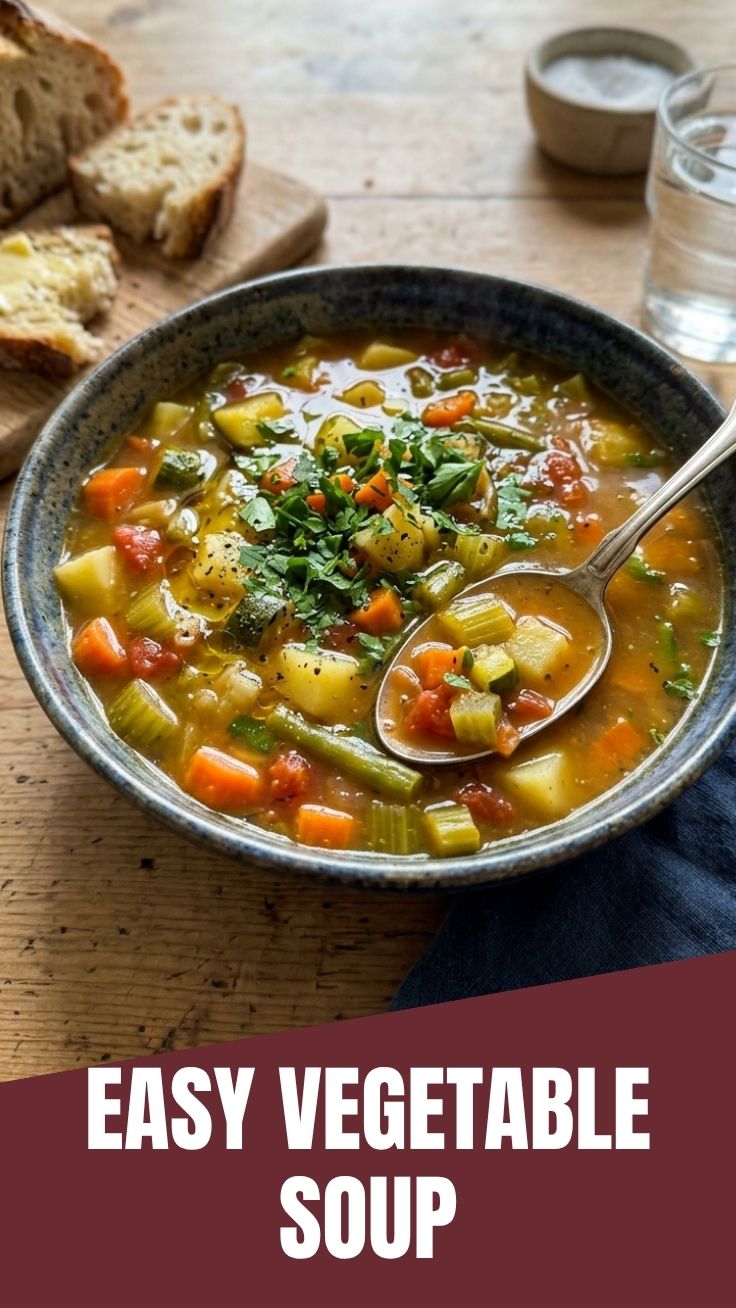
- Prep Time: 20 minutes (for chopping vegetables)
- Cook Time: 35-40 minutes
- Resting Time: 5-10 minutes (allows flavors to meld before serving)
This recipe is perfect for a weeknight meal, as the cook time is under an hour, making it a quick yet hearty option. Allow the soup to rest briefly after cooking; this time lets the flavors deepen and the vegetables fully absorb the broth’s essence.
Step-by-Step Instructions
1. Sauté Aromatics: Heat olive oil in a large stockpot or Dutch oven over medium heat. Add chopped onion, carrots, and celery. Sauté for 5-7 minutes, until vegetables begin to soften. This initial step builds the flavor foundation for your Vegetable Soup (Homemade).
2. Add Garlic and Herbs: Stir in minced garlic, dried thyme, and dried oregano. Cook for another minute until fragrant, being careful not to burn the garlic.
3. Combine Liquids and Tomatoes: Pour in the vegetable broth and add the undrained diced tomatoes. Bring the mixture to a simmer, scraping any browned bits from the bottom of the pot.
4. Introduce Heartier Vegetables: Add diced potatoes to the simmering broth. Cook for 10-12 minutes, or until potatoes are just tender.
5. Add Softer Vegetables & Pasta: Stir in the green beans and zucchini. If using, add the small pasta now. Continue to simmer for another 8-10 minutes, or until the pasta is al dente and the vegetables are tender-crisp. Overcooking will make them mushy, so keep an eye on the texture. This ensures your soup has a delightful mix of textures, a hallmark of excellent Soup Recipes.
6. Season and Finish: Season generously with salt and freshly ground black pepper to taste. You may need more salt than you think, as the vegetables absorb it.
7. Serve: Ladle the hot soup into bowls. Garnish with fresh chopped parsley before serving.
Nutritional Benefits & Advantages
Our Vegetable Soup (Homemade) is a powerhouse of nutrition. Loaded with an array of colorful vegetables, it’s rich in vitamins, minerals, and dietary fiber, which supports digestive health and can help maintain a healthy weight. Carrots provide beta-carotene for eye health, tomatoes offer lycopene (a powerful antioxidant), and leafy greens (if added) contribute vitamin K. Opting for a homemade version allows you to control sodium levels and avoid artificial additives often found in store-bought options, making it a heart-healthy and wholesome choice for all ages.
Tips, Variations & Cooking Advice
- Boost Protein: Add a can of drained and rinsed cannellini beans, chickpeas, or lentils during the last 15 minutes of cooking for an extra protein punch.
- Spice It Up: A pinch of red pepper flakes can add a subtle kick.
- Creamy Texture: For a richer soup, stir in a splash of coconut milk or a tablespoon of heavy cream just before serving.
- Herb Variations: Experiment with fresh herbs like basil, rosemary, or bay leaves for different flavor profiles.
- Gluten-Free: Ensure your broth is gluten-free and use a gluten-free pasta or substitute with rice or quinoa.
- Seasonal Veggies: Adapt the recipe to what’s in season! Asparagus, corn, and spinach are wonderful additions depending on the time of year.
Common Mistakes to Avoid
- Overcooking Vegetables: This leads to a mushy texture and loss of vibrancy. Add denser vegetables first and softer ones later.
- Undercooking Aromatics: Not sautéing onions, carrots, and celery long enough can result in a less flavorful base.
- Skimping on Seasoning: Vegetables absorb a lot of salt. Taste and adjust seasoning throughout the cooking process.
- Using Too Much Water: This can dilute the flavors. Stick to the recommended broth amount, or add more gradually if needed.
Storage & Meal Prep Tips
This Vegetable Soup (Homemade) is fantastic for meal prepping.
- Refrigeration: Store leftover soup in airtight containers in the refrigerator for up to 3-4 days.
- Freezing: For longer storage, allow the soup to cool completely then transfer to freezer-safe containers or bags. It can be frozen for up to 2-3 months. If you plan to freeze, it’s best to add the pasta fresh when reheating, as it can get mushy when thawed.
- Reheating: Reheat gently on the stovetop over medium-low heat, stirring occasionally, until thoroughly warmed through. You might need to add a splash of water or broth to adjust consistency.
Conclusion
Making a delicious bowl of Vegetable Soup (Homemade) is a truly rewarding culinary experience. This recipe empowers you to create a deeply flavorful, wholesome, and comforting meal that rivals any restaurant offering. We hope you feel inspired to explore the vast world of Soup Recipes, starting with this vibrant and nutritious staple. Dive in, experiment, and savor the process! Share your soup creations with us in the comments below!
FAQs
Q1: Can I make this soup in a slow cooker?
A1: Yes! Sauté the aromatics (onion, carrots, celery, garlic) on the stovetop first for best flavor, then transfer to the slow cooker with all other ingredients (except pasta). Cook on low for 6-8 hours or high for 3-4 hours. Add the pasta during the last 30 minutes.
Q2: How can I make this soup thicker?
A2: For a thicker soup, you can mash some of the cooked potatoes against the side of the pot, or mix a tablespoon of cornstarch with a little cold water to create a slurry and stir it into the simmering soup until it thickens.
Q3: What if I don’t have fresh herbs?
A3: Dried herbs work perfectly fine. A good rule of thumb is to use one-third the amount of dried herbs compared to fresh herbs.
Q4: Can I add meat to this recipe?
A4: Absolutely! Cooked shredded chicken, ground turkey, or small pieces of beef can be added along with the broth for a heartier, non-vegetarian version. Adjust seasoning as needed.
Q5: My soup tastes a bit bland. What should I do?
A5: Often, blandness can be solved with more salt and pepper. A squeeze of fresh lemon juice or a dash of your favorite hot sauce can also brighten the flavors significantly. Don’t be afraid to taste and adjust!