Unlock Restaurant-Quality Flavor: Your Guide to Perfect Blackened Salmon at Home
Are you tired of bland weeknight dinners and longing for that smoky, spicy kick of a truly satisfying meal? Imagine sinking your teeth into perfectly seared fish, its exterior a symphony of spices, revealing a tender, flaky interior. Preparing a stellar Blackened Salmon at home isn’t just possible, it’s incredibly rewarding. This guide will empower you to create a dish that rivals any restaurant, offering unparalleled freshness and control over your ingredients. Mastering homemade Cajun Salmon not only elevates your culinary skills but also ensures a wholesome, delicious meal for you and your loved ones.
Ingredients & Kitchen Tools
Here’s everything you’ll need to create your culinary masterpiece:
- Salmon Fillets: (2 fillets, 6-8 oz each, skin on or off, wild-caught preferred for flavor and sustainability). Skin-on helps keep the fish moist while cooking.
- Blackening Seasoning: (2 tablespoons, store-bought or homemade – see tips for a DIY blend). This is the heart of the flavor profile, a blend of paprika, garlic powder, onion powder, cayenne pepper, thyme, oregano, and black pepper.
- Unsalted Butter: (4 tablespoons, melted). Crucial for achieving that beautiful, dark crust.
- Olive Oil: (1 tablespoon, or another high-smoke point oil like avocado oil). For additional searing power and preventing sticking.
- Lemon: (1/2, for fresh juice and garnish). Adds a bright, acidic counterpoint to the rich flavors.
- Pinch of Salt & Black Pepper: To taste, in addition to the seasoning.
- Cast Iron Skillet: (10-12 inch, essential for achieving true blackening). Its high heat retention ensures a superior crust.
- Tongs or Fish Spatula: For safely flipping the fish.
- Small Bowl: For mixing the seasoning.
- Pastry Brush (optional): For evenly coating the salmon with butter.
- Meat Thermometer (optional but recommended): For ensuring perfect doneness.
Prep Time & Cooking Schedule
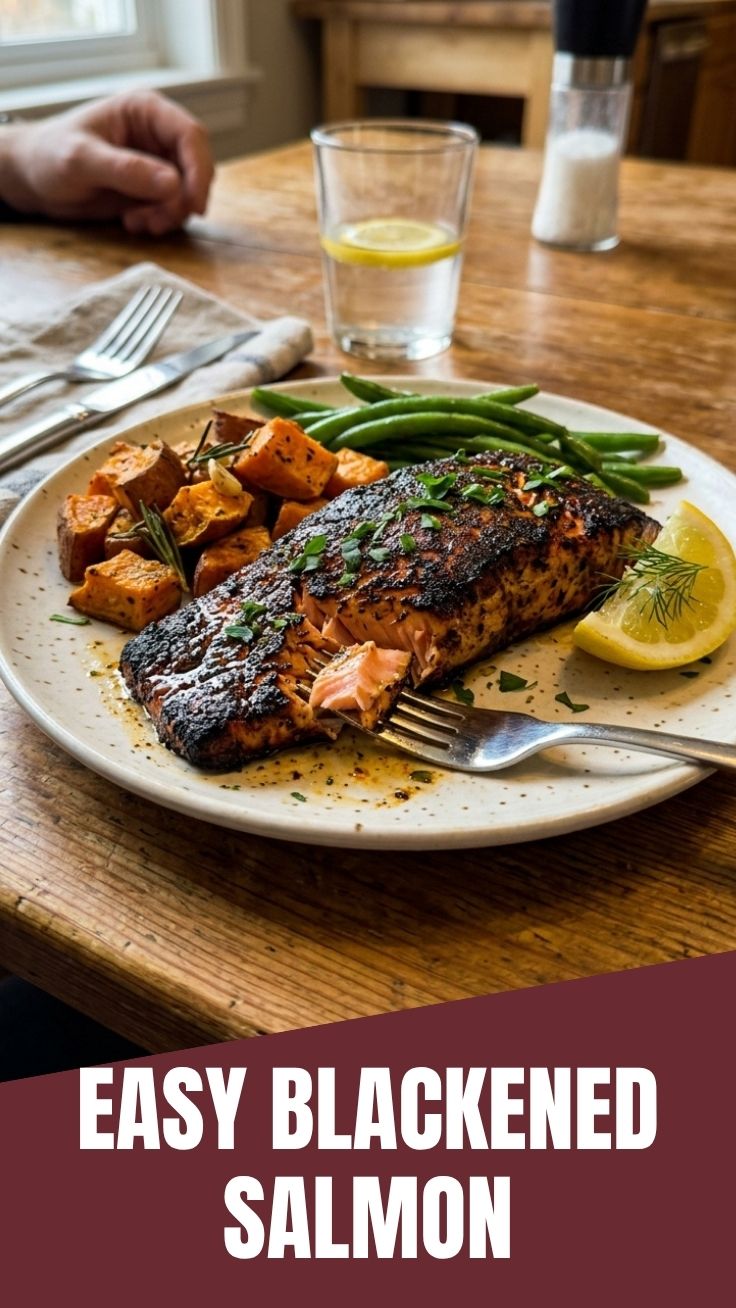
- Prep Time: 10 minutes
- Cook Time: 6-8 minutes
- Resting Time: 2-3 minutes
This recipe is incredibly quick! Plan to have your side dishes ready or nearly ready before you start cooking the salmon, as it comes together very fast. The short resting time allows the juices to redistribute, ensuring a tender, moist fillet.
Step-by-Step Instructions
1. Prepare the Salmon: Pat the salmon fillets completely dry with paper towels. This is a critical step for achieving a crispy crust.
2. Make it Blacken-Ready: In a small bowl, combine your blackening seasoning. Evenly coat both sides of each salmon fillet with the seasoning, pressing gently to adhere. Don’t be shy – this is where the flavor comes from!
3. Heat the Skillet: Place your cast iron skillet over medium-high heat. Add the olive oil and 2 tablespoons of melted butter. Heat until shimmering and just starting to smoke. This high heat is key for developing that signature crust on your Blackened Salmon.
4. Sear the Salmon: Carefully place the salmon fillets, skin-side down (if applicable), into the hot skillet. Cook for 3-4 minutes per side, or until a deep, dark crust forms and the fish flakes easily with a fork. For a true Cajun Salmon, embrace that char – that’s where the magic happens!
5. Baste and Finish: During the last minute of cooking, add the remaining 2 tablespoons of butter to the skillet. Tilt the pan and spoon the melted butter over the salmon, basting it to infuse more flavor and richness.
6. Rest and Serve: Remove the salmon from the skillet and let it rest on a plate for 2-3 minutes. Squeeze fresh lemon juice over the top and serve immediately.
Nutritional Benefits & Advantages
Salmon is a nutritional powerhouse! It’s an excellent source of omega-3 fatty acids, which are vital for heart health, brain function, and reducing inflammation. It’s also packed with high-quality protein, essential for muscle repair and growth, and rich in B vitamins (especially B12) and vitamin D. Choosing salmon makes this dish not only delicious but incredibly good for you, offering a lean protein option that supports overall well-being.
Tips, Variations & Cooking Advice
- DIY Blackening Seasoning: Mix 1 tbsp paprika, 1 tsp onion powder, 1 tsp garlic powder, 1/2 tsp cayenne pepper, 1/2 tsp dried thyme, 1/2 tsp dried oregano, 1/2 tsp black pepper, and 1/4 tsp salt. Adjust cayenne to your spice preference.
- Flavor Boosts: Add a pinch of smoked paprika for extra depth, or a touch of brown sugar to the seasoning for a sweet and savory glaze.
- Alternative Cooking Methods: While cast iron is best for blackening, you can bake salmon at 400°F (200°C) for 12-15 minutes for a less intense crust. Grill for a smoky flavor.
- Side Dishes: This salmon pairs beautifully with a fresh corn and black bean salsa, roasted asparagus, sautéed greens, or a simple lemon-herb couscous.
- Dietary Adaptations: Naturally gluten-free. For dairy-free, use olive oil instead of butter for blackening, or a plant-based butter alternative.
Common Mistakes to Avoid
- Wet Salmon: Ensure fillets are thoroughly patted dry before seasoning. Moisture prevents a good crust from forming.
- Not Enough Heat: Your skillet needs to be very hot to achieve true blackening. Don’t be afraid of a little smoke!
- Overcrowding the Pan: Cook salmon in batches if necessary. Overcrowding lowers the pan’s temperature and steams the fish instead of searing it.
- Overcooking: Salmon cooks quickly. Aim for an internal temperature of 145°F (63°C) for perfectly flaky, moist fish. An overcooked fillet will be dry and tough.
- Underseasoning: Don’t skimp on the blackening seasoning! It’s what gives this dish its iconic flavor.
Storage & Meal Prep Tips
Leftover Blackened Salmon can be stored in an airtight container in the refrigerator for up to 3 days. It’s fantastic flaked into salads, sandwiches, or even tacos for a quick lunch the next day. Reheat gently in a microwave (on medium power) or a warm oven (300°F/150°C) to prevent drying out. Freezing cooked salmon is possible for up to 2-3 months, but the texture may change slightly upon thawing.
Conclusion
There you have it – your definitive guide to preparing mouthwatering Blackened Salmon right in your own kitchen! With its bold flavors and impressive presentation, this recipe for Cajun Salmon is sure to become a regular in your rotation. Embrace the heat, savor the spices, and enjoy the satisfaction of creating a restaurant-quality meal at home. We encourage you to try this recipe and share your culinary adventures in the comments below! What sides do you plan to pair with your perfectly seasoned salmon?
FAQs
Q: Can I use frozen salmon?
A: Yes, but ensure it’s fully thawed in the refrigerator overnight and thoroughly patted dry before seasoning and cooking for best results.
Q: My salmon stuck to the pan, what went wrong?
A: This usually means your pan wasn’t hot enough, or you didn’t use enough oil/butter. Cast iron, high heat, and a good coating of fat are key to preventing sticking.
Q: Is blackening seasoning the same as Cajun seasoning?
A: Blackening seasoning is a type of Cajun-inspired spice blend, often with more emphasis on developing a dark crust through high heat. Cajun seasoning can be broader, used in various dishes, not just for “blackening.”
Q: How do I know when the salmon is done?
A: The most reliable method is an internal temperature of 145°F (63°C). Visually, it should flake easily with a fork and be opaque throughout, with a slightly darker, crispy exterior.
Q: Can I make this dish less spicy?
A: Absolutely! Reduce the amount of cayenne pepper in your blackening seasoning, or omit it entirely if you prefer a milder flavor.