Unleash the Flavor: Your Guide to Mastering Homemade Beef Bulgogi
Ever dreamt of recreating that irresistible, sweet, and savory magic of your favorite Korean BBQ at home? You’re not alone! The allure of perfectly marinated, tender slices of beef, kissed by the flame, is undeniable. But what if we told you that achieving that authentic experience, especially with a dish as beloved as Beef Bulgogi, is not only possible but incredibly rewarding? Preparing this iconic Korean dish in your own kitchen allows for complete control over ingredients, ensuring a fresher, often healthier, and undeniably more personal culinary journey. Get ready to embark on a flavor adventure that will impress your family and friends, all from the comfort of your home.
Ingredients & Kitchen Tools
Crafting restaurant-quality Beef Bulgogi requires a thoughtful selection of fresh ingredients and a few fundamental kitchen tools.
Ingredients:
- 1 ½ lbs thinly sliced beef ribeye or sirloin: The traditional cut for beef bulgogi. Thin slices ensure quick cooking and maximum flavor absorption.
- ½ cup soy sauce (low sodium preferred): Provides the foundational savory, umami flavor. Low sodium helps control the saltiness.
- ¼ cup brown sugar (packed): Balances the savory notes with a caramel-like sweetness, aiding in browning.
- 2 tbsp sesame oil: Adds a distinctive nutty aroma and flavor; crucial for authentic Korean taste.
- 2 tbsp minced garlic: Aromatic cornerstone of Korean cuisine, enhancing depth of flavor.
- 1 tbsp grated fresh ginger: Adds a zesty, slightly spicy kick and aids in tenderizing.
- ¼ cup finely grated or pureed Asian pear (or apple): A natural tenderizer and source of subtle sweetness. Crucial for texture.
- 2 tbsp gochujang (Korean chili paste, optional): For a spicy kick. Adjust to your heat preference.
- 1 large yellow onion, thinly sliced: Adds sweetness and aromatic complexity as it caramelizes.
- 4 green onions, chopped (for garnish): Provides freshness, a mild oniony bite, and vibrant color.
- 1 tbsp sesame seeds (for garnish): Adds a delicate crunch and visual appeal.
Kitchen Tools:
- Large mixing bowl: For marinating the beef.
- Whisk: To combine marinade ingredients thoroughly.
- Cutting board and sharp knife: For slicing beef (if not pre-sliced) and vegetables.
- Large skillet, wok, or grill pan: For cooking the bulgogi. A cast-iron skillet provides excellent browning.
- Tongs or spatula: For turning and stirring the beef.
Prep Time & Cooking Schedule
Prep Time: 20 minutes
Marinating Time: Minimum 30 minutes (ideally 2-4 hours, or overnight for best flavor)
Cook Time: 10-15 minutes
Plan your cooking by ensuring the beef has ample time to marinate. The longer it rests in the aromatic bath, the more profound and tender the final dish will be. If you’re short on time, even 30 minutes will yield delicious results, but for that truly melt-in-your-mouth texture, aim for a few hours.
Step-by-Step Instructions
1. Prepare the Beef: If your beef isn’t pre-sliced, place it in the freezer for about 15-20 minutes to firm up. This makes it much easier to slice super thinly against the grain. Aim for slices about ⅛ inch thick.
2. Make the Marinade: In your large mixing bowl, whisk together the soy sauce, brown sugar, sesame oil, minced garlic, grated ginger, grated Asian pear (or apple), and gochujang (if using).
3. Marinate the Beef: Add the thinly sliced beef and sliced yellow onion to the marinade. Use your hands to gently massage the marinade into the beef and onions, ensuring every piece is coated. Cover the bowl and refrigerate for at least 30 minutes, or up to 24 hours. The extended marination is key to unlocking the true essence of Beef Bulgogi.
4. Cook the Bulgogi: Heat your skillet, wok, or grill pan over medium-high heat until very hot. Add a small amount of neutral oil (like vegetable or canola oil). Working in batches if necessary (to avoid overcrowding, which steams the meat instead of searing it), add a single layer of marinated beef and onions to the hot pan.
5. Sear to Perfection: Cook for 2-3 minutes per side, stirring occasionally, until the beef is beautifully caramelized and cooked through. You’ll notice the onions softening and turning translucent as the Korean BBQ flavors develop.
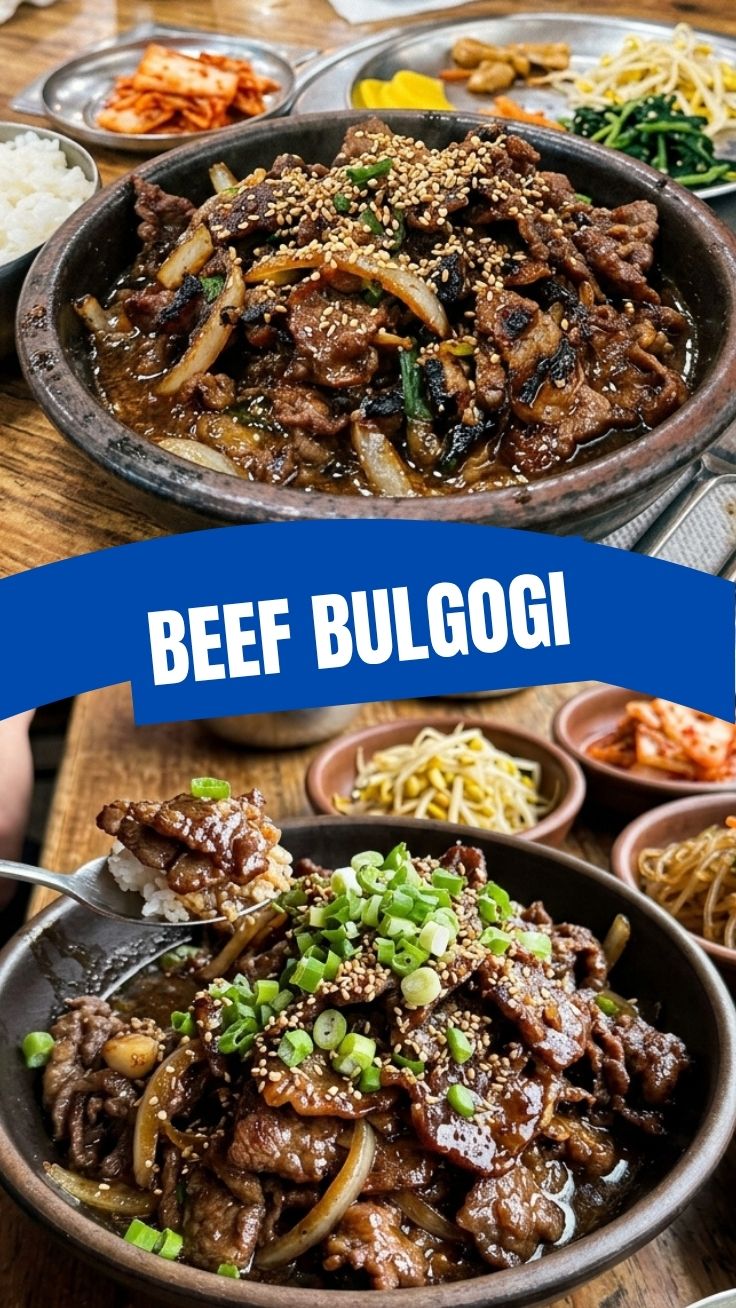
6. Garnish and Serve: Transfer the cooked bulgogi to a serving platter. Garnish with chopped green onions and sesame seeds. Serve immediately with steamed rice, lettuce wraps, and kimchi.
Nutritional Benefits & Advantages
Beef Bulgogi, when prepared with lean cuts of beef, can be a great source of essential nutrients. Beef is rich in high-quality protein, iron (crucial for oxygen transport), and B vitamins (important for energy metabolism). The addition of ingredients like garlic and ginger provides powerful antioxidants and anti-inflammatory compounds. Using an Asian pear or apple as a tenderizer is a natural, healthy alternative to chemical tenderizers, adding natural fiber and vitamins. By making it at home, you can control the amount of sugar and sodium, making it a healthier option than many restaurant versions.
Tips, Variations & Cooking Advice
- Spicy Kick: Increase the gochujang or add a pinch of red pepper flakes for extra heat.
- Vegetarian Option: Marinate thinly sliced firm tofu or shiitake mushrooms using the same bulgogi marinade for a delicious plant-based alternative.
- Grilled Perfection: For an authentic Korean BBQ experience, cook the bulgogi over a charcoal grill. The smoky char adds another layer of incredible flavor.
- Sweetness Control: Adjust the amount of brown sugar to your preference. Some prefer a sweeter bulgogi, while others like it more savory.
- Serving Suggestions: Beyond rice, consider serving bulgogi in lettuce wraps with ssamjang (spicy dipping sauce), as a filling for tacos, or even over noodles.
Common Mistakes to Avoid
- Overcrowding the Pan: This is the most common mistake. Too much meat in the pan lowers the temperature, preventing proper searing and caramelization. Cook in batches for best results.
- Cutting Thick Slices: Thick slices won’t absorb the marinade as effectively and will be tougher. Thin slices are key for tender bulgogi.
- Skipping the Marinade Time: While 30 minutes works, less than that won’t give the flavors time to penetrate, resulting in a less flavorful dish.
- Overcooking: Beef bulgogi cooks quickly due to its thin slices. Overcooking will dry out the meat and make it tough. Cook until just done.
Storage & Meal Prep Tips
Leftover Beef Bulgogi can be stored in an airtight container in the refrigerator for up to 3-4 days. It’s excellent for meal prep! You can portion it out with rice and vegetables for easy lunches. To reheat, gently warm in a skillet over medium heat, or in the microwave, being careful not to overcook. It can also be frozen for up to 2-3 months. Thaw overnight in the refrigerator before reheating.
Conclusion
Mastering homemade Beef Bulgogi is a culinary triumph that brings the vibrant flavors of Korea straight to your table. From the careful selection of ingredients to the patient marination and sizzling sear, each step contributes to a dish that is both deeply satisfying and incredibly versatile. We hope this guide empowers you to confidently recreate the magic of a classic Korean BBQ feast. Don’t hesitate to experiment with the flavors and make this recipe your own. Share your bulgogi creations with us – we can’t wait to see your delicious results!
FAQs
Q1: Can I use different cuts of beef?
A1: While ribeye and sirloin are traditional due to their tenderness and marbling, you can use other cuts like chuck eye or flank steak. Just ensure they are sliced very thinly against the grain for tenderness.
Q2: What if I can’t find Asian pear?
A2: A ripe Bosc pear or even a regular apple (like Fuji or Gala) can be used as a substitute for the Asian pear. They still provide crucial enzymes for tenderizing and a subtle sweetness.
Q3: Is it possible to make this gluten-free?
A3: Yes! Simply substitute regular soy sauce with a gluten-free tamari. Most other ingredients are naturally gluten-free, but always double-check labels, especially for gochujang.
Q4: How can I make this spicier?
A4: Increase the amount of gochujang (Korean chili paste) in the marinade, or add a pinch of gochugaru (Korean chili flakes) during cooking for an extra kick.
Q5: What’s the best way to get thinly sliced beef?
A5: Partially freezing the beef for 15-20 minutes makes it much firmer and easier to slice finely with a sharp knife. If you prefer, ask your butcher to thinly slice it for you.