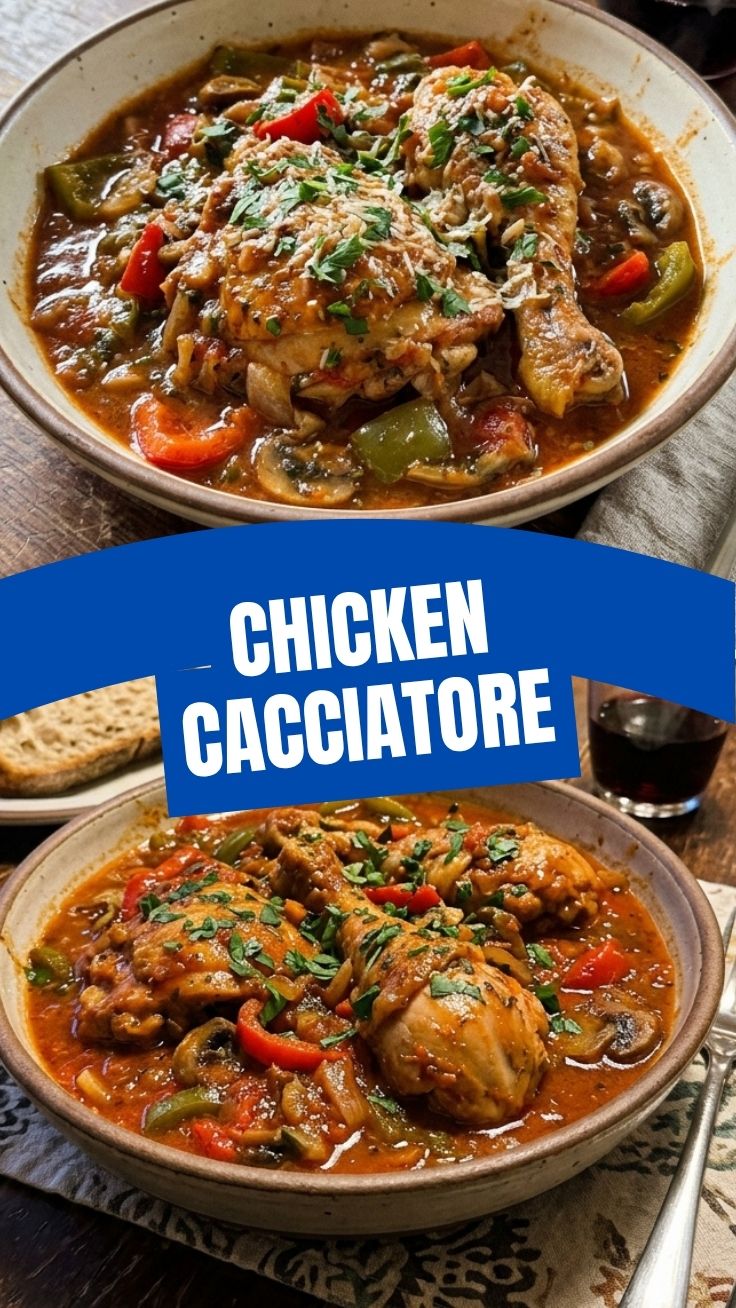
Master the Art of Chicken Cacciatore: Your Guide to a Savory Italian Classic
Tired of dinner dilemmas? Imagine a dish that’s rich in flavor, steeped in tradition, and surprisingly easy to make. That’s the magic of Chicken Cacciatore. This rustic Italian stew, meaning “hunter’s style chicken,” is more than just a meal; it’s an experience, bringing the warmth and heartiness of Italian cuisine straight to your kitchen. Learning to prepare classic Italian chicken recipes like this at home isn’t just about saving money or eating healthier; it’s about connecting with culinary heritage and filling your home with intoxicating aromas that promise a truly satisfying dinner. If you’ve been looking for a comforting yet sophisticated dish to add to your repertoire, you’ve come to the right place.
Ingredients & Kitchen Tools
- 2 lbs Bone-in, skin-on chicken thighs: (About 4-6 pieces) Provides maximum flavor and keeps the chicken moist during slow cooking. You can substitute with boneless, skinless thighs for a leaner option, but adjust cooking time.
- 2 tbsp Olive oil: Essential for browning the chicken and sautéing aromatics, contributing to the dish’s flavor foundation.
- 1 Large onion: (Finely chopped) Forms the aromatic base, adding sweetness and depth.
- 2-3 Cloves garlic: (Minced) The backbone of most Italian chicken recipes, offering pungent, savory notes.
- 1 Green bell pepper: (Sliced) Adds a fresh, slightly sweet, and peppery flavor.
- 1 Red bell pepper: (Sliced) Offers a sweeter counterpoint to the green pepper and vibrant color.
- 1 (28 ounce) can crushed tomatoes: Forms the rich, saucy base. Fire-roasted crushed tomatoes can add an extra layer of smoky flavor.
- 1/2 cup Dry red wine: (Such as Chianti or Merlot) Deglazes the pan, adding complexity and depth to the sauce. Chicken broth can be used as a non-alcoholic substitute.
- 1/2 cup Chicken broth: Hydrates the sauce and enhances overall savory notes.
- 1 tsp Dried oregano: A classic Italian herb that imparts an earthy, slightly peppery aroma.
- 1/2 tsp Dried thyme: Adds subtle floral and minty notes, complementing the savory chicken.
- 1/4 tsp Red pepper flakes: (Optional) For a hint of heat. Adjust to your spice preference.
- Salt and freshly ground black pepper: To taste, for seasoning every layer of the dish.
- Fresh parsley: (Chopped, for garnish) Adds freshness and a pop of color before serving.
- Large Dutch oven or oven-safe pot: Ideal for even heat distribution and allows for stove-to-oven cooking.
- Tongs: For easy handling of chicken and vegetables.
- Wooden spoon or spatula: For stirring and scraping the pan.
- Sharp knife and cutting board: For precise vegetable preparation.
Prep Time & Cooking Schedule
- Prep time: 20 minutes
- Cook time: 45-60 minutes
- Total time: 1 hour 5 minutes – 1 hour 20 minutes
This dish is perfect for a comforting weeknight meal or a leisurely weekend dinner. The active prep is minimal, allowing the rich flavors to meld beautifully during the simmering process. You can chop your vegetables ahead of time to streamline the cooking process. The beauty of Chicken Cacciatore lies in its ability to taste even better the next day, making it an excellent candidate for meal prepping!
Step-by-Step Instructions
1. Sear the Chicken: Pat chicken thighs dry with paper towels and season generously with salt and pepper. Heat olive oil in a large Dutch oven over medium-high heat. Sear the chicken skin-side down for 6-8 minutes until golden brown and crispy. Flip and sear for another 3-4 minutes. Remove chicken from the pot and set aside, leaving the rendered fat in the pot. This step is crucial for developing deep flavor in your Chicken Cacciatore.
2. Sauté Aromatics: Reduce heat to medium. Add chopped onion to the pot and sauté for 5-7 minutes until softened and translucent. Add minced garlic and bell peppers, cooking for another 3-5 minutes until slightly tender and fragrant.
3. Deglaze and Build Sauce: Pour in the red wine, scraping up any browned bits from the bottom of the pot with a wooden spoon – this is called deglazing and adds immense flavor. Allow the wine to simmer for 2-3 minutes until slightly reduced.
4. Simmer and Flavor: Stir in the crushed tomatoes, chicken broth, dried oregano, dried thyme, and red pepper flakes (if using). Bring the sauce to a gentle simmer.
5. Return Chicken and Cook: Return the seared chicken thighs to the pot, nestling them into the sauce. Ensure the chicken is partially submerged. Cover the pot and reduce heat to low. Simmer for 30-40 minutes, or until the chicken is cooked through and tender. The internal temperature should reach 165°F (74°C). The slow simmer allows the chicken to absorb the rich flavors, creating truly authentic Italian chicken recipes.
6. Serve: Taste and adjust seasoning as needed. Garnish with fresh parsley before serving.
Nutritional Benefits & Advantages
Chicken Cacciatore is a powerhouse of nutrition. Chicken provides lean protein, essential for muscle repair and satiety. The generous amount of vegetables like bell peppers and onions contribute a wealth of vitamins (especially Vitamin C from peppers), minerals, and fiber. Tomatoes are rich in lycopene, a potent antioxidant linked to heart health. Cooked in olive oil, a source of healthy monounsaturated fats, this dish offers a balanced and wholesome meal that is both delicious and beneficial for your well-being.
Tips, Variations & Cooking Advice
- Spice Level: For more heat, increase the red pepper flakes. For a milder version, omit them.
- Mushroom Magic: Add sliced mushrooms (cremini or button) along with the bell peppers for an earthy depth.
- Olives or Capers: Stir in pitted Kalamata olives or capers during the last 10 minutes of cooking for a briny, tangy kick.
- Herbs: Fresh rosemary or bay leaves can be added to the sauce during simmering for additional aromatic complexity.
- Serving Suggestions: Traditionally served with pasta, polenta, or crusty bread to soak up the delicious sauce. It’s also excellent with mashed potatoes or a simple green salad.
- Dietary Adaptations:
* Gluten-Free: This recipe is naturally gluten-free if served with gluten-free pasta or polenta.
* Dairy-Free: The recipe is naturally dairy-free.
* Low-Carb: Serve with cauliflower rice or zucchini noodles instead of traditional pasta.
Common Mistakes to Avoid
- Not browning the chicken: Skipping this step means missing out on a crucial layer of flavor and texture. High heat and patience are key for that golden-brown crust.
- Overcrowding the pan: When searing chicken or sautéing vegetables, do not overcrowd the pot. This lowers the temperature and steams rather than browns the ingredients, resulting in bland flavors. Cook in batches if necessary.
- Omitting the wine/broth: The liquid helps deglaze the pan and forms the basis of a rich, flavorful sauce. Don’t skip it!
- Not simmering long enough: The magic of Chicken Cacciatore happens during
the slow simmer, allowing the chicken to become incredibly tender and the flavors to meld.
- Under-seasoning: Taste and adjust seasoning at various stages, especially before serving.
Storage & Meal Prep Tips
Chicken Cacciatore is a fantastic meal prep option as its flavors deepen overnight.
- Refrigeration: Store cooled leftovers in airtight containers in the refrigerator for up to 3-4 days.
- Freezing: This dish freezes exceptionally well. Allow to cool completely, then transfer to freezer-safe containers or bags. It can be frozen for up to 3 months. Thaw overnight in the refrigerator before reheating.
- Reheating: Gently reheat on the stovetop over medium-low heat, or in the microwave, until heated through. Add a splash of broth or water if the sauce appears too thick. To maintain texture, avoid reheating at very high temperatures.
Conclusion
Embracing the rich flavors of a homemade Chicken Cacciatore is a culinary journey worth taking. This iconic dish, a staple among classic Italian chicken recipes, proves that sophisticated taste doesn’t have to mean complicated cooking. By following these steps and tips, you can confidently create a meal that’s not only deeply satisfying but also a testament to good, honest cooking. We encourage you to try this recipe, share your delicious results with us, and explore the endless possibilities that Italian cuisine has to offer!
FAQs
Q1: Can I use boneless chicken breasts instead of thighs?
A1: Yes, you can, but adjust the cooking time. Boneless, skinless chicken breasts cook faster (about 20-25 minutes of simmering) and can dry out if overcooked. Thighs are recommended for their flavor and ability to remain moist.
Q2: What if I don’t have red wine?
A2: You can substitute the red wine with an equal amount of chicken broth. While the wine adds complexity, the dish will still be delicious with only broth.
Q3: How can I make the sauce thicker?
A3: If your sauce is too thin, you can uncover the pot during the last 10-15 minutes of simmering to allow some liquid to evaporate. Alternatively, remove the chicken, bring the sauce to a gentle boil, and reduce it to your desired consistency.
Q4: Can I add other vegetables?
A4: Absolutely! Carrots, celery, zucchini, or even hardy greens like spinach or kale (added towards the end) would be great additions to enhance the nutritional value and flavor.
Q5: Is this dish spicy?
A5: The level of spice is entirely up to you. The recipe includes optional red pepper flakes, which can be adjusted or omitted based on your preference. Without them, the dish is savory and mild.