Unleash the Flavor: Your Ultimate Guide to Crafting Perfect Holiday Stuffing From Scratch
Ever wondered what truly elevates a holiday meal from good to unforgettable? Often, it’s the side dishes that steal the show, and no dish is more iconic and anticipated than a perfectly executed batch of Stuffing. Moving beyond the box mix and embracing homemade provides a depth of flavor and a comforting aroma that store-bought simply cannot replicate. This comprehensive guide will walk you through crafting a sensational holiday side, ensuring every bite is a triumph of taste and texture. We’ll delve into the secrets of selecting the finest ingredients and mastering techniques to create a side dish that your family will rave about for years to come.
Ingredients & Kitchen Tools
Crafting the perfect holiday Stuffing starts with quality components. Here’s what you’ll need to gather:
- 12-14 cups Stale Bread Cubes: (About 1.5 lbs, preferably day-old sourdough, artisan white, or whole wheat; helps absorb moisture without becoming mushy).
- 1 cup (2 sticks) Unsalted Butter: (For sautéing aromatics and enriching the flavor).
- 2 large Yellow Onions: (Finely diced, provides a sweet and savory base).
- 4-5 stalks Celery: (Finely diced, adds a crucial aromatic crunch).
- 3 cloves Garlic: (Minced, intensifies the savory notes).
- 1 lb fresh Sage Sausage: (Remove from casings and crumble, optional but highly recommended for rich flavor).
- 1 tbsp Fresh Sage: (Chopped, for a classic, earthy aroma).
- 1 tbsp Fresh Thyme: (Chopped, complements the sage beautifully).
- 1 tsp Dried Rosemary: (Crushed, adds a pungent, piney note).
- 4-5 cups Chicken or Vegetable Broth: (Low sodium preferred, for moisture and flavor; adjust as needed for desired consistency).
- 2 large Eggs: (Lightly beaten, acts as a binder to prevent crumbling).
- Salt and Freshly Ground Black Pepper: (To taste, essential for seasoning).
- Optional Add-ins: 1 cup chopped dried cranberries (for sweetness), 1 cup toasted pecans or walnuts (for crunch), 1/2 cup chopped fresh parsley (for freshness).
Kitchen Tools: Large mixing bowl, large skillet or Dutch oven, 9×13 inch baking dish, measuring cups and spoons, sharp knife, cutting board, whisk, spatula.
Prep Time & Cooking Schedule
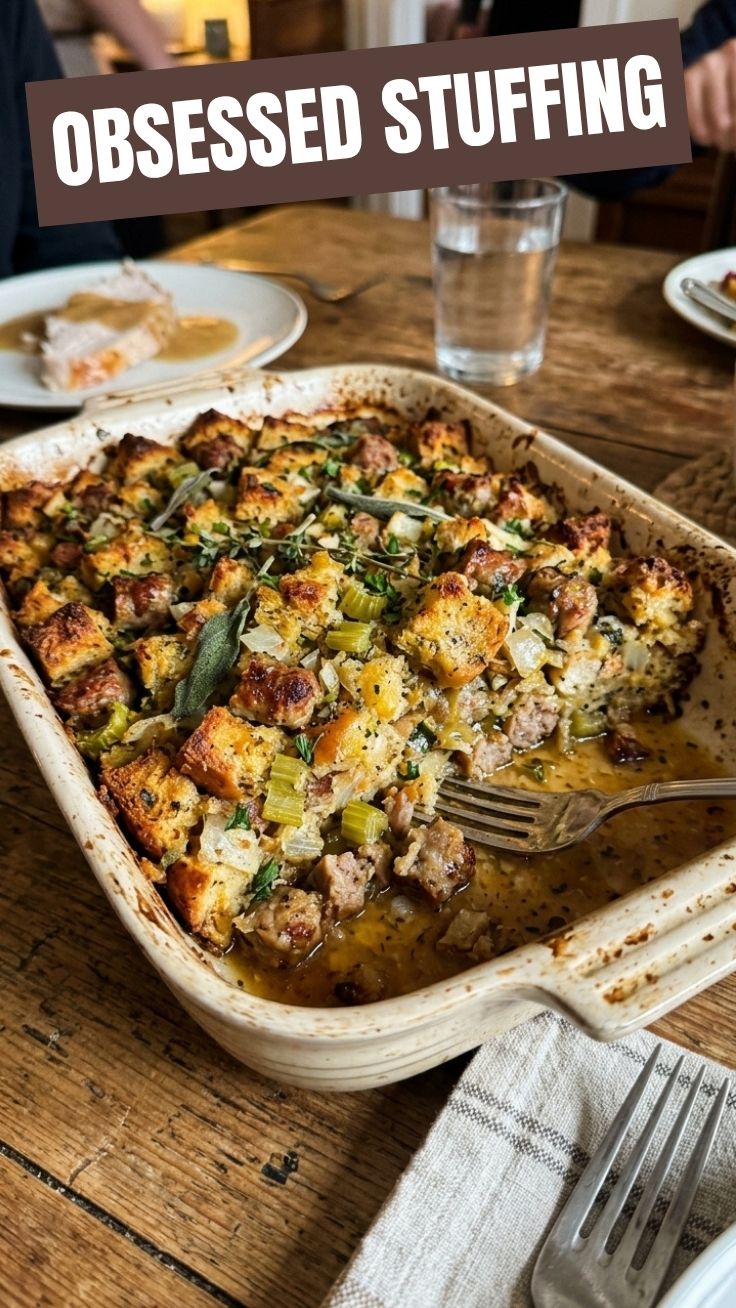
Planning is key to a stress-free holiday meal. This Stuffing recipe is designed for flexibility.
- Prep Time: 25-30 minutes (This includes dicing vegetables and browning sausage.)
- Active Cook Time: 40-50 minutes
- Resting Time (after baking): 10-15 minutes (Allows the flavors to meld and the Stuffing to set for easier serving.)
Advance Prep: You can cube the bread and let it stale for a day or two in advance. The vegetable mix (without sausage) can also be prepared a day ahead and stored in the refrigerator. The entire Stuffing can be assembled the day before, covered, and refrigerated, then baked on the day of your event, potentially adding an extra 10-15 minutes to the baking time if cold.
Step-by-Step Instructions
1. Prepare the Bread: If your bread isn’t already stale, preheat your oven to 250°F (120°C). Spread the bread cubes on baking sheets and bake for 20-30 minutes, or until dried out and lightly toasted. This is crucial for avoiding soggy Stuffing.
2. Sauté Aromatics: In a large skillet or Dutch oven, melt the butter over medium heat. Add the diced onions and celery, cooking until softened, about 8-10 minutes. For robust flavor in your holiday side, ensure these aromatics are translucent.
3. Brown the Sausage (if using): Add the crumbled sage sausage to the skillet with the vegetables. Cook, breaking it up with a spoon, until browned and cooked through. Drain any excess fat.
4. Add Herbs & Garlic: Stir in the minced garlic, fresh sage, fresh thyme, and dried rosemary. Cook for another minute until fragrant. This ensures the herbal notes are vibrant and aromatic.
5. Combine Ingredients: In a large mixing bowl, combine the stale bread cubes with the sautéed vegetable and sausage mixture. Add any optional ingredients like cranberries or nuts at this stage.
6. Moisten and Bind: In a separate small bowl, whisk together the chicken broth and beaten eggs. Pour this liquid mixture over the bread and vegetable mixture. Toss gently but thoroughly until the bread cubes are evenly moistened. Be careful not to overmix, as this can lead to a dense texture. The goal is moist, not soggy.
7. Seasoning Check: Taste a small piece of the moistened Stuffing mixture. Adjust salt and pepper as needed. Properly seasoned ingredients are the secret to outstanding flavor.
8. Bake: Transfer the Stuffing mixture into a greased 9×13 inch baking dish. Cover with aluminum foil. Bake for 30 minutes.
9. Brown Top: Remove the foil and bake for an additional 10-20 minutes, or until the top is golden brown and crispy. An internal temperature of 165°F (74°C) indicates doneness.
10. Rest and Serve: Let the baked Stuffing rest for 10-15 minutes before serving. This allows it to set and makes for easier scooping.
Nutritional Benefits & Advantages
Beyond its irresistible taste, homemade Stuffing offers several advantages. Using fresh vegetables like onions and celery provides dietary fiber and essential vitamins. By making it from scratch, you have complete control over the ingredients, allowing you to reduce sodium, use healthier fats, or incorporate whole-grain bread for increased fiber. Sage and thyme are not just flavor enhancers; they also offer antioxidant properties. Adding nuts contributes healthy fats and protein, making this side dish more robust.
Tips Variations & Cooking Advice
- Gluten-Free: Easily adapt this recipe by using gluten-free bread. Ensure all other ingredients (like broth) are certified gluten-free.
- Vegetarian/Vegan: Omit the sausage. Use vegetable broth and a plant-based butter substitute. For a vegan version, use a flax egg (1 tbsp ground flaxseed + 3 tbsp water per egg) as a binder.
- Different Breads: Experiment with cornbread for a sweeter, crumbier Stuffing, or rye for a more robust, earthy flavor.
- Flavor Boosts: Sauté mushrooms with the onions and celery for an umami kick. Add a splash of dry white wine or apple cider to the broth for extra depth. Roast Chestnuts can also be a delightful addition.
- Cooking in the Bird: If stuffing a turkey, ensure the Stuffing reaches 165°F (74°C) for food safety. Also, remember that Stuffing cooked inside the bird adds to the overall cooking time of the turkey.
- Crispier Top: For extra crispiness, broil for the last 2-3 minutes, watching carefully to prevent burning.
Common Mistakes to Avoid
- Soggy Stuffing: This is often due to using fresh bread. Always use stale or toasted bread to ensure it absorbs moisture without becoming mushy. Also, don’t drown it in too much broth; add it gradually.
- Dry Stuffing: Not enough liquid or overbaking are common culprits. Ensure your bread cubes are adequately moistened, and cover the dish with foil for most of the baking time to retain moisture.
- Underseasoned: Don’t be afraid to season generously with salt and pepper, especially when dealing with a large volume of Stuffing. Tasting the mixture before baking is key.
- Not Draining Fat: If using sausage, ensure you drain most of the rendered fat to prevent the Stuffing from becoming greasy.
Storage & Meal Prep Tips
Leftover Stuffing is a holiday treat!
- Refrigeration: Store cooled Stuffing in an airtight container in the refrigerator for up to 3-4 days.
- Freezing: For longer storage, freeze portions in freezer-safe containers or bags for up to 3 months. Thaw overnight in the refrigerator before reheating.
- Reheating: Reheat in the oven at 350°F (175°C) until warmed through, covering with foil to prevent drying out. A splash of extra broth can help revive its moisture. You can also reheat smaller portions in the microwave.
Conclusion
Mastering homemade holiday Stuffing is a rewarding culinary journey that elevates any festive table. By carefully selecting your ingredients and following these detailed steps, you’re not just preparing a side dish; you’re crafting an unforgettable experience for your loved ones. We encourage you to try this recipe, personalize it with your favorite additions, and share your delicious results! What’s your secret ingredient for the perfect holiday Stuffing?
FAQs
Q1: Can I make this Stuffing ahead of time?
A1: Absolutely! You can assemble the entire dish a day in advance, cover it, and refrigerate. Just add an extra 10-15 minutes to the baking time if it’s going into the oven cold.
Q2: What’s the best type of bread for Stuffing?
A2: Stale sourdough, artisan white, or whole wheat bread work best. Their sturdy texture holds up well to moisture without becoming mushy. Avoid very soft sandwich breads.
Q3: How do I prevent my Stuffing from being too dry or too soggy?
A3: Ensure your bread is stale/toasted before mixing. For dryness, add broth gradually until the bread is just moistened, not saturated. To prevent sogginess, cover with foil during most of the baking process and only remove it to brown the top.
Q4: Can I use different herbs?
A4: Yes! While sage and thyme are classic, you can experiment with marjoram or poultry seasoning. Always use fresh herbs for the best flavor, but dried can be used if fresh isn’t available (use about 1/3 the amount of dried to fresh).
Q5: What are some good additions to customize this Stuffing?
A5: Chopped apples, dried fruits (cranberries, apricots), toasted nuts (pecans, walnuts), sautéed mushrooms, or even cooked bacon bits are fantastic additions to personalize your Stuffing.