Unlocking Culinary Delights: Your Guide to Exceptional Homemade Fried Rice
Ever wondered how to replicate that irresistible, fluffy, and flavor-packed fried rice you crave from your favorite takeout spot, right in your own kitchen? The secret lies not just in the ingredients, but in the technique. Preparing dishes like Shrimp Fried Rice at home offers myriad benefits, from control over fresh ingredients and seasonings to the sheer satisfaction of creating a masterpiece. Forget soggy, bland versions; this comprehensive guide will empower you to craft a fried rice experience that rivals any restaurant. And for those who love all things oceanic, the principles we discuss here are equally applicable to mastering a delectable seafood fried rice. Get ready to elevate your home cooking!
Ingredients & Kitchen Tools
Crafting the perfect fried rice requires a thoughtful selection of fresh ingredients and the right tools.
Ingredients:
- Cooked Rice (cold): 3-4 cups (day-old rice is crucial for texture)
- Shrimp (peeled & deveined): 1 lb (fresh or frozen, thawed; consider medium to large for best texture)
- Eggs: 2 large (lightly beaten, for a delicate scramble)
- Vegetable Oil: 2-3 tbsp (high smoke point oil like canola, peanut, or grapeseed)
- Garlic: 2-3 cloves (minced, for aromatic depth)
- Ginger: 1 tbsp (freshly grated, for a zesty kick)
- Onion: ½ medium (finely diced, for a foundational sweetness)
- Carrots: 1 large (diced small, for color and a touch of sweetness)
- Peas: ½ cup (frozen, thawed; for bursts of freshness)
- Soy Sauce: 2-3 tbsp (low sodium preferred, adjust to taste and for saltiness)
- Sesame Oil: 1 tsp (for nutty aroma and deep flavor)
- Green Onions: 2-3 stalks (chopped, for garnish and freshness)
- Salt & Black Pepper: To taste (essential seasoning)
- Optional: 1 tsp oyster sauce (for umami richness), a pinch of white pepper (traditional touch)
Kitchen Tools:
- Large Wok or Skillet: Essential for even heat distribution and space to toss
- Spatula: Preferably a wide, flat metal one for efficient tossing
- Small Bowl: For beating eggs
- Cutting Board & Knife: For prepping vegetables and shrimp
- Measuring Spoons & Cups: For accurate ingredient portions
Prep Time & Cooking Schedule
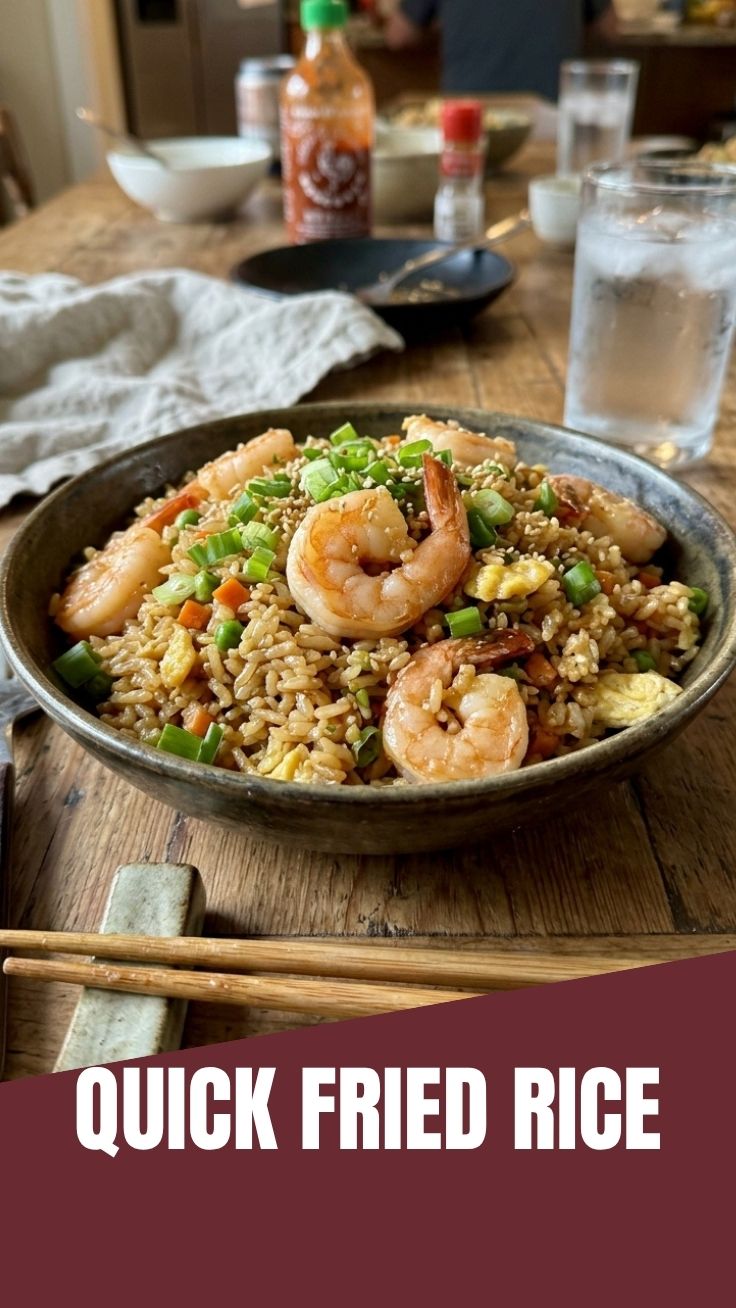
Achieving that perfect fried rice texture is all about preparation and timing. Here’s how to plan:
- Prep Time: 15-20 minutes (includes chopping vegetables, mincing garlic/ginger, and preparing shrimp)
- Cook Time: 10-15 minutes (fried rice cooks quickly at high heat)
- Total Time: 25-35 minutes
Ensure all ingredients are prepped and lined up before you start cooking (“mise en place”). Fried rice moves fast, so you won’t have time to chop mid-cook. Use day-old, cold rice – this is critical! Freshly cooked, warm rice will clump and become mushy.
Step-by-Step Instructions
1. Prep Shrimp: Pat shrimp dry with paper towels. Season lightly with salt and pepper.
2. Scramble Eggs: Heat 1 tbsp vegetable oil in your wok or skillet over medium-high heat. Pour in beaten eggs and scramble until just set, then remove from wok and set aside.
3. Cook Shrimp: Add another 1 tbsp vegetable oil to the wok. Add shrimp and cook for 1-2 minutes per side, just until pink and opaque. Do not overcook. Remove from wok and set aside with the scrambled eggs.
4. Sauté Aromatics: Add remaining 1 tbsp vegetable oil, if needed, to the hot wok. Add minced garlic and ginger, cooking for 30 seconds until fragrant.
5. Add Vegetables: Add diced onions and carrots. Stir-fry for 2-3 minutes until slightly softened but still crisp. Stir in thawed peas.
6. Incorporate Rice: Add the cold, day-old cooked rice to the wok. Break up any clumps with your spatula. Stir-fry for 3-5 minutes, ensuring the rice is heated through and slightly toasted. The goal is separate, individual grains.
7. Combine & Season: Return the cooked shrimp and scrambled eggs to the wok. Drizzle in soy sauce and sesame oil (and oyster sauce if using). Stir continuously to evenly distribute the ingredients and seasonings. Ensure each grain of Shrimp Fried Rice gets coated with that beautiful savory goodness.
8. Final Touches: Taste and adjust seasoning with additional soy sauce, salt, or pepper if needed. Garnish with chopped green onions. Serve immediately. This method works wonders for creating a delicious seafood fried rice as well, simply by swapping or adding your favorite seafood.
Nutritional Benefits & Advantages
Homemade fried rice, especially when packed with vegetables and lean protein like shrimp, offers a surprisingly nutritious meal. Shrimp is an excellent source of lean protein, low in calories, and rich in selenium, B12, and phosphorus. The various vegetables (carrots, peas, onions, garlic, ginger) provide essential vitamins, minerals, and dietary fiber, supporting digestion and overall health. Using fresh ingredients eliminates artificial flavors and excessive sodium often found in takeout versions, giving you full control over your dietary intake.
Tips, Variations & Cooking Advice
- Rice is Key: Always use cold, day-old rice. If you must use freshly cooked rice, spread it on a baking sheet and refrigerate for at least an hour to dry it out.
- High Heat: Fried rice loves high heat. This ensures a quick cook, prevents stickiness, and gives that characteristic slightly charred flavor.
- Don’t Overcrowd: Cook in batches if your wok isn’t large enough, especially if making a massive portion of Shrimp Fried Rice or seafood fried rice. Overcrowding lowers the temperature and steams the ingredients instead of frying them.
- Flavor Boosts: A dash of fish sauce can add an extra layer of umami. For a spicy kick, add a pinch of chili flakes or a swirl of chili oil at the end.
- Vegetable Variations: Experiment with bell peppers, corn, broccoli florets, or bean sprouts. Add quick-cooking vegetables later in the process to maintain their crispness.
- Protein Swaps: Sliced chicken, pork, tofu, or simply more eggs make great alternatives or additions.
Common Mistakes to Avoid
- Using Warm/Freshly Cooked Rice: The #1 culprit for mushy fried rice. Starchy warm rice clumps and absorbs too much moisture.
- Low Heat: Results in steaming, not frying, leading to bland and soggy results. Keep that heat high!
- Overcrowding the Wok: Leads to uneven cooking, steaming, and a lack of that fried texture.
- Overcooking Shrimp/Protein: Shrimp cooks very quickly. Remove it as soon as it’s opaque to keep it tender.
- Adding Too Much Sauce Too Soon: Can make the rice soggy. Add sauces towards the end and taste as you go.
Storage & Meal Prep Tips
Homemade fried rice is excellent for meal prep!
- Cooling: Allow the fried rice to cool completely before storing.
- Refrigeration: Store in an airtight container in the refrigerator for up to 3-4 days.
- Freezing: While possible, freezing can alter the texture of the rice and shrimp. If freezing, spread a single layer on a baking sheet and freeze until solid, then transfer to a freezer-safe bag or container for up to 1 month. Thaw in the refrigerator overnight.
- Reheating: For best results, reheat in a hot skillet or wok with a tiny bit of oil, breaking up the clumps. You can also microwave, but it may compromise the texture.
Conclusion
Mastering the art of homemade fried rice is incredibly rewarding. From the precise preparation of cold rice to the high-heat stir-frying technique, each step contributes to a dish that is far superior to any takeout option. By following this guide, you can confidently prepare a fantastic Shrimp Fried Rice that will impress your family and friends. Don’t stop there; apply these techniques to create an equally extraordinary seafood fried rice, adapting the principles to your favorite ocean bounty. Experiment with variations, personalize the flavors, and most importantly, enjoy the delicious fruits of your culinary efforts! Share your fried rice triumphs in the comments below!
FAQs
Q1: Can I use brown rice for fried rice?
A1: Yes, you can! Brown rice works well, but it might require a longer cooking time during the initial stir-fry to achieve the desired texture. Ensure it’s day-old and cold.
Q2: What’s the best way to prevent the fried rice from being sticky?
A2: The most crucial step is using day-old, cold rice. Also, make sure your wok is very hot, don’t overcrowd it, and use enough oil to coat the grains without making it greasy.
Q3: How can I make my fried rice healthier?
A3: Reduce the amount of oil, use low-sodium soy sauce, and significantly increase the proportion of vegetables. You can also opt for brown rice or quinoa.
Q4: My shrimp became rubbery. What went wrong?
A4: Overcooking is the common culprit. Shrimp cooks very quickly, typically 1-2 minutes per side until just pink and opaque. Remove them from the heat as soon as they’re done.
Q5: Can I make this vegetarian or vegan?
A5: Absolutely! Omit the shrimp and replace it with tofu (pressed and cubed), extra vegetables, or plant-based protein. Use a vegan soy sauce and omit oyster sauce.