Unlocking Authentic Flavors: Your Guide to Homemade Pad Thai Perfection
Have you ever savored the vibrant, complex flavors of a truly exceptional Pad Thai and wondered if you could recreate that magic in your own kitchen? The good news is, you absolutely can! While often perceived as a daunting dish, mastering homemade Pad Thai is a rewarding culinary journey that opens the door to authentic Thai cuisine. Beyond the sheer delight of tasting your own creation, preparing this iconic dish at home offers unparalleled freshness, control over ingredients, and the satisfaction of knowing exactly what goes into your meal. Forget soggy takeout; today, we’re diving deep into crafting a delicious, restaurant-quality Pad Thai loaded with tender Noodles from scratch. Get ready to impress your taste buds and your dinner guests!
Ingredients & Kitchen Tools
Crafting the perfect Pad Thai requires a harmonious blend of fresh ingredients and a few essential kitchen companions.
Ingredients:
- 12 oz flat rice noodles: (Also known as Chanthaburi or sen yai noodles) Essential for the authentic texture of Pad Thai.
- 8 oz shrimp or chicken breast: (Peeled, deveined for shrimp; thinly sliced for chicken) Your protein choice.
- 2 large eggs: Adds richness and binds the dish.
- 1/4 cup tamarind paste: (Unsweetened, dissolved in 1/4 cup hot water) The sour key to Pad Thai’s unique flavor.
- 1/4 cup fish sauce: (Good quality) Provides umami and salinity.
- 3 tbsp palm sugar: (Finely chopped or grated) Adds sweetness and balances other flavors.
- 1 tbsp soy sauce: (Light or regular) Further enhances savory depth.
- 2 tbsp vegetable oil: For stir-frying.
- 3 cloves garlic: (Minced) Aromatic base.
- 1 small shallot: (Minced) Adds a subtle oniony sweetness.
- 1 cup bean sprouts: Fresh, crispy texture.
- 1/2 cup chopped chives or green onions: Aromatic garnish.
- 1/4 cup roasted peanuts: (Roughly chopped) Adds crunch and nutty flavor.
- 1 lime: (Cut into wedges) Essential for serving, adds brightness.
- Optional garnishes: Red chili flakes, a sprig of cilantro.
Kitchen Tools:
- Large wok or large non-stick skillet: Essential for stir-frying at high heat.
- Spatula: For tossing and stirring.
- Mixing bowls: For ingredients and sauce.
- Measuring cups and spoons: For accuracy.
- Cutting board and knife: For ingredient prep.
Prep Time & Cooking Schedule
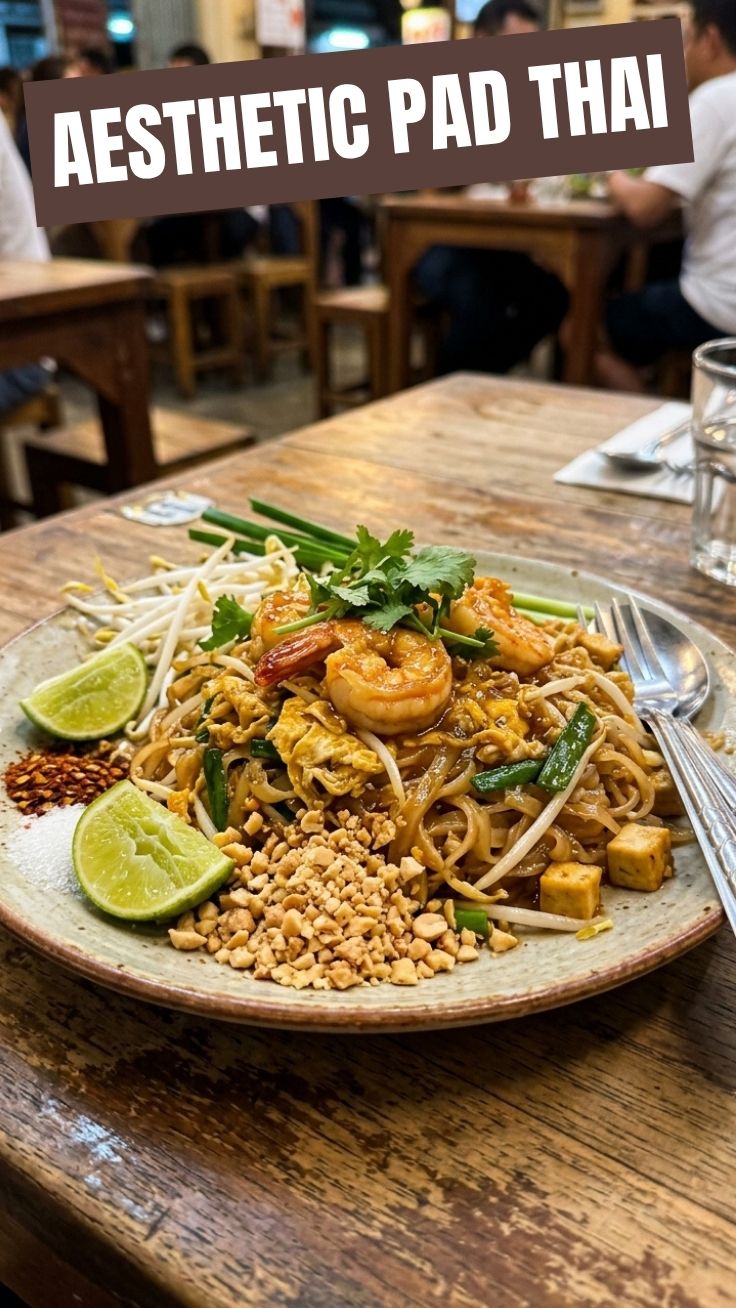
Prep Time: 25 minutes
Cook Time: 15-20 minutes
Resting Time: 5 minutes (for noodles)
The key to a successful Pad Thai is having all your ingredients prepped and ready before you start cooking. This dish comes together quickly once the heat is on! Begin by soaking your rice noodles. This allows them to soften and become pliable, ready for their brief cook in the wok. Meanwhile, prepare your sauce, chop your vegetables, and have your protein ready. This “mise en place” approach ensures a smooth and enjoyable cooking process, preventing frantic scrambling once the stir-frying begins.
Step-by-Step Instructions
1. Prepare the Noodles: Place the dried flat rice noodles in a large bowl. Cover them completely with hot water (not boiling) and let them soak for 20-30 minutes, or until pliable but still slightly firm to the bite. Drain thoroughly and set aside.
2. Make the Pad Thai Sauce: In a small bowl, whisk together the dissolved tamarind paste, fish sauce, palm sugar, and soy sauce until the sugar is fully dissolved.
3. Cook Protein and Aromatics: Heat 1 tablespoon of vegetable oil in a large wok or skillet over medium-high heat. Add your shrimp or chicken and stir-fry until cooked through (shrimp will turn pink, chicken will be opaque). Remove from the wok and set aside. Add the remaining 1 tablespoon of oil, then add the minced garlic and shallot. Stir-fry for 30 seconds until fragrant.
4. Scramble Eggs: Push the aromatics to one side of the wok. Crack the eggs into the empty space and scramble them until just set but still slightly moist.
5. Combine and Cook Noodles: Add the drained, prepared Noodles to the wok with the aromatics and scrambled egg. Pour the prepared Pad Thai sauce over the noodles. Toss continuously with tongs or a spatula for 2-3 minutes, ensuring the noodles are evenly coated and heated through, absorbing the rich flavors of the sauce.
6. Add Final Ingredients: Return the cooked protein to the wok. Add the bean sprouts and chopped chives (or green onions). Toss quickly for another 1-2 minutes until the sprouts are just slightly wilted but still retain their crispness.
7. Serve: Transfer the finished Pad Thai to a serving platter. Garnish generously with roasted peanuts and a lime wedge. Serve immediately.
Nutritional Benefits & Advantages
Homemade Pad Thai offers several nutritional advantages. By making it yourself, you control the amount of oil, sugar, and sodium, often significantly less than restaurant versions. Rice noodles are naturally gluten-free, making this a suitable option for those with sensitivities. The dish is rich in protein from shrimp or chicken, essential for muscle repair and satiety. Bean sprouts provide a good source of vitamins C and K, while tamarind paste offers antioxidants. The fresh herbs and lime add not only flavor but also a boost of vitamins.
Tips, Variations & Cooking Advice
- Noodle Texture: The biggest secret to great Pad Thai Noodles is not over-soaking them. They should be pliable but firm. They will continue to soften in the wok.
- Protein Swaps: Feel free to use tofu (pressed and pan-fried until crispy), beef, or a mix of seafood for your protein.
- Vegetable Boost: Add thinly sliced carrots, bell peppers, or bok choy for extra nutrition and color.
- Spice It Up: For heat lovers, add a pinch of red chili flakes during the stir-fry or serve with a side of sriracha.
- Sweetness Adjustment: Taste the sauce before adding to the noodles. Adjust palm sugar to your preference.
- Wok Heat: Keep your wok hot! Stir-frying at a high temperature prevents the noodles from sticking and creates that desirable smoky flavor.
Common Mistakes to Avoid
- Overcooked Noodles: This leads to a mushy dish. Always soak to pliable, not soft.
- Under-soaked Noodles: They will be tough and not absorb the sauce.
- Crowding the Wok: Cooking in batches if your wok isn’t large enough ensures even cooking and prevents steaming instead of stir-frying.
- Lacking “Wok Hei”: Not enough heat results in a less flavorful dish. Ensure your wok is smoking hot before adding ingredients.
- Skipping the Lime: The fresh squeeze of lime at the end is crucial for balancing the rich flavors. Don’t omit it!
Storage & Meal Prep Tips
Leftover Pad Thai can be stored in an airtight container in the refrigerator for up to 3 days. While the noodles might become a bit softer, the flavors often meld beautifully overnight. To reheat, gently warm in a skillet over medium heat, adding a splash of water if the noodles seem dry. Avoid microwaving if possible, as it can make the noodles rubbery. Freshly squeezed lime juice after reheating can revive the flavors. This dish is best enjoyed fresh, but leftovers are a delicious lunch!
Conclusion
There you have it – a comprehensive guide to crafting an incredibly flavorful and satisfying homemade Pad Thai that rivals your favorite Thai restaurant. From selecting the perfect flat rice Noodles to balancing the sweet, sour, salty, and savory notes of the iconic sauce, this recipe empowers you to take control of your culinary adventures. Don’t be shy; give this recipe a try and savor the authentic tastes of Thailand right in your own kitchen! We encourage you to experiment, personalize, and most importantly, enjoy the journey. Share your Pad Thai creations with us in the comments below!
FAQs
Q1: Can I use different types of noodles?
A1: While traditional Pad Thai uses flat rice noodles, you can experiment with other flat, wide rice noodles. Avoid thin vermicelli or egg noodles, as they don’t provide the right texture.
Q2: I can’t find tamarind paste. What’s a good substitute?
A2: While not ideal, a mixture of lime juice and a tiny bit of brown sugar (to mimic the slight sweetness of tamarind) can be used in a pinch. Start with a smaller amount and taste as you go.
Q3: My noodles are sticking together. What went wrong?
A3: This often happens if the noodles were over-soaked, not drained well enough, or if the wok wasn’t hot enough. Make sure to toss continuously and cook in batches if your pan is too small.
Q4: How do I make this vegetarian/vegan?
A4: Replace shrimp/chicken with pressed and pan-fried tofu. Ensure your fish sauce is vegan (some brands offer this) or use a combination of soy sauce and a splash of seaweed extract for umami. Omit the eggs or use a vegan egg substitute.
Q5: What’s the best way to get that authentic smoky flavor?
A5: The “wok hei” (breath of the wok) comes from using a very hot wok and stir-frying ingredients quickly. Ensure your wok is smoking before adding oil and ingredients, and avoid overcrowding the pan.