Master the Art of Perfectly Moist Cornbread: Your New Go-To Recipe
Ever wondered how to achieve that perfect balance of crispy edges and a tender, melt-in-your-mouth interior in every bite of Cornbread? Look no further! This comprehensive guide will transform your kitchen into a haven of comforting aromas and have you baking the most delicious Homemade cornbread you’ve ever tasted. Preparing this Southern staple at home isn’t just about the incredible flavor; it’s about customizing ingredients to your preference, avoiding unnecessary additives, and experiencing the satisfying warmth of a truly homemade dish. Mastering the art of Cornbread is simpler than you think, especially with our proven recipe and expert tips.
Ingredients & Kitchen Tools
Gather your culinary arsenal! Here’s what you’ll need to create this fantastic Cornbread:
- 1 ½ cups yellow cornmeal (medium grind preferred): Provides the authentic texture and flavor. Don’t use fine-ground for this recipe.
- ½ cup all-purpose flour: Gives the cornbread a lighter crumb and prevents it from being too dense.
- 2 tablespoons granulated sugar (optional, adjust to taste): For a touch of sweetness; omit for a more savory profile.
- 2 teaspoons baking powder: The leavening agent that makes the cornbread rise beautifully.
- ½ teaspoon baking soda: Works with buttermilk to create a tender, airy texture.
- 1 teaspoon salt: Enhances all the flavors.
- 1 cup buttermilk: Adds tanginess and moisture, reacting with the baking soda for lift. (Substitution: 1 cup milk + 1 tablespoon lemon juice or white vinegar, let sit for 5 minutes).
- ½ cup milk (whole milk recommended): For additional moisture and richness.
- 1 large egg: Acts as a binder and adds to the structure.
- ¼ cup unsalted butter, melted: Provides richness and a golden crust. You can also use bacon grease for a traditional, smoky flavor.
- Cast iron skillet (10-inch) or 8×8 inch baking dish: A cast iron skillet creates a superior crispy crust.
- Large mixing bowl: For combining dry ingredients.
- Medium mixing bowl: For wet ingredients.
- Whisk: To ensure all ingredients are well combined and lump-free.
- Rubber spatula: For scraping down bowls and folding ingredients.
- Measuring cups and spoons: For accurate ingredient quantities.
Prep Time & Cooking Schedule
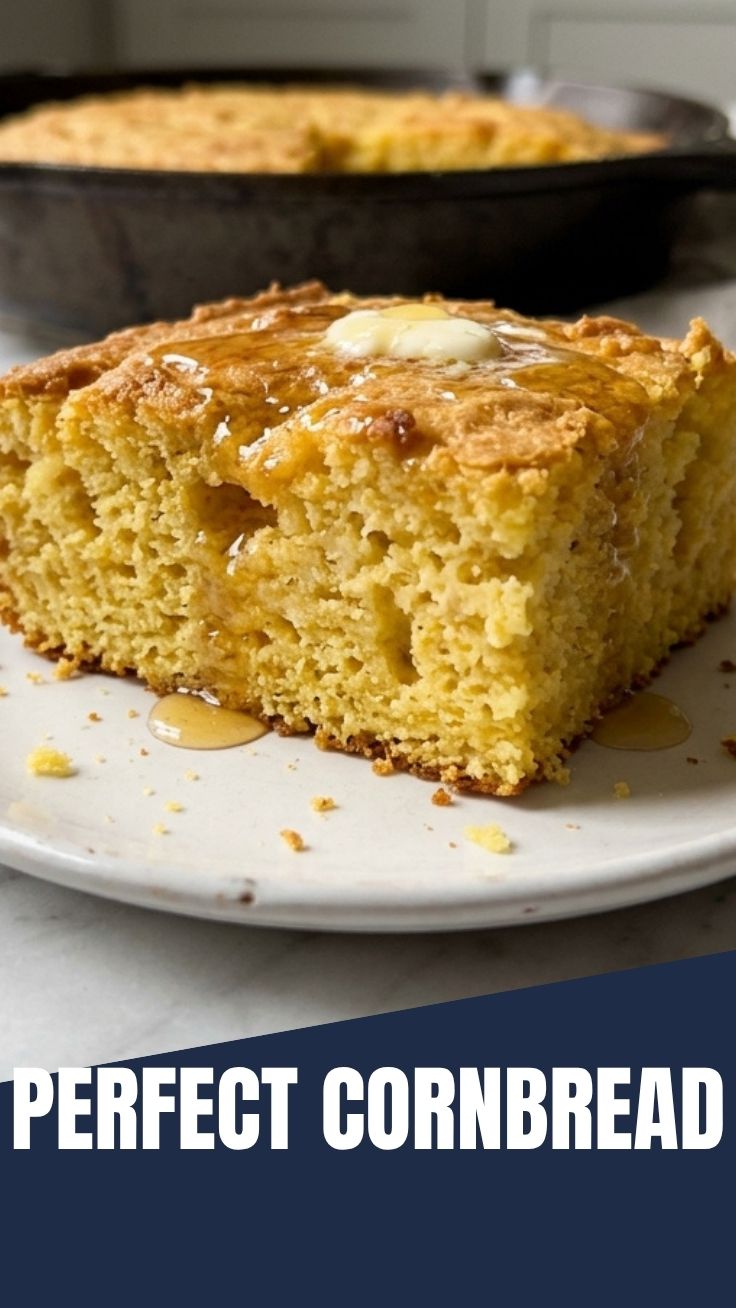
Planning makes perfect! Here’s a breakdown to ensure your Homemade cornbread emerges flawlessly:
- Prep Time: 10 minutes
- Cook Time: 20-25 minutes
- Resting Time: 5-10 minutes (after baking, before slicing)
This recipe is quick enough for a weeknight side but impressive enough for a weekend gathering. Preheat your oven and skillet while you mix the batter for optimal results.
Step-by-Step Instructions
Follow these clear steps to achieve a truly remarkable Cornbread:
1. Preheat & Prepare: Preheat your oven to 400°F (200°C). Place your cast iron skillet (if using) in the oven while it preheats. This ensures a hot surface for an extra crispy crust. If using a baking dish, lightly grease it.
2. Combine Dry Ingredients: In a large mixing bowl, whisk together the cornmeal, flour, sugar (if using), baking powder, baking soda, and salt until thoroughly combined.
3. Mix Wet Ingredients: In a separate medium bowl, whisk together the buttermilk, milk, egg, and melted butter (or bacon grease) until smooth.
4. Combine Wet and Dry: Pour the wet ingredients into the dry ingredients. Stir with a rubber spatula or whisk just until combined. Be careful not to overmix; a few lumps are perfectly fine and prevent a tough texture. Overmixing develops the gluten in the flour, which isn’t ideal for tender cornbread.
5. Bake: Carefully remove the hot skillet from the oven (use oven mitts!). Pour the Homemade cornbread batter into the hot skillet. The edges should sizzle slightly. Return the skillet to the oven.
6. Bake until Golden: Bake for 20-25 minutes, or until the cornbread is golden brown on top and a wooden skewer inserted into the center comes out clean.
7. Cool & Serve: Remove from the oven and let cool in the skillet for 5-10 minutes before slicing and serving.
Nutritional Benefits & Advantages
Our Cornbread isn’t just delicious; it offers some excellent benefits too! Cornmeal is a good source of dietary fiber, which aids digestion and promotes a feeling of fullness. It also contains essential minerals like iron and phosphorus. By making it at home, you control the amount of sugar and fat, allowing you to create a healthier version tailored to your dietary needs. The buttermilk adds probiotics, supporting gut health, and eggs contribute protein.
Tips, Variations & Cooking Advice
- Sweeter Profile: Increase sugar to 1/4 cup.
- Savory Twist: Add 1/2 cup shredded cheddar cheese, diced jalapeños, or cooked corn kernels to the batter.
- Gluten-Free: Substitute all-purpose flour with a 1:1 gluten-free baking blend that contains xanthan gum. Ensure your cornmeal is certified gluten-free.
- Dairy-Free: Use a dairy-free milk substitute (almond or soy milk) and a dairy-free buttermilk substitute (dairy-free milk + lemon juice/vinegar). Replace butter with a neutral oil like canola or melted coconut oil.
- Muffin Form: Pour batter into a greased muffin tin and bake for 15-20 minutes.
- Crumbly vs. Cakey: For a more traditional, crumbly cornbread, use less flour (around 1/4 cup). For a cake-like texture, use the full 1/2 cup of flour as specified.
- Bacon Fat Hack: For an unparalleled depth of flavor, melt a tablespoon of bacon fat in your skillet before adding the batter.
Common Mistakes to Avoid
- Overmixing: This is the cardinal sin of cornbread! It develops gluten, leading to a tough, dry texture. Mix just until combined.
- Cold Skillet: A hot skillet is crucial for that desirable crispy crust. Don’t skip preheating it.
- Too Much Flour: Too much flour can make the cornbread dense and cake-like, losing its distinctive crumbly texture. Stick to the specified amount for a balanced result.
- Incorrect Oven Temperature: If the oven is too low, the cornbread won’t rise properly; too high, and it will burn before cooking through. A calibrated oven is key.
- Substituting Self-Rising Cornmeal: If using self-rising cornmeal, omit the baking powder, baking soda, and salt as these are already included.
Storage & Meal Prep Tips
Leftover Homemade cornbread is a joy to have on hand!
- Refrigeration: Store cooled cornbread in an airtight container at room temperature for up to 2 days, or in the refrigerator for up to 5 days.
- Freezing: For longer storage, wrap individual slices or the whole loaf tightly in plastic wrap, then aluminum foil, and freeze for up to 3 months. Thaw at room temperature before reheating.
- Reheating: To maintain moisture, reheat slices in the microwave briefly (15-30 seconds), or warm in a preheated oven at 300°F (150°C) for 10-15 minutes until heated through. A toaster oven also works wonders for crisping up slices.
- Meal Prep Uses: Leftover cornbread is fantastic for making cornbread dressing, cornbread croutons for salads, or crumbled into chili.
Conclusion
There you have it – your definitive guide to baking the perfect Cornbread. This recipe, with its simple steps and customizable options, empowers you to create a dish that’s truly your own. Whether enjoyed warm with a pat of butter, alongside a hearty bowl of chili, or as the star of a holiday meal, the joy of a truly delicious slice of Homemade cornbread is unmatched. We encourage you to try this recipe and discover the magic of baking a Southern classic from scratch. Share your creations and let us know your favorite variations!
FAQs
Q1: Can I use white cornmeal instead of yellow?
A1: Yes, you can. White cornmeal will yield a slightly milder flavor and a lighter appearance, but the texture will be similar.
Q2: My cornbread came out dry. What went wrong?
A2: Overmixing is a common culprit for dry cornbread, as is overbaking. Ensure you mix just until combined and remove it from the oven as soon as a skewer comes out clean.
Q3: Can I make this recipe in a 9×13 inch pan?
A3: You can, but you might need to double the recipe or your cornbread will be very thin. Alternatively, use a smaller 8×8 inch pan for the proportions listed.
Q4: What’s the best way to get a perfectly crispy bottom crust?
A4: Definitely preheat your cast iron skillet in the oven while it warms up. Pouring the batter into a sizzling hot skillet is key to that desirable crispy, golden bottom.