Master the Art of Cacio e Pepe: A Journey to Rome’s Simplest Perfection
Have you ever wondered if true culinary magic could be woven with just a few humble ingredients? Today, we’re peeling back the layers of one of Rome’s most iconic and deceptively simple pasta dishes: Cacio e Pepe. This isn’t just a recipe; it’s an exercise in technique, patience, and appreciation for fundamental flavors. Far from being intimidating, mastering this dish at home offers immense satisfaction, transforming everyday ingredients into an extraordinary experience. Forget complicated sauces and endless prep – with this guide, you’ll unlock the secrets to a perfectly creamy, peppery, and utterly delightful pasta, a cornerstone of classic Italian pasta recipes.
Ingredients & Kitchen Tools
Crafting the perfect Cacio e Pepe requires precision with minimal components. Here’s what you’ll need:
- Spaghetti or Tonnarelli (320g / 11 oz): The traditional choice for its ideal cylindrical shape that holds the sauce beautifully. Tonnarelli is a thicker, square-cut spaghetti.
- Pecorino Romano DOP (180g / 6.3 oz): Authenticity is key! This hard, salty sheep’s milk cheese from Lazio is irreplaceable for its sharp, pungent flavor. Avoid substitutes if possible.
- Freshly Ground Black Pepper (15g / 0.5 oz): Coarsely ground is essential for both flavor and textural contrast. Don’t use pre-ground pepper.
- Salt (for pasta water): Just enough to season the water, as the Pecorino Romano is quite salty. Estimate about 1 tablespoon per gallon of water.
- Pasta Water (approx. 2-3 cups, reserved): The starchy magic ingredient that emulsifies the sauce.
Kitchen Tools:
- Large Pot: For cooking the pasta.
- Large, Deep Skillet or Sauté Pan: Crucial for tossing the pasta and creating the sauce. Its wider surface area helps with evaporation and emulsification.
- Fine-Mesh Grater: For grating the Pecorino Romano finely. This ensures it melts smoothly.
- Tongs: For easy pasta transfer and tossing.
- Whisk: Optional, but can help create a smoother cheese paste.
Prep Time & Cooking Schedule
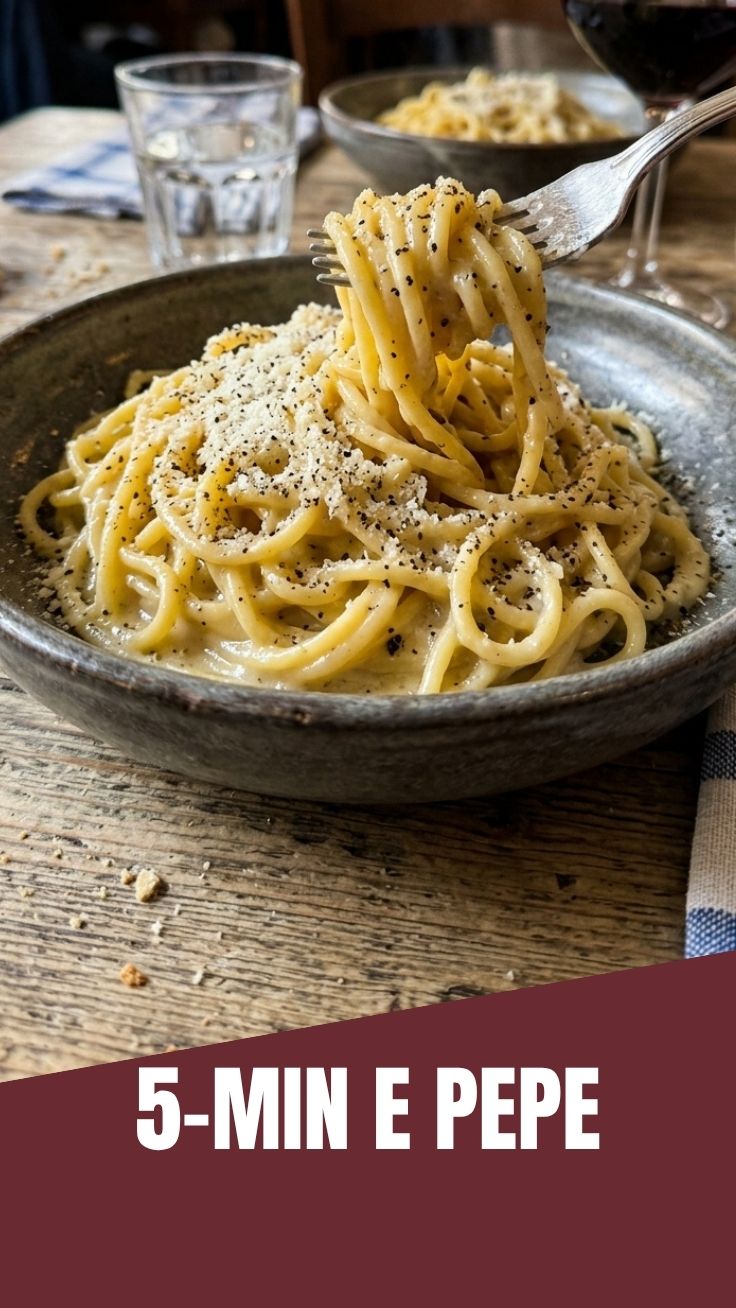
The beauty of Cacio e Pepe lies in its speed once you’ve prepped.
- Prep Time: 10 minutes (grating cheese, grinding pepper)
- Cook Time: 8-12 minutes (pasta cooking time)
- Total Time: Approximately 20-25 minutes
This dish comes together very quickly, so ensure all your ingredients are prepped and ready before you start cooking the pasta. The process of making the sauce happens swiftly once the pasta is al dente, making it a perfect weeknight meal when you crave something special.
Step-by-Step Instructions
Ready to unlock the secrets to creamy perfection? Follow these steps for an unforgettable Cacio e Pepe, a true jewel among Italian pasta recipes.
1. Prepare the Pecorino Romano: Grate the Pecorino Romano very finely. This is crucial for a smooth sauce. Set aside about ¼ cup for garnishing later.
2. Toast the Pepper: In your large skillet (off the heat), add the freshly ground black pepper. Place the skillet over medium heat and toast the pepper for 1-2 minutes until fragrant. Be careful not to burn it. Remove the skillet from the heat briefly.
3. Boil the Pasta Water: Bring a large pot of water to a rolling boil. Season generously with salt – it should taste like the sea.
4. Cook the Pasta: Add the spaghetti or tonnarelli to the boiling water. Cook according to package directions until very al dente – about 2-3 minutes less than recommended. You want it firm with a bite, as it will finish cooking in the sauce.
5. Create the Pepper Paste: While the pasta cooks, add about ¼ cup of the hot pasta water to the toasted pepper in your skillet. Swirl to combine and create a peppery paste.
6. Reserve Pasta Water: Before draining, generously reserve at least 1 ½ to 2 cups of the starchy pasta water. This is your magic ingredient.
7. Combine Pasta and Pepper: Using tongs, transfer the al dente pasta directly from the pot into the skillet with the pepper paste. Do not drain the pasta completely – let some water cling to it.
8. Emulsify the Sauce: Return the skillet to low heat. Begin to toss the pasta vigorously, adding small splashes of reserved pasta water as needed.
9. Introduce the Pecorino: Gradually add the grated Pecorino Romano, ½ cup at a time, continuously tossing and adding small amounts of pasta water. The key is to keep tossing and introducing liquid to melt the cheese and create a silky, emulsified sauce. The sauce should be coating the strands, not pooling at the bottom. If it’s too dry, add more pasta water; if it’s too wet, toss off the heat until it thickens slightly.
10. Serve Immediately: As soon as the sauce is creamy and coats the pasta, serve it hot. Garnish with the remaining grated Pecorino Romano and an extra grind of black pepper.
Nutritional Benefits & Advantages
Beyond its incredible flavor, Cacio e Pepe offers some notable dietary advantages. Pecorino Romano is a good source of calcium and protein, essential for bone health and muscle repair. While it’s higher in sodium, the dish’s rich taste means a smaller portion can be incredibly satisfying. Black pepper, beyond its culinary appeal, is known for its antioxidant and anti-inflammatory properties, thanks to compounds like piperine. When prepared with high-quality ingredients, this dish provides sustained energy from complex carbohydrates, making it a fulfilling and comforting meal.
Tips, Variations & Cooking Advice
- Ingredient Quality: There are only three main ingredients, so their quality is paramount. Invest in authentic Pecorino Romano and freshly ground whole black peppercorns.
- Gradual Water Addition: The biggest mistake is adding too much pasta water at once. Add it a tablespoon or two at a time, patiently tossing, until the desired creaminess is achieved.
- Temperature Control: Keep the heat low to medium-low when emulsifying the sauce. High heat will cause the cheese to clump or split.
- Toasting Pepper: Don’t skip toasting the pepper! It awakens its flavors and adds depth.
- Spice Level: Adjust the amount of pepper to your liking. Some enjoy a very peppery kick.
- Dairy-Free Option: While not traditional, for a “cacio-style” dish, nutritional yeast and a plant-based unsalted cheese substitute (perhaps a firm cashew cheese) can be used, replicating some of the umami and texture.
- Gluten-Free: Use a good quality gluten-free spaghetti or bucatini. The technique remains the same.
Common Mistakes to Avoid
- Not grating cheese finely enough: Leads to clumpy, un-melted cheese.
- Adding cold water instead of hot pasta water: Cold water will shock the cheese and prevent emulsification.
- Draining all the pasta water: This starchy liquid is non-negotiable for the sauce.
- Too high heat: Causes the cheese to seize and separate, resulting in an oily, clumpy mess instead of a smooth sauce.
- Overcooking the pasta: Leads to mushy pasta that can’t hold up to the vigorous tossing required.
Storage & Meal Prep Tips
Cacio e Pepe is best enjoyed immediately after preparation. The sauce, due to the nature of the cheese and starch, doesn’t reheat particularly well. The cheese can separate, and the pasta can become soggy.
- Leftovers: If you do have leftovers, store them in an airtight container in the refrigerator for up to 1 day.
- Reheating: Reheat gently on the stovetop over very low heat, adding a splash of water or a tiny bit of broth and stirring constantly to try and re-emulsify. However, it will likely not regain its original silky texture. This is truly a dish to be savored fresh.
Conclusion
Mastering Cacio e Pepe is a culinary rite of passage, a testament to the power of a few perfect ingredients and precise technique. This humble dish, a cornerstone of classic Italian pasta recipes, proves that simplicity can indeed be the ultimate sophistication. By following these steps and understanding the nuances of temperature and emulsification, you can recreate the magic of Rome in your own kitchen. We encourage you to try this iconic recipe, savor its peppery, cheesy embrace, and share your delicious results! What are your favorite simple pasta dishes? Let us know in the comments!
FAQs
Q1: My sauce is clumpy, not creamy. What went wrong?
A1: This usually happens due to the cheese not being finely grated, the heat being too high, or not enough reserved pasta water. Ensure Pecorino is powdery, keep heat low, and add starchy water gradually while continuously tossing.
Q2: Can I use Parmesan cheese instead of Pecorino Romano?
A2: While you can use Parmesan, it will significantly change the flavor profile. Pecorino Romano is sharper, saltier, and has a distinct sheep’s milk tang that is crucial for authentic Cacio e Pepe.
Q3: How much pasta water should I really reserve?
A3: Always reserve more than you think you’ll need, at least 1.5 to 2 cups. You can always add more, but you can’t take it away! The starch in the water is key to emulsification.
Q4: Can I add butter to the sauce for extra creaminess?
A4: While some recipes suggest a tiny knob of butter, authentic Cacio e Pepe relies solely on the starchy pasta water and Pecorino Romano for its creaminess. Adding butter can alter the traditional flavor and texture.