Unlock Umami: Crafting the Perfect Hoisin Garlic Noodles at Home
Ever wished you could recreate that irresistible, savory-sweet noodle dish from your favorite Asian restaurant in your own kitchen? Today, we’re diving deep into the art of making flavorful Hoisin Garlic Noodles, a culinary journey that promises to tantalize your taste buds and impress your dinner guests. Beyond the sheer deliciousness, mastering this recipe at home offers invaluable benefits: control over ingredients, customization to dietary needs, and the pure satisfaction of creating a restaurant-quality meal. Forget those greasy takeout versions; our homemade Hoisin Garlic Noodles recipe not only delivers on taste but also allows for healthier variations, making it a staple among fantastic asian noodle recipes that you’ll want to add to your repertoire. Let’s get cooking!
Ingredients & Kitchen Tools
Gather your culinary arsenal and fresh produce before you begin this delightful adventure.
Ingredients:
- 1 lb (450g) Egg Noodles or Lo Mein Noodles: The foundation of our dish, these noodles are springy and absorb sauces beautifully. You can substitute with ramen noodles (without the seasoning packet) or even spaghetti in a pinch.
- 1 tbsp Sesame Oil: Adds a nutty aroma and flavor, crucial for authentic asian noodle recipes.
- 1 tbsp Vegetable Oil (or other neutral oil): For sautéing, ensures even cooking without overpowering flavors.
- 4 cloves Garlic, minced: The star of our garlic-infused sauce, essential for its pungent, aromatic kick.
- 1-inch Fresh Ginger, grated: Adds a zesty, warming counterpoint to the garlic and hoisin.
- ½ cup Hoisin Sauce: The namesake and backbone of the sauce, providing sweet, savory, and slightly tangy notes.
- 2 tbsp Soy Sauce (low sodium preferred): Enhances the umami and provides seasoning.
- 1 tbsp Rice Vinegar: Adds a touch of acidity to balance the sweetness of the hoisin.
- 1 tbsp Brown Sugar (lightly packed): Boosts the sweetness and caramelization.
- ½ tsp Red Pepper Flakes (optional): For a subtle or pronounced kick of heat.
- ½ cup Chicken or Vegetable Broth: Thins the sauce to the perfect consistency.
- 2 Green Onions, sliced (for garnish): Adds a fresh, oniony bite and vibrant color.
- 1 tbsp Toasted Sesame Seeds (for garnish): Provides a delightful crunch and visual appeal.
Kitchen Tools:
- Large Pot: For boiling the noodles.
- Large Skillet or Wok: Ideal for stir-frying and combining all ingredients.
- Whisk: To blend the sauce ingredients smoothly.
- Measuring Cups & Spoons: For accurate ingredient measurement.
- Garlic Press or Grater: For quick and efficient garlic and ginger preparation.
- Tongs or Spatula: For stirring and tossing the noodles.
Prep Time & Cooking Schedule
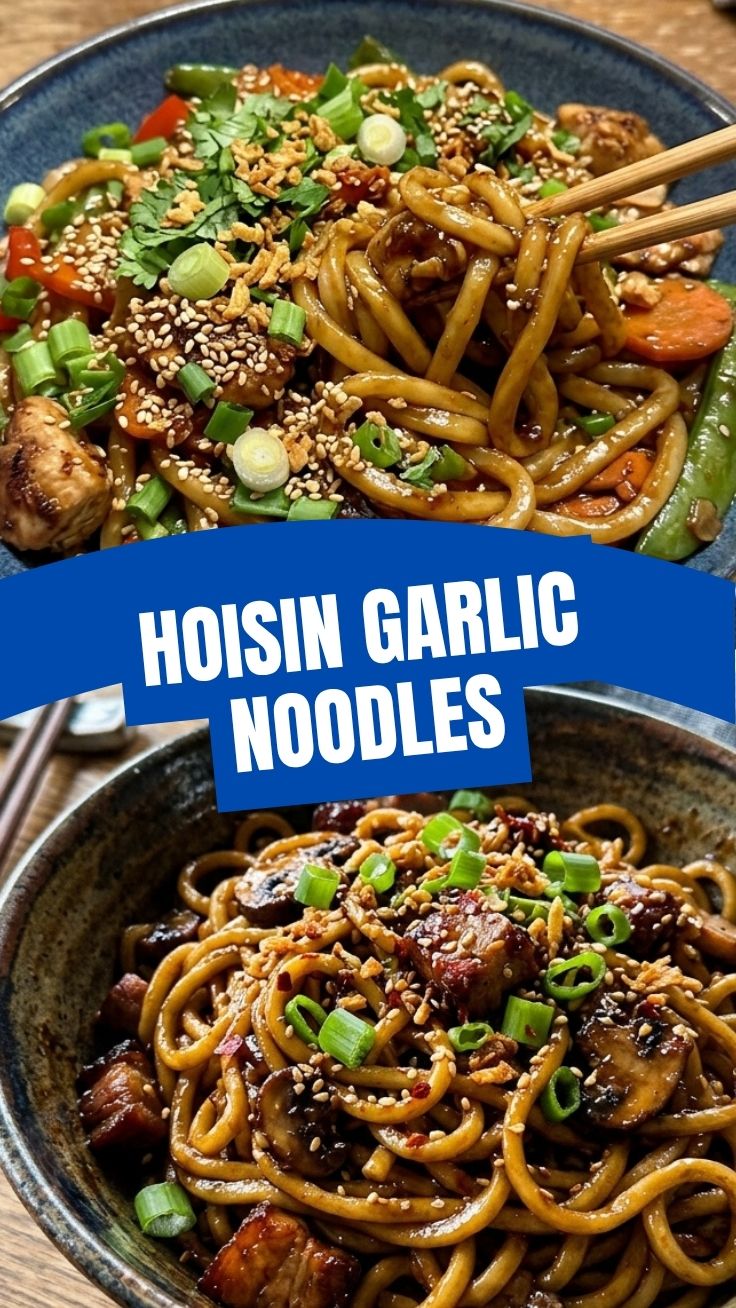
This dish is a weeknight warrior!
- Prep Time: 15 minutes (chopping, mincing, sauce whisking)
- Cook Time: 10-12 minutes (noodle boiling, stir-frying)
- Total Time: Approximately 25-30 minutes
This efficient timeline means you can have a fresh, hot meal on the table in under half an hour, making it perfect for busy evenings.
Step-by-Step Instructions
Follow these simple steps for a flawless batch of noodles.
1. Cook the Noodles: Bring a large pot of salted water to a rolling boil. Add your egg or lo mein noodles and cook according to package directions until al dente. Drain well and rinse with cold water to prevent sticking. Toss with 1 teaspoon of sesame oil to keep them separate.
2. Prepare the Hoisin Garlic Sauce: In a small bowl, whisk together the hoisin sauce, soy sauce, rice vinegar, brown sugar, red pepper flakes (if using), and chicken or vegetable broth until smooth. This flavorful mixture is the heart of our Hoisin Garlic Noodles.
3. Aromatics (Garlic & Ginger): Heat the vegetable oil and remaining sesame oil in a large skillet or wok over medium-high heat. Add the minced garlic and grated ginger. Sauté for about 30 seconds to 1 minute, until fragrant but not browned. Be careful not to burn the garlic, as it can turn bitter.
4. Combine & Stir-Fry: Add the cooked noodles to the skillet. Pour the prepared hoisin garlic sauce over the noodles. Using tongs, toss everything together vigorously for 2-3 minutes, ensuring the noodles are evenly coated with the rich sauce. The sauce should slightly thicken as it heats.
5. Serve & Garnish: Transfer the asian noodle recipes to serving bowls. Garnish generously with sliced green onions and toasted sesame seeds. Serve immediately and enjoy!
Nutritional Benefits & Advantages
These noodles aren’t just delicious; they offer several nutritional perks. Garlic and ginger are packed with antioxidants and anti-inflammatory properties. The hoisin sauce, while decadent, is balanced by the fresh aromatics and the complex carbs from the noodles provide sustained energy. By making this dish at home, you control the amount of sodium and sugar, avoiding excessive additives often found in store-bought or restaurant versions. You can also easily incorporate lean proteins like chicken, shrimp, or tofu, and a medley of vegetables for a complete, nutrient-dense meal.
Tips, Variations & Cooking Advice
- Protein Power: For a heartier meal, stir-fry 1/2 pound of diced chicken, shrimp, or thinly sliced beef, or even ground pork, before adding the garlic and ginger. Cook until done, then proceed with the recipe.
- Veggie Boost: Add colorful vegetables like bell peppers, snap peas, shredded carrots, broccoli florets, or bok choy. Sauté them briefly after the aromatics, before adding the noodles.
- Spice It Up: If you love heat, increase the red pepper flakes or add a dash of sriracha to the sauce.
- Gluten-Free Option: Use tamari instead of soy sauce and ensure your noodles are gluten-free (rice noodles or gluten-free ramen work well).
- Vegan Version: Omit any meat or seafood, use vegetable broth, and ensure your noodles are egg-free. Tofu or mushrooms make excellent plant-based additions.
- Flavor Depth: A tiny splash of Chinese black vinegar (Chinkiang vinegar) can add an extra layer of authentic complexity.
Common Mistakes to Avoid
- Overcooking Noodles: Mushy noodles are a no-go. Cook them al dente, as they will continue to soften slightly when tossed with the hot sauce.
- Burning Garlic/Ginger: These aromatics can burn quickly, turning bitter. Keep the heat controlled and sauté just until fragrant.
- Under-seasoning: Taste the sauce before adding the noodles and adjust soy sauce or sugar as needed. The seasoning needs to stand up to the noodles.
- Crowding the Pan: If adding protein or lots of vegetables, cook them in batches if necessary to ensure even cooking and proper searing, preventing steaming.
Storage & Meal Prep Tips
Leftover Hoisin Garlic Noodles store beautifully!
- Refrigeration: Store in an airtight container in the refrigerator for up to 3-4 days.
- Reheating: Reheat gently in a microwave or on the stovetop with a splash of water or broth to loosen the sauce. The noodles might absorb more sauce as they sit, so don’t be afraid to add a little extra liquid.
- Freezing: Freezing is not recommended for this dish as the noodles can become mushy upon thawing.
Conclusion
There you have it – a comprehensive guide to crafting sensational Hoisin Garlic Noodles right in your own kitchen! This recipe is a testament to how simple ingredients, combined with careful technique, can yield extraordinary flavors. Whether you’re a seasoned chef or a home cook looking to expand your repertoire of delicious asian noodle recipes, this dish promises satisfaction and applause. We encourage you to try this recipe, experiment with your favorite add-ins, and share your culinary creations with us. Your homemade noodle adventure awaits!
FAQs
Q1: Can I make the sauce ahead of time?
A1: Absolutely! Whisking the sauce ingredients together a day or two in advance will save you time and allow the flavors to meld even further. Store it in an airtight container in the refrigerator.
Q2: What’s the best type of noodle to use for this recipe?
A2: Egg noodles (lo mein style) are traditional and highly recommended for their texture and ability to absorb the sauce. However, ramen noodles (without the seasoning packet), spaghetti, or even udon noodles can be delicious alternatives.
Q3: My noodles stuck together after cooking. What went wrong?
A3: This usually happens if noodles aren’t rinsed with cold water after draining, or aren’t tossed with a little oil. Rinsing removes excess starch, and oil helps prevent them from clumping.
Q4: How can I make this dish spicier?
A4: You can increase the amount of red pepper flakes, add a touch of sriracha, or even stir in some chili garlic sauce with the aromatics for an extra fiery kick.