Fluffy Pancakes: Your Guide to the Perfect Homemade Breakfast
Have you ever craved that quintessential stack of fluffy, golden perfection, only to be disappointed by store-bought mixes or restaurant versions that fall flat? Crafting the perfect batch of Pancakes at home is not just about making a meal; it’s about creating a comforting ritual, a delightful morning experience that fills your kitchen with warmth and an irresistible aroma. This comprehensive guide will walk you through every step, ensuring your homemade breakfast is not only delicious but also a joy to prepare. Mastering this simple yet rewarding recipe elevates your culinary skills and guarantees a consistently satisfying start to your day. This recipe focuses on achieving that coveted light and airy texture, making it an ideal choice for a cherished weekend breakfast.
Ingredients & Kitchen Tools
To embark on your journey to pancake perfection, gather these essentials:
- 1 ½ cups all-purpose flour: The structural base for your pancakes.
- 3 ½ teaspoons baking powder: The magic ingredient for lift and fluffiness. Ensure it’s fresh for optimal rise.
- 1 teaspoon salt: Balances flavors and enhances sweetness.
- 1 tablespoon granulated sugar: Adds a touch of sweetness and aids in browning.
- 1 ¼ cups milk: Provides moisture and helps create a smooth batter. Any milk (dairy or non-dairy) will work.
- 1 large egg: Acts as a binder and adds richness.
- 3 tablespoons melted butter (plus extra for greasing): Contributes to flavor and a tender texture. Unsalted is preferred, but salted works too—adjust salt in the recipe accordingly.
- Whisk: For combining dry and wet ingredients.
- Large mixing bowl: To prepare the batter.
- Measuring cups and spoons: For accurate ingredient quantities.
- Griddle or large non-stick skillet: Essential for cooking the pancakes evenly.
- Spatula: For flipping.
- Ladle or ¼ cup measure: For portioning batter onto the griddle.
- Optional Substitutions: For a richer flavor, use buttermilk instead of regular milk and reduce baking powder slightly. For a dairy-free option, use plant-based milk and oil instead of butter.
Prep Time & Cooking Schedule
- Prep Time: 10 minutes
- Cook Time: 15-20 minutes (depending on your griddle size and number of pancakes cooked simultaneously)
- Resting Time: 5 minutes (for the batter, allowing the baking powder to activate)
This recipe is designed for a quick and satisfying morning meal. The short prep time means you can enjoy these fluffy delights even on a busy weekday, though they truly shine as a leisurely weekend breakfast.
Step-by-Step Instructions
1. Combine Dry Ingredients: In a large mixing bowl, whisk together the flour, baking powder, salt, and granulated sugar until well combined. This ensures even distribution of leavening agents for consistent fluffiness in your Pancakes.
2. Combine Wet Ingredients: In a separate medium bowl, whisk together the milk, egg, and melted butter until thoroughly blended.
3. Combine Wet and Dry: Pour the wet ingredients into the dry ingredients. Mix gently with a whisk or spoon until just combined. A few lumps are perfectly fine and even desirable; overmixing develops gluten, leading to tougher pancakes. The batter should be thick but pourable. Let the batter rest for 5 minutes; this allows the baking powder to start working its magic.
4. Heat Your Griddle: Heat a lightly oiled or buttered griddle or non-stick skillet over medium-low heat. A good test for readiness: sprinkle a few drops of water onto the surface; if they sizzle and evaporate quickly, it’s ready. Too high heat will burn the outside before the inside cooks through.
5. Cook the Pancakes: Pour ¼ cup of batter for each pancake onto the hot griddle. Cook for 2-3 minutes per side, or until golden brown and bubbles appear on the surface. Flip carefully with a spatula and cook for another 1-2 minutes until both sides are golden and the center is cooked through.
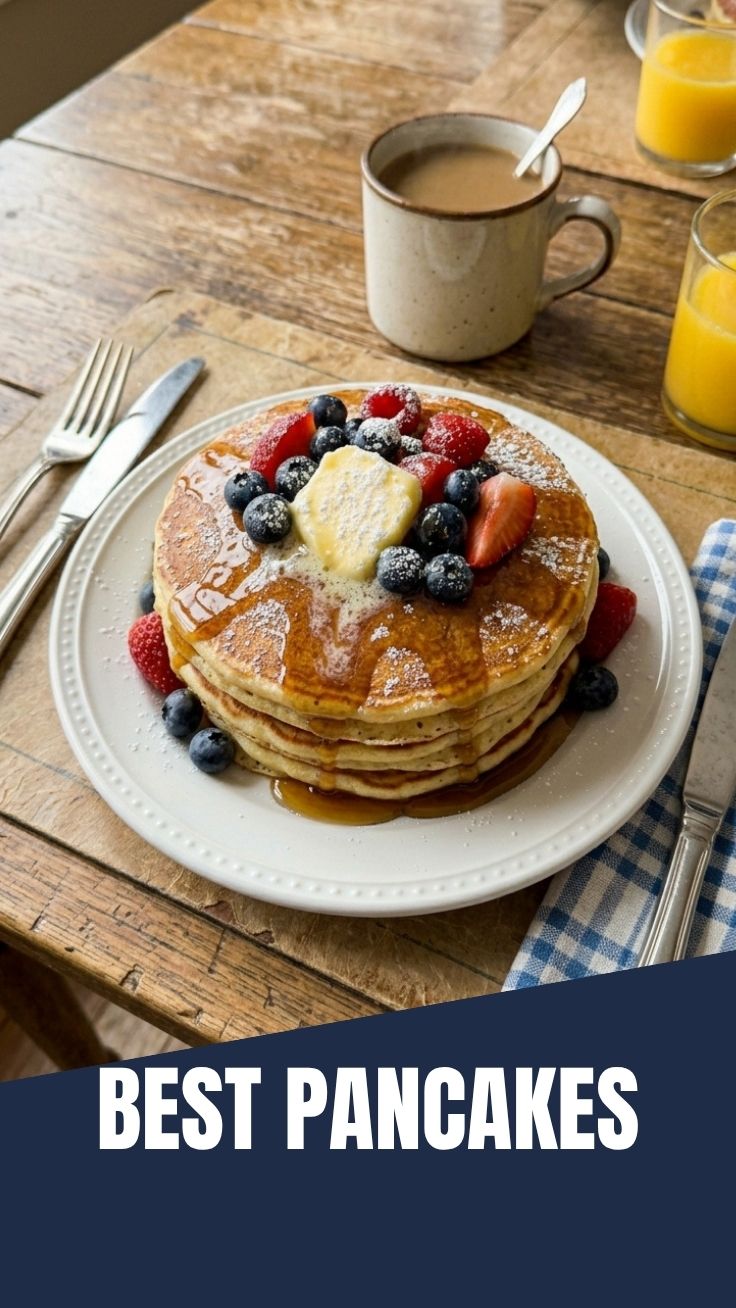
6. Serve Immediately: Serve your fresh Pancakes warm with your favorite toppings for a delightful breakfast.
Nutritional Benefits & Advantages
These light and airy Pancakes, when made from scratch, offer more control over ingredients than many pre-made options. They provide a good source of carbohydrates for energy, and with milk and eggs, they contribute protein and essential vitamins like B12 and D, as well as calcium. Opting for whole wheat flour can increase fiber content, aiding digestion. They are a comforting and adaptable canvas for healthy fruit toppings, adding essential vitamins, minerals, and antioxidants to your diet.
Tips, Variations & Cooking Advice
- Buttermilk Pancakes: Swap regular milk for buttermilk for a tangier flavor and even more tender crumb.
- Fruit-Filled: Fold in fresh berries (blueberries, raspberries), sliced bananas, or chocolate chips into the batter for added flavor and texture.
- Spice It Up: Add a pinch of cinnamon or nutmeg to the dry ingredients for a warm, aromatic twist.
- Perfectly Round: Use an ice cream scoop or a ¼ cup measure to consistently portion your batter for uniform-sized pancakes.
- Dietary Adaptations:
* Gluten-Free: Substitute all-purpose flour with a 1:1 gluten-free flour blend.
* Dairy-Free: Use plant-based milk (almond, soy, oat) and swap butter for a neutral oil like canola or vegetable oil.
Common Mistakes to Avoid
- Overmixing the Batter: This is the most common sin! Overmixing develops gluten, leading to tough, chewy pancakes instead of light and fluffy ones. Mix only until the ingredients are just combined. Lumps are your friend!
- Cooking on Too High Heat: High heat will quickly brown the outside, leaving the inside raw. Keep the heat at medium-low for even cooking and a beautiful golden-brown crust.
- Not Letting the Batter Rest: A short 5-minute rest allows the baking powder to activate and the flour to fully hydrate, resulting in a lighter texture.
- Greasing the Griddle Too Much: Too much oil leads to greasy edges. A light brush of butter or oil is sufficient.
- Flipping Too Soon: Wait for bubbles to appear on the surface and the edges to look set before flipping.
Storage & Meal Prep Tips
Leftover pancakes can be a fantastic breakfast solution throughout the week!
- Refrigeration: Store cooked pancakes in an airtight container in the refrigerator for up to 3-4 days. Separate layers with parchment paper to prevent sticking.
- Freezing: For longer storage, flash-freeze individual pancakes on a baking sheet until solid (about 30 minutes to an hour), then transfer them to a freezer-safe bag or container. They will keep well for up to 2-3 months.
- Reheating:
* Toaster/Toaster Oven: The best way to regain a crispy edge.
* Microwave: Quickest, but can make them slightly softer.
* Oven: Lay on a baking sheet and heat at 350°F (175°C) for about 5-10 minutes until warmed through.
Conclusion
Mastering the art of homemade Pancakes is a culinary triumph that guarantees a delightful and comforting start to any day. With just a few simple ingredients and techniques, you can achieve that coveted fluffy texture and rich flavor that far surpasses any store-bought alternative. This recipe, perfect for a leisurely weekend breakfast or a quick morning treat, is versatile and endlessly customizable. We encourage you to try this recipe, experiment with your favorite toppings, and share your homemade pancake creations with us!
FAQs
Q1: Can I make the batter ahead of time?
A1: While fresh batter yields the best results, you can prepare the dry ingredients and wet ingredients separately and combine them just before cooking. If you must mix the whole batter ahead, store it in an airtight container in the fridge for up to 12 hours, but be aware it might lose some of its fluffiness due to the baking powder losing potency. Add a tiny pinch of extra baking powder just before cooking if the batter has been sitting for a while.
Q2: My pancakes aren’t fluffy. What went wrong?
A2: The most common culprits are overmixing the batter (developing gluten) or using old baking powder. Ensure your baking powder is fresh (test it by adding a teaspoon to hot water – it should vigorously bubble) and mix the batter only until just combined.
Q3: How do I know when to flip the pancakes?
A3: Look for bubbles to appear on the surface of the pancake and for the edges to start looking dry and set. This usually takes 2-3 minutes on medium-low heat.
Q4: Can I use different types of flour?
A4: Yes, you can experiment! Whole wheat flour will yield a denser, heartier pancake. For gluten-free options, a 1:1 gluten-free blend works well. Adjust liquid if necessary, as different flours absorb moisture differently.
Q5: What are some popular pancake toppings?
A5: Classic choices include maple syrup, fresh berries, sliced bananas, whipped cream, chocolate sauce, nuts, or a dollop of yogurt. Get creative with what you love!