Unlocking Culinary Comfort: The Art of Homemade Beef Stew
Ever wonder what truly sets a memorable meal apart? It’s often the warmth, the aroma, and the sheer comfort of a dish crafted with love right in your own kitchen. There’s something uniquely satisfying about transforming simple ingredients into a rich, hearty Beef Stew that nourishes both body and soul. Forget bland, pre-made meals; mastering this classic dish at home offers unparalleled flavor and a profound sense of accomplishment. And for those busy days, a perfectly executed slow cooker beef stew can be a true game-changer, delivering that same comforting taste with minimal effort. Let’s dive into creating a truly exceptional stew that will become a staple in your culinary repertoire.
Ingredients & Kitchen Tools
Crafting an outstanding Beef Stew begins with quality ingredients and the right tools.
Ingredients:
- 2 lbs Boneless Beef Chuck Roast: Cut into 1.5-inch cubes. Chuck roast is ideal due to its marbling and connective tissue, which breaks down beautifully during slow cooking, resulting in tender, succulent meat.
- 2 tbsp Olive Oil: For searing the beef and sautéing aromatics.
- 1 Large Yellow Onion: Chopped. Provides a foundational sweetness and aroma.
- 3 Cloves Garlic: Minced. Adds a pungent, aromatic depth.
- 4 cups Beef Broth: Low sodium is preferred to control seasoning. Forms the liquid base of the stew.
- 1 cup Dry Red Wine (e.g., Merlot, Cabernet Sauvignon): Optional, but highly recommended for deepening the flavor profile and adding acidity.
- 1 tbsp Tomato Paste: Adds umami and richness.
- 2 Large Carrots: Peeled and cut into 1-inch pieces. Sweetens the stew and adds vibrant color.
- 2 Celery Stalks: Chopped into 1-inch pieces. Contributes a subtle, earthy flavor.
- 1.5 lbs Baby Yukon Gold Potatoes: Halved or quartered, depending on size. Starchy potatoes thicken the stew naturally.
- 2 Bay Leaves: Infuses a subtle, herbal aroma.
- 1 tsp Dried Thyme: Classic herb for beef stew, adds warmth.
- Salt and Freshly Ground Black Pepper: To taste, essential for seasoning at every stage.
- 2 tbsp All-Purpose Flour: For thickening the stew. Can substitute with cornstarch slurry for gluten-free.
- Fresh Parsley (for garnish): Chopped, adds freshness and visual appeal.
Kitchen Tools:
- Large Dutch Oven or Heavy-Bottomed Pot: Essential for even heat distribution and stovetop-to-oven cooking.
- Cutting Board and Sharp Knife: For prepping ingredients safely and efficiently.
- Measuring Cups and Spoons: For accurate ingredient quantities.
- Wooden Spoon or Spatula: For stirring and scraping.
- Tongs: For searing meat.
Prep Time & Cooking Schedule
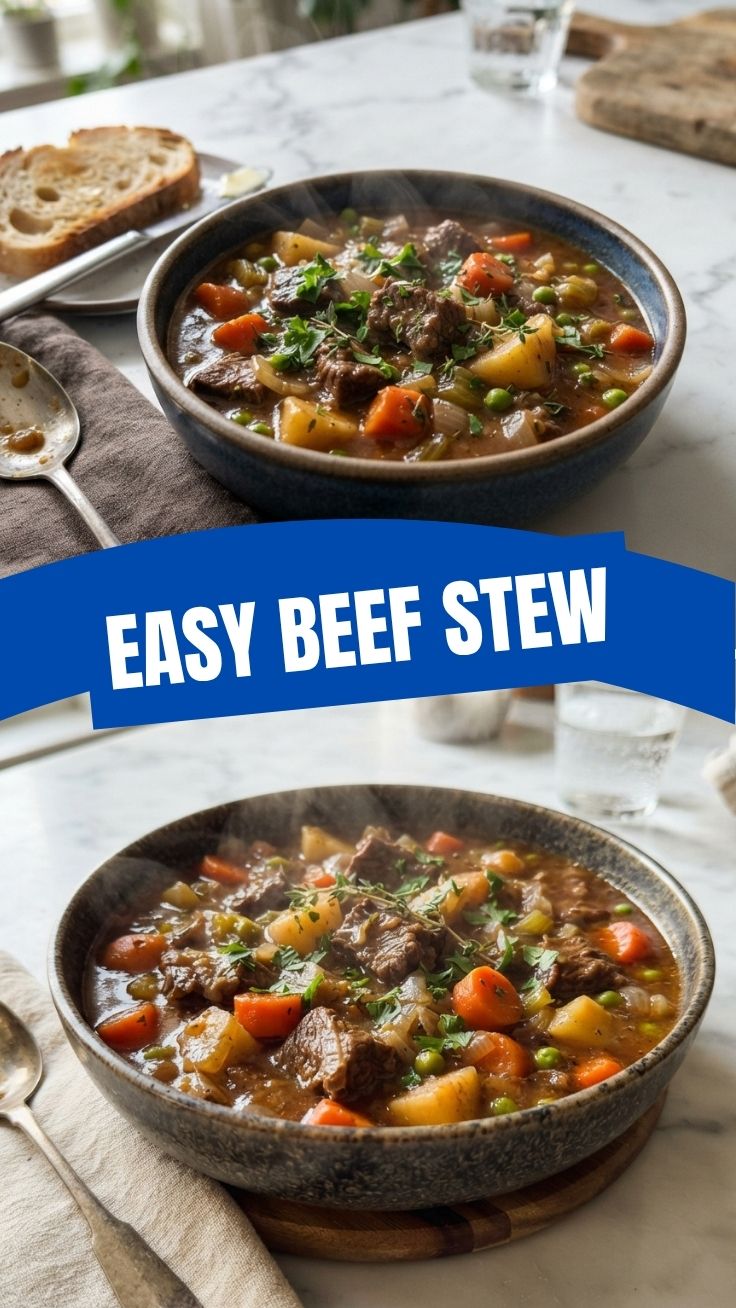
Planning is key to a perfectly tender Beef Stew.
- Prep Time: 30 minutes
- Cook Time: 2.5 – 3 hours (stovetop/oven) or 6-8 hours (slow cooker)
- Resting Time: 15-20 minutes after cooking allows flavors to meld and meat to reabsorb juices.
This recipe is ideal for a weekend project or can be started in the morning for a comforting dinner. The long, slow cooking process is crucial for tenderizing the beef, so don’t rush it!
Step-by-Step Instructions
Follow these steps for a rich and flavorful Beef Stew:
1. Prepare the Beef: Pat the beef chuck cubes dry with paper towels. Season generously with salt and black pepper. This step is crucial for building flavor and achieving a good sear.
2. Sear the Beef: Heat olive oil in a large Dutch oven over medium-high heat. Sear the beef in batches until browned on all sides. Do not overcrowd the pot, as this will steam the meat instead of searing it. Remove the seared beef and set aside.
3. Sauté Aromatics: Reduce heat to medium. Add chopped onion to the pot and cook until softened, about 5-7 minutes. Stir in minced garlic and cook for another minute until fragrant.
4. Deglaze and Build Flavor: Stir in tomato paste and cook for 2 minutes. If using, pour in red wine and scrape up any browned bits from the bottom of the pot. Cook until the wine has reduced by half. This step adds immense depth.
5. Thicken and Combine: Sprinkle flour over the vegetables and stir for 1-2 minutes to cook out the raw flour taste. Gradually pour in beef broth, stirring constantly to prevent lumps.
6. Simmer and Cook: Return the seared beef to the pot. Add carrots, celery, bay leaves, and dried thyme. Bring the mixture to a simmer, then reduce heat to low, cover, and cook for 1.5 hours, stirring occasionally. Alternatively, transfer everything to a slow cooker for a hands-off slow cooker beef stew and cook on low for 6-8 hours or high for 3-4 hours.
7. Add Potatoes: After 1.5 hours (or halfway through slow cooking), add the potatoes to the pot. Continue to cook for another 1-1.5 hours, or until the beef is fork-tender and the potatoes are soft.
8. Final Adjustments: Remove bay leaves. Taste and adjust seasoning with salt and pepper as needed. If the stew is too thin, you can simmer it uncovered for a bit longer. If it’s too thick, add a little more broth.
9. Serve: Ladle hot stew into bowls. Garnish with fresh parsley.
Nutritional Benefits & Advantages
This hearty stew isn’t just delicious; it’s packed with goodness. Beef chuck is an excellent source of protein, essential for muscle repair and growth. The medley of vegetables – carrots, celery, and potatoes – provides a good dose of fiber, vitamins (like Vitamin A from carrots), and minerals. The slow cooking process helps to break down nutrients, making them more bioavailable, and creates a meal that is both satisfying and incredibly nourishing.
Tips Variations & Cooking Advice
- Vegetable Variations: Feel free to add other root vegetables like parsnips or rutabaga, or leafy greens like kale or spinach towards the end of cooking.
- Gluten-Free Option: Omit the flour and use a cornstarch slurry (1 tbsp cornstarch mixed with 2 tbsp cold water) stirred in at the end to thicken to desired consistency.
- Spice It Up: A pinch of red pepper flakes can add a subtle kick.
- Herb Power: Experiment with fresh rosemary or marjoram for different aromatic notes.
- Dairy-Free: This recipe is naturally dairy-free.
Common Mistakes to Avoid
- Not Searing the Beef: Searing creates a flavorful crust (Maillard reaction) that significantly enhances the stew’s depth. Don’t skip this step!
- Overcrowding the Pot: When searing, work in batches to allow the beef to brown properly.
- Rushing the Cooking Process: Tender beef chuck takes time. Low and slow is the secret to melt-in-your-mouth results.
- Under-Seasoning: Season at different stages – the beef before searing, and the stew throughout and at the end.
Storage & Meal Prep Tips
Beef Stew is fantastic for meal prep!
- Refrigeration: Store leftovers in an airtight container in the refrigerator for up to 3-4 days.
- Freezing: This stew freezes beautifully. Allow it to cool completely, then transfer to freezer-safe containers or bags. It can be frozen for up to 3 months. Thaw overnight in the refrigerator before reheating.
- Reheating: Reheat gently on the stovetop over medium-low heat, stirring occasionally, until warmed through. You may need to add a splash of beef broth or water to adjust consistency.
Conclusion
Crafting your own Beef Stew is a truly rewarding experience, yielding a dish that’s rich in flavor, deeply comforting, and incredibly versatile. Whether you opt for the traditional Dutch oven method or prefer the ease of a slow cooker beef stew, the result is a wholesome meal perfect for any occasion. Don’t hesitate to personalize it with your favorite vegetables and seasonings. Give this recipe a try, savor the incredible aromas filling your home, and share your delicious creations with us!
FAQs
Q: Can I use a different cut of beef?
A: While chuck roast is ideal, you can use other tough cuts like short ribs or brisket, adjusting cooking time as needed until fork-tender.
Q: My stew is too thin, how can I thicken it?
A: You can simmer it uncovered for a longer period to reduce, or make a cornstarch slurry (1 tbsp cornstarch mixed with 2 tbsp cold water) and stir it into the simmering stew until it reaches your desired thickness.
Q: Can I make this vegetarian?
A: Absolutely! Omit the beef and use vegetable broth. Add hearty vegetables like mushrooms, squash, or lentils to maintain substance.
Q: How can I enhance the flavor even more?
A: A splash of Worcestershire sauce, a spoonful of Dijon mustard, or a Parmesan rind added during simmering can deepen the umami and complexity.
Q: What are good side dishes for beef stew?
A: Crusty bread, mashed potatoes (if not using potatoes in the stew), a simple green salad, or even polenta are excellent accompaniments.