Unleash Flavor and Health: Your Guide to the Ultimate Homemade Chicken Stir Fry
Are you tired of bland weeknight dinners that leave you feeling unsatisfied and reaching for takeout menus? Imagine a dish that’s bursting with vibrant flavors, packed with wholesome ingredients, and incredibly easy to prepare. That’s exactly what you get when you master the art of making a delicious Chicken Stir Fry at home. Beyond the convenience, preparing healthy stir fry recipes yourself ensures you control every ingredient, tailoring it to your taste and dietary needs. This guide will walk you through crafting a sensational stir fry that’s a true game-changer for your culinary repertoire.
Ingredients & Kitchen Tools
Gathering your mise en place before you begin is essential for a smooth and enjoyable cooking experience.
Proteins:
- 1.5 lbs Boneless, Skinless Chicken Thighs or Breasts: Cut into 1-inch pieces. Thighs offer more flavor and tend to stay juicier.
- Marinade:
* 2 tbsp Soy Sauce (or Tamari for gluten-free): Adds umami and depth.
* 1 tbsp Rice Vinegar: Provides a touch of acidity to tenderize.
* 1 tsp Sesame Oil: Imparts a nutty aroma.
* 1 tbsp Cornstarch: Helps tenderize and creates a silky coating.
* 1 clove Garlic, minced: Essential for aromatic flavor.
* 1 tsp Fresh Ginger, grated: Adds a zesty warmth.
Vegetables:
- 1 large Bell Pepper (any color), thinly sliced: Adds sweetness and crunch.
- 1 cup Broccoli Florets: Packed with nutrients and a delightful texture.
- 1 cup Snap Peas or Snow Peas: For a fresh, crisp element.
- 1 medium Carrot, thinly sliced or julienned: Adds natural sweetness and color.
- 1/2 Red Onion, thinly sliced: Pungent and adds a nice bite.
Stir Fry Sauce:
- 1/4 cup Soy Sauce (or Tamari): Base for the savory sauce.
- 2 tbsp Oyster Sauce (optional, or hoisin for vegetarian): Adds a rich, complex sweetness.
- 1 tbsp Honey or Maple Syrup: Balances the savory notes.
- 1 tbsp Rice Vinegar: For a tangy kick.
- 1 tsp Fresh Ginger, grated: Reinforces the aromatic profile.
- 1 tsp Sesame Oil: Enhances the overall flavor.
- 1 tbsp Cornstarch mixed with 2 tbsp cold water (slurry): Thickens the sauce.
For Serving:
- Cooked Rice (brown or white), Quinoa, or Noodles: The perfect base for your stir fry.
- Sesame Seeds and Chopped Green Onions (for garnish): Adds visual appeal and extra flavor.
Kitchen Tools:
- Large Wok or Skillet: Essential for high-heat cooking and even distribution.
- Cutting Board & Sharp Knife: For precise ingredient preparation.
- Mixing Bowls: For marinating and sauce preparation.
- Spatula or Tongs: For tossing and flipping ingredients.
- Whisk: To combine sauce ingredients.
Prep Time & Cooking Schedule
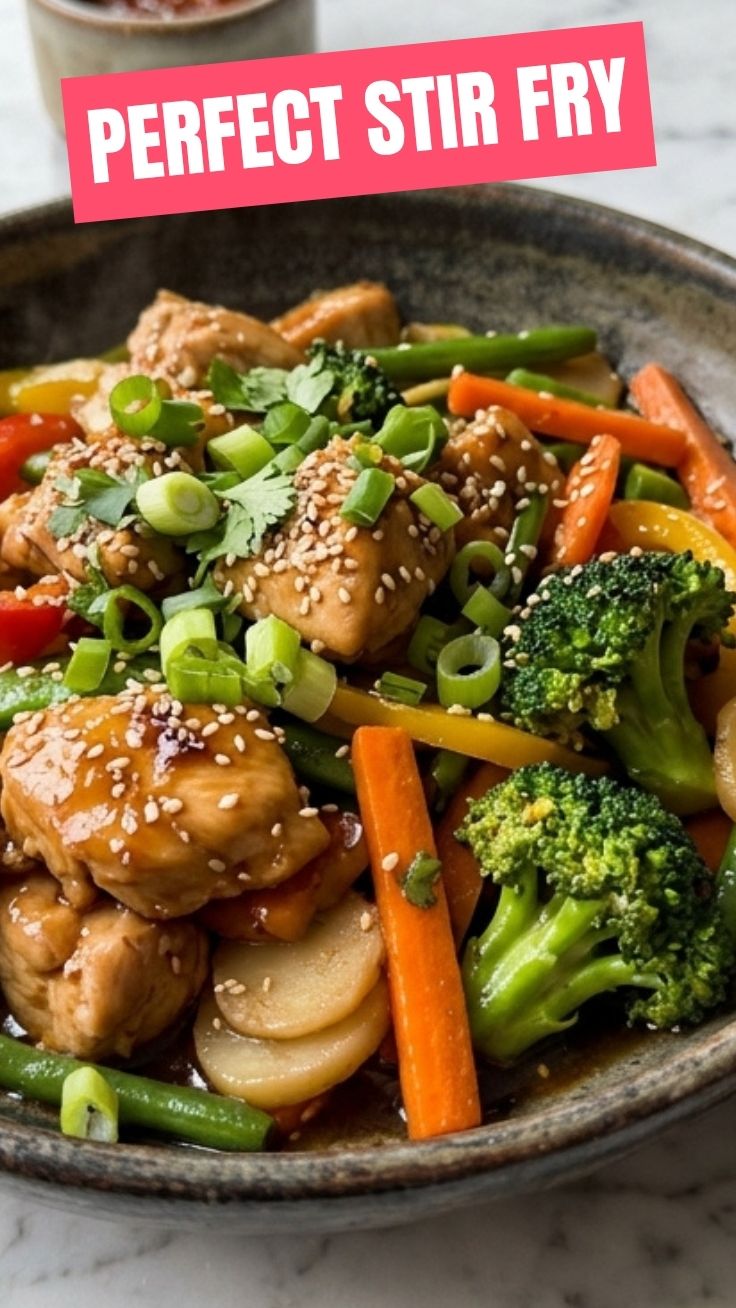
- Prep Time: 20 minutes (includes chopping and marinating chicken)
- Cook Time: 15-20 minutes
- Resting Time (Chicken): 15-30 minutes for optimal flavor and tenderness.
- Total Time: Approximately 50-70 minutes
Plan to marinate your chicken first. While it’s soaking up all those delicious flavors, you can chop all your vegetables and whisk together your sauce, making the actual cooking process incredibly fast and efficient. This ensures your Chicken Stir Fry comes together seamlessly.
Step-by-Step Instructions
1. Marinate the Chicken: In a medium bowl, combine the chicken pieces with soy sauce, rice vinegar, sesame oil, cornstarch, minced garlic, and grated ginger. Toss well to coat. Cover and refrigerate for at least 15 minutes, or up to 30 minutes. This is a crucial step for a tender and flavorful Chicken Stir Fry.
2. Prepare the Sauce: While the chicken marinates, whisk together all stir fry sauce ingredients (soy sauce, oyster sauce, honey, rice vinegar, ginger, sesame oil, and cornstarch slurry) in a small bowl. Set aside.
3. Heat the Wok: Heat 1-2 tablespoons of high-heat cooking oil (like canola, vegetable, or peanut oil) in your wok or large skillet over high heat until shimmering and just starting to smoke. This high heat is key for achieving that perfect stir-fry char.
4. Cook the Chicken: Add the marinated chicken to the hot wok in a single layer, ensuring not to overcrowd the pan. Cook for 3-4 minutes, undisturbed, until browned, then flip and cook for another 2-3 minutes until cooked through. Remove the chicken from the wok and set aside.
5. Stir-Fry Vegetables: Add another tablespoon of oil to the wok if needed. Add the bell pepper, broccoli, snap peas, carrot, and red onion. Stir-fry for 3-5 minutes, tossing constantly, until the vegetables are tender-crisp. Don’t overcook them; they should retain some bite.
6. Combine and Sauce: Return the cooked chicken to the wok with the vegetables. Give your prepared stir-fry sauce a quick whisk (to re-incorporate the cornstarch) and pour it over the chicken and vegetables.
7. Thicken and Serve: Toss everything quickly to coat evenly. Cook for 1-2 minutes, stirring, until the sauce has thickened and coats all ingredients.
8. Serve Immediately: Garnish with sesame seeds and chopped green onions. Serve hot over your choice of cooked rice, quinoa, or noodles. Enjoy these homemade Healthy stir fry recipes knowing you’ve created a delicious and wholesome meal!
Nutritional Benefits & Advantages
This homemade stir fry is a powerhouse of nutrition. Chicken provides lean protein essential for muscle repair and growth, while the array of colorful vegetables delivers a rich source of vitamins, minerals, and dietary fiber. Bell peppers are packed with Vitamin C, broccoli boasts vitamins K and C, and carrots are renowned for their beta-carotene. The quick cooking method preserves many of these heat-sensitive nutrients. By making your own, you avoid excessive sodium and unhealthy fats often found in restaurant versions, turning a simple meal into one of the most effective and Healthy stir fry recipes.
Tips, Variations & Cooking Advice
- Spice it up: Add a pinch of red pepper flakes or a dash of sriracha to the sauce for a fiery kick.
- Vegetable Variety: Feel free to swap or add other quick-cooking vegetables like mushrooms, baby corn, water chestnuts, or bok choy.
- Protein Alternatives: Tofu, shrimp, or beef can be excellent substitutes for chicken. Adjust cooking times accordingly.
- Nutty notes: A sprinkle of chopped peanuts or cashews at the end adds a delightful crunch and extra flavor dimension.
- Low-carb option: Serve over cauliflower rice or zucchini noodles for a lighter meal.
Common Mistakes to Avoid
- Overcrowding the Wok: This lowers the temperature of the pan, causing ingredients to steam instead of stir-fry, resulting in soggy food. Cook in batches if necessary.
- Underheating the Wok: A proper stir fry requires very high heat to achieve that characteristic charred flavor and tender-crisp vegetables.
- Overcooking Vegetables: Stir-fry vegetables should be vibrant and have a slight crunch. Cook them quickly and remove them from the heat promptly.
- Skipping the Marinade: While optional for some dishes, the marinade in this recipe contributes significantly to the tenderness and flavor of the chicken.
- Not Preparing Ahead: Stir-frying is a fast-paced cooking method. Have all your ingredients chopped and sauces mixed before you start.
Storage & Meal Prep Tips
Leftovers of your Chicken Stir Fry can be stored in an airtight container in the refrigerator for up to 3-4 days. It reheats well in a microwave or a skillet over medium heat. For meal prep, you can chop all your vegetables and make the sauce ahead of time, storing them separately in the fridge. When ready to cook, simply marinate the chicken and proceed with the stir-frying steps for a quick, fresh meal.
Conclusion
Mastering the art of a homemade Chicken Stir Fry is a rewarding culinary journey that brings vibrant flavors and wholesome goodness to your table. You’ve learned how to properly marinate chicken for tenderness, achieve crisp-tender vegetables, and balance a flavorful sauce, transforming simple ingredients into an extraordinary meal. Now, it’s your turn to unleash your inner chef! We encourage you to try this recipe and discover firsthand why it stands out among Healthy stir fry recipes. Share your creations and tweak it to your heart’s content – your taste buds will thank you!
FAQs
Q1: Can I use frozen vegetables?
A1: Yes, you can use frozen stir-fry vegetable mixes. Just make sure to thaw them completely and pat them dry to remove excess moisture before adding them to the hot wok, otherwise, they can make your stir fry watery.
Q2: What’s the best oil for stir-frying?
A2: high smoke point oils are best, such as canola, vegetable, peanut, grapeseed, or avocado oil. Avoid olive oil as it has a lower smoke point.
Q3: How do I prevent my chicken from being dry?
A3: The cornstarch in the marinade helps lock in moisture. Also, avoid overcooking; cook the chicken quickly until just done, then remove it from the pan before adding it back with the sauce.
Q4: Can I make this gluten-free?
A4: Absolutely! Use tamari instead of soy sauce and ensure your oyster sauce (or hoisin) is labeled gluten-free. Cornstarch is naturally gluten-free.
Q5: My sauce is too thin/thick. What should I do?
A5: If too thin, mix another small cornstarch slurry and whisk it into the sizzling sauce. If too thick, add a tablespoon of water or broth at a time until you reach your desired consistency.